This is Wonder Piano. In China, we develop AI-assisted piano practice tools for families, and we also take a harder question seriously: what should you do when a child refuses to practice, cannot settle into practice, or leaves parents unsure what to say? Here, you will find practice methods as well as the difficulties families can encounter when putting those methods into everyday use.
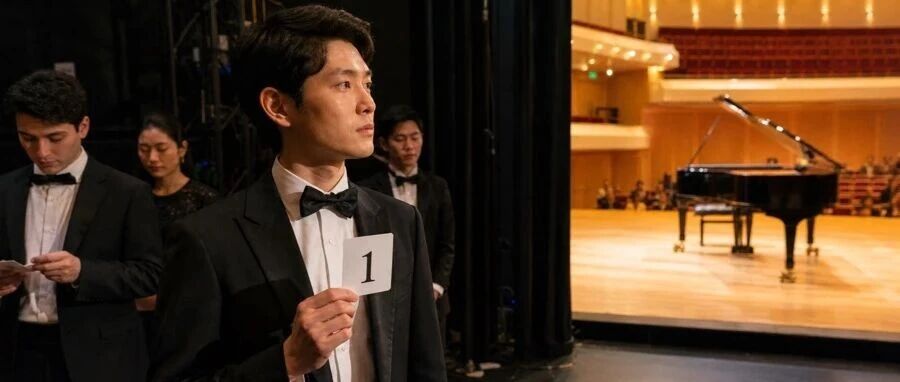
Before the 19th International Chopin Piano Competition took place in Warsaw in October 2025, the organizers announced a modest rule change that deserved a closer look from parents of young pianists. Previously, a starting letter was drawn before the first round, and competitors performed in alphabetical order by surname, beginning with that letter; the same starting letter was then used in every subsequent round. From the 2025 edition onward, the starting letter would move forward by six places for each successive round, distributing early and late performance slots as evenly as possible across all competitors. The public draw took place on September 30. The original article says that the first pianist to perform that day was the young Chinese pianist Ziye Tao.
Translator’s note: The Chinese article describes the previous rule as drawing a starting letter before each round. The organizers’ official announcement instead says that one letter was drawn and reused for subsequent rounds; the translation above follows that account. September 30, 2025 was the public draw, not the first day of competition performances. The official competition schedule places the first round on October 3–7, 2025. Ziye Tao was drawn to perform first, as confirmed by competition partner the Adam Mickiewicz Institute.
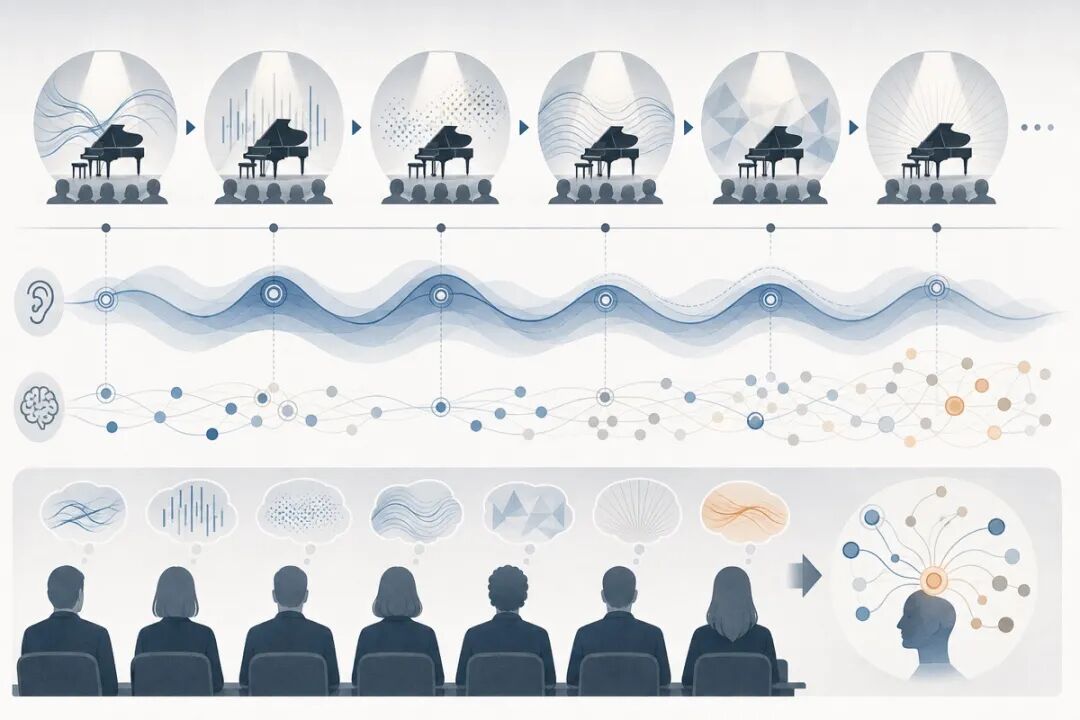
The organizers did not offer this explanation casually: their announcement about performance order cited research showing that competitors appearing at the beginning of a round had slightly lower chances of receiving a high score. The article interprets this through the psychology of judging music competitions: after listening to performances for long periods, judges may not apply exactly the same standards to the first and last competitors. This does not mean that judges lack professionalism. Rather, the author’s explanation is that people making judgments through sustained concentration are affected by where a performance falls in the sequence. The article describes this as a repeatedly observed phenomenon in judging psychology, with music competitions particularly conducive to it because judging runs for long periods and involves many competitors.
When parents first hear about this, many react by saying, “Isn’t that taking things a bit too far?” But consider it from another angle: if even one of the world’s leading piano competitions, with exceptionally rigorous judging, considers this variable worth a specific rule change, the article argues that it is also a real, frequently overlooked factor for children entering ordinary competitions and graded music exams.
We often hear, “Ability is what matters; the order doesn’t.” There is nothing wrong with the underlying point, but it can hide a subtler issue: among competitors of similar ability, performance order can make a small but real difference. The Chopin Competition’s 2025 rule change did not alter the broad principle that the better performance should win. Instead, it acknowledged a more specific point: judges are human too. In the author’s account, attention and memory fluctuate during prolonged listening, and performances near the beginning or end of a sequence are more susceptible to those fluctuations.
How can ordinary families with young piano learners use this information? Most children’s competitions and graded exams are much smaller than the Chopin Competition. According to the original Chinese article, performance slots can often be selected or adjusted during registration, although parents rarely give this much thought. If an exam or competition allows a choice of time slot, instead of focusing only on “morning or afternoon,” first find out roughly how the judges’ listening schedule is organized: how many children will they hear that day, for example, and will there be breaks? The article recommends trying to avoid slots near the end of a long stretch of continuous listening, when judges’ attention may be most likely to drift. If you cannot choose the performance order, a more practical step is to rehearse a fixed routine with your child for getting ready in the same way, regardless of their position in the lineup. That might mean taking a few deep breaths before going onstage and playing a familiar scale beforehand to warm up, so that nerves from performing early or fatigue from waiting until later do not cause large swings in performance.
Performance order cannot determine ability, but it is a real variable in competitions and graded exams, and one worth considering beforehand. By changing its rules specifically to address it in 2025, the Chopin Competition offered parents a reminder: details that prompt us to ask, “Am I overthinking this?” may be precisely the issues that professional judging systems have already taken seriously.
The last time your child entered a competition or graded exam, did you choose their performance slot, or simply accept the assigned order? If you had a choice, would you prefer an earlier or later slot? Share your choice and your reasons in the comments.
Source: Original Chinese article on WeChat.