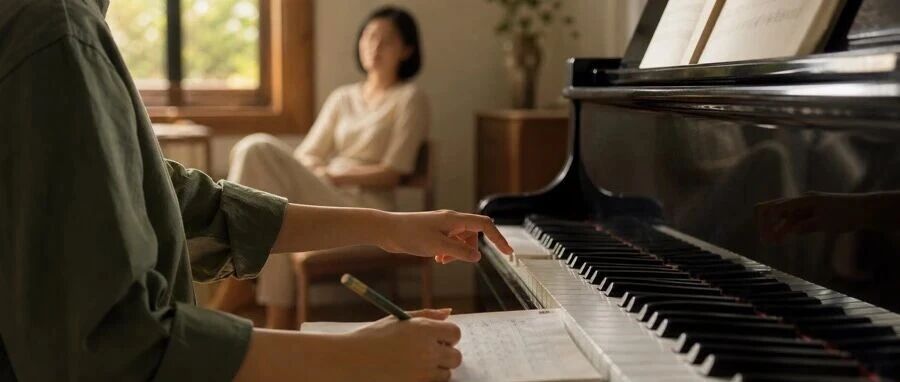
Your child plays the same phrase twice, then suddenly stops and says, “I want to play this part more softly.”
You glance at the score. There is no new dynamic marking, and you do not recall the teacher asking for that either.
The easiest response to blurt out is, “Don’t make changes on your own. Play it the way your teacher told you to.”
But a child’s willingness to say, “This is how I want to play it,” is a change worth preserving. They are beginning to care about more than whether they have played the right notes. They are also starting to listen to the sound they produce.
Do not rush to approve or correct the idea. Treat it as something they can test by listening.
”I Want to Play It More Softly” Is Not the Final Answer
Musical expression does not mean doing whatever you feel like. When your child says they want to play more softly, there are still more specific questions to answer: Why here? Can the melody still be heard clearly when it becomes softer? Does it connect with the phrases before and after it?
Sometimes they play more softly without realizing it simply because they are unfamiliar with the phrase. Sometimes they hesitate to press the keys all the way down, leaving the sound weak and indistinct. And sometimes they really do hear this passage as something whispered quietly.
These three kinds of “soft” do not sound the same.
You do not need to decide for them. Ask them to play the same phrase three times in a row: first, at the original dynamic level; second, more softly, as they intended; and third, softly while carrying the melody through to the end of the phrase. Then ask, “Which version do you prefer? Why?”
It is fine if they cannot explain it clearly yet. Being able to compare already takes them a step beyond simply memorizing an answer.
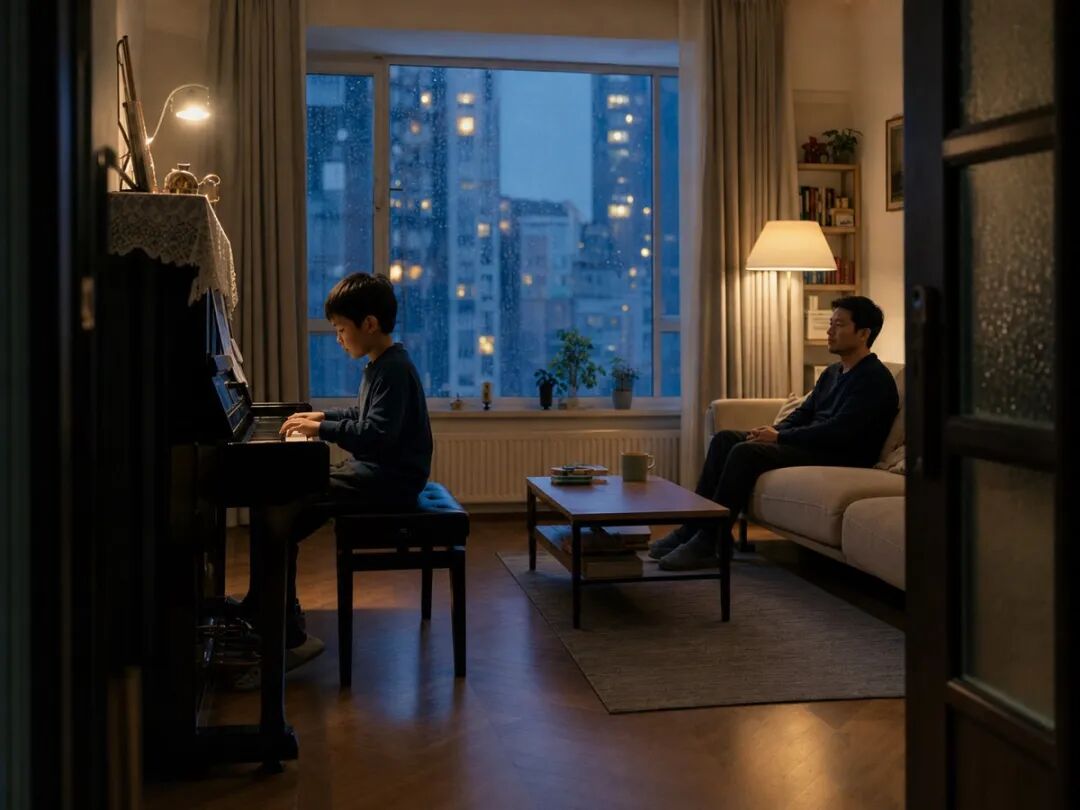
You can also change your listening position when making the comparison. At the piano, your child experiences both the sound and the feeling of their fingers pressing the keys. From the other end of the room, you hear more of how the melody carries through the space. A change that feels substantial beside the piano may make almost no audible difference farther away.
There is no need to argue about whose hearing is more accurate. Help your child understand that “it feels softer under my fingers” and “someone else can actually hear that it is softer” may still require an adjustment to bring them together. This is where expression starts to become more concrete.
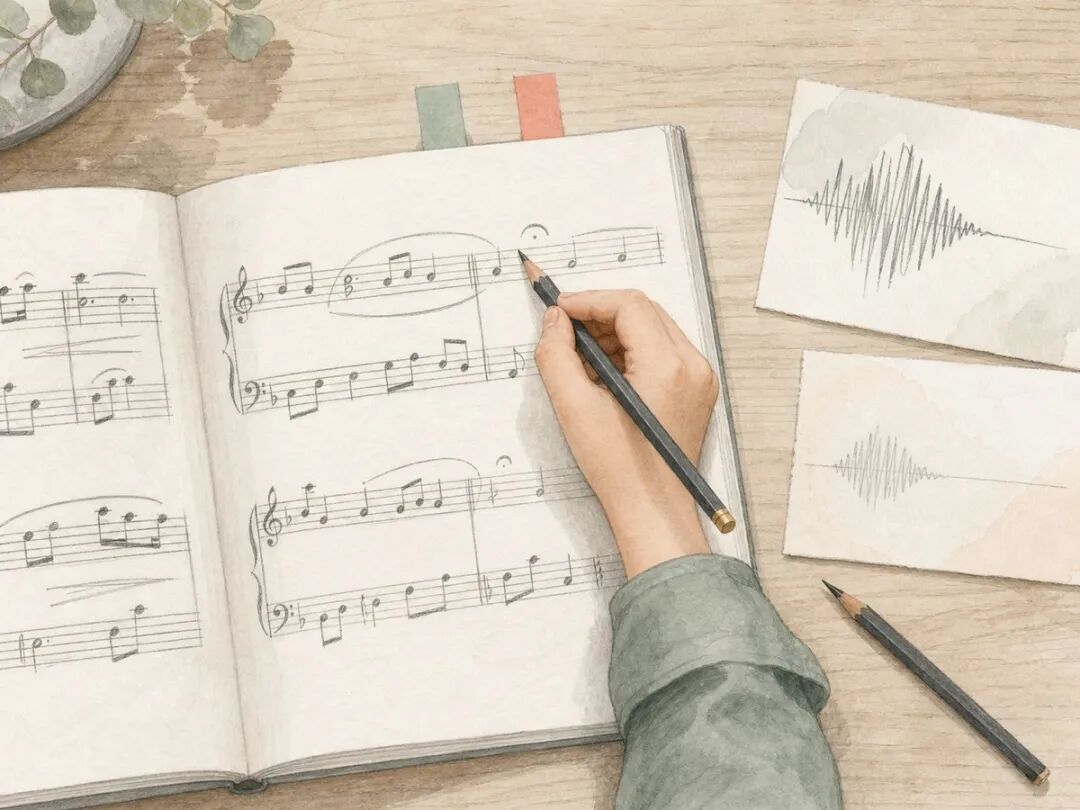
What Really Matters Is “Listen to the End Before Judging”
If someone immediately judges every new idea your child has, they will soon return to the safest approach: waiting for the teacher to tell them how to play.
At home, leave room for an uninterrupted experiment. Have them play just four to eight bars. Sit a little farther away, and wait until the last note has ended before speaking. First ask what your child heard, then explain what you heard from where you were sitting.
The two of you may hear different things.
Your child may feel they are already playing very softly, while you can barely hear the melody from a few steps away. They may feel a contrast between one part and the next, while all you hear is a sudden drop in tempo. These differences are not about who is right or wrong. They help your child understand that the feeling under their hands and the sound reaching someone else’s ears are not always the same thing.
If you are unsure how to respond, describe only what you saw and heard: “The first half of the phrase was very clear the second time, but I couldn’t hear the melody in the last two notes.” This is more useful than “The second version wasn’t good,” and it leaves more room for thought than immediately telling your child how to play.
Your child can learn to describe their own playing in the same way: “I want to play softly, but the last two notes always fade away.” Once a feeling becomes a specific statement, their teacher has something concrete to help with at the next lesson.
Teachers Guide and Correct; Children Need to Practice Making Choices Too
Fingering, touch, style, and the background of a piece still require a teacher’s judgment. In particular, if your child pulls their hands back or lets their fingers go limp in an attempt to play “softly,” or if their rhythm becomes unsteady, you cannot focus only on producing the effect they like.
But a teacher’s guidance does not have to remove every choice. A lesson can have clear requirements while still leaving one phrase for your child to compare two interpretations. A practice session at home can begin with the version the teacher assigned, followed by two minutes spent trying your child’s version.
If the score already has clear instructions for dynamics, tempo, and expression, your child should first experiment within those boundaries. “Their own expression” does not mean ignoring the piece or the teacher. It means learning to give the sound a clearer direction after understanding the requirements. A completely opposite interpretation can also be tried for comparison, but “I like it this way” is no reason to skip learning technique and style.
Then return to the lesson with a specific question: “When I play this phrase more softly, the melody keeps breaking up. What should I do?” This offers more learning value than a vague “I want to play it this way.”
Learning to play correctly is learning to express the music accurately. Beginning to consider how a phrase should be expressed is how a child gradually finds their way into the music.
The next time your child says, “I want to play this part a little faster, slower, or softer,” let them play it all the way through first. What you hear may be more than a change in their playing. It may be a judgment taking shape.
Has your child recently volunteered that they would like to play a particular phrase differently?