
This is Wonder Piano. We make an AI practice companion for piano practice at home, and here we also share music news and discuss common challenges in learning to play.
After a child has practiced a piece for more than a month and is still stuck at the same point, many parents have the same first reaction: “Are they not trying hard enough?”
It is a natural question to ask, but most of the time, that is not the answer.
When progress has been stalled for a long time, do not rush to blame a lack of effort
If a child has been practicing a piece for a long time without resolving the problem, the first thing to examine is not how long they practice, but whether their approach has changed. Many children keep playing in exactly the same way: they play from beginning to end, get stuck, and then start again from the beginning. This approach does not address the specific difficulty. No matter how many times they repeat it, the result is much the same.
To break this cycle, first identify exactly which note or rhythmic pattern has been holding the child up over the past month. Parents who rely on listening and keeping track themselves can easily mix things up or record them inaccurately. More importantly, if parent and child do not agree on what just went wrong, they can easily end up back at “Just practice it a few more times.” That is why I would first ask the child to play through the whole piece once. Once the problem has gone from a vague feeling to a small, identifiable spot, we can decide what to do next. If the child can see clear, easy-to-read practice feedback after that play-through, the parent does not have to guess from memory, and the child can more easily refocus on how to improve that short passage. As described in the original China-region article at the time of publication, Wonder Piano’s Challenge Mode can be used for this check.

What often holds up progress is that this particular measure has never been isolated and worked on in a different way. It has simply remained part of the whole piece, passed over again and again.
Try a different approach before deciding whether to add more practice time
Once you have found the precise spot, isolate that measure and work on it in a completely different way. For example, try a different fingering sequence or a different way of breaking down the rhythm, rather than continuing to repeat it in exactly the same way.
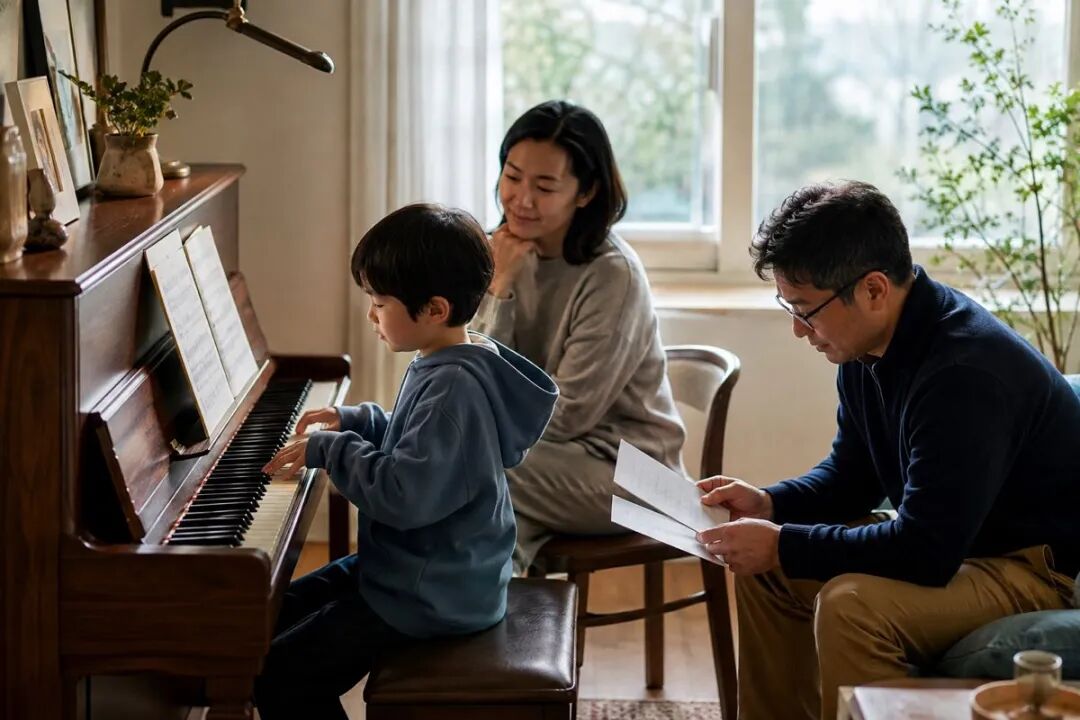
When progress on a piece has been stalled for a long time, it is worth first considering another explanation: perhaps the child has been putting in repeated effort using the same ineffective approach, rather than failing to try hard enough.
When your child gets stuck on a piece, have they tried changing how they practice? Share your experience in the comments.