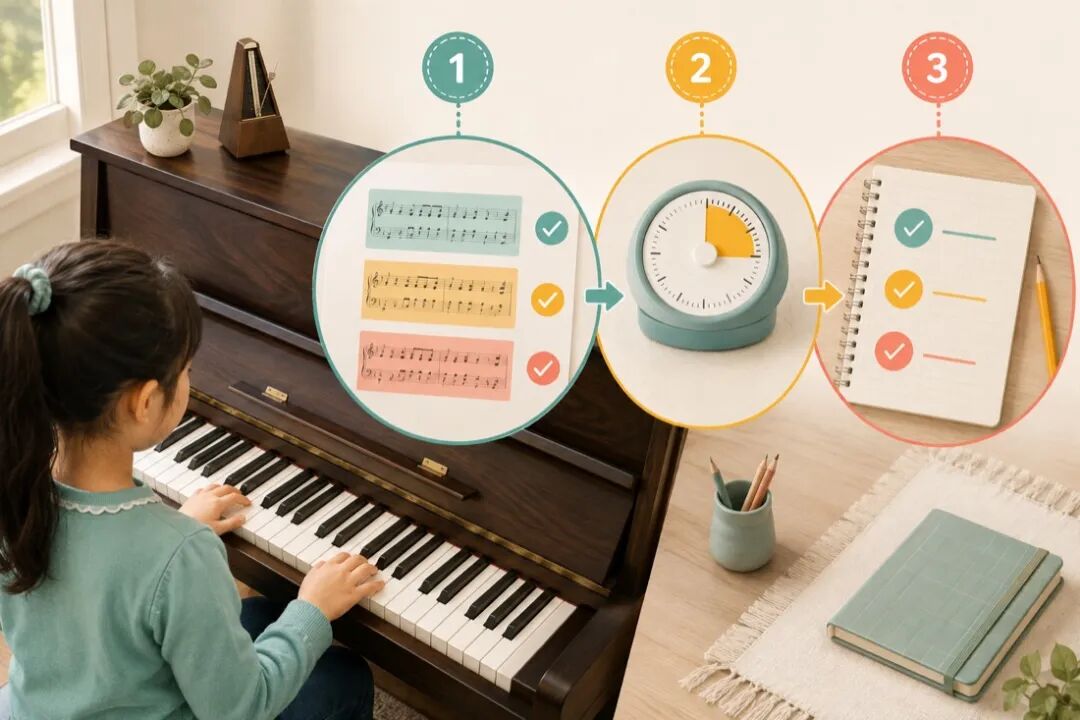
In China, Wonder Piano is an AI piano practice companion app that turns practice into a game of completing levels. Through small tasks, immediate feedback, and rewards, it aims to make children more willing to get started and reduce parents’ nagging and arguments.
Remember this about piano practice once school starts: the first step is to decide which small task to finish tonight, rather than starting a timer.
Once school starts, children’s time is suddenly divided into small chunks: homework, dinner, a bath, reading—and only then piano.
Some children have just twenty minutes left by the time they sit at the piano. Others have not even started when they ask, “Do I have to practice for the full thirty minutes today?”
At that point, starting the timer is the easiest thing for a parent to do. If time is short, they urge their child to play faster; if the playing is not going smoothly, they add a few more minutes.
But once school starts, the first question should be how much energy your child has left today, and which small task is most worth completing, rather than “How long must you practice today?“
01 “30 Minutes Every Day” Is Not a Standard That Suits Every Child
Common practice advice online gives figures such as 10, 30, or 45 minutes. These can serve as rough guidelines, but they should not become rigid daily targets.
The same 30 minutes can mean very different things. A child who still feels alert after school may be able to practice a passage from a new score slowly. A child who has just finished homework and has tired eyes may struggle to stay focused even through three consecutive repetitions.
A duration tells us only how long a child sat at the piano. It does not tell us whether they listened to the rhythm, found a wrong note, or played a measure more steadily than yesterday.
If a child works every day to fill the allotted time but cannot say what they resolved, practice can easily become a task spent waiting for the end.
02 When Time Gets Shorter, Tasks Need to Get Smaller Too
Once school starts, what usually needs adjusting is the size of the task, rather than the child’s goal.
Stop assigning a piece simply as “play it once from beginning to end.” Instead, write down a finish line for tonight’s practice that your child can understand:
- Work only on the rhythm in measures 8–12.
- Play only the left-hand accompaniment steadily twice.
- Practice just one fingering transition slowly until it no longer causes a pause.
These tasks are small, but they are easier to start than “practice seriously for half an hour.” They also make it easier to tell at the end whether the task is complete.
Children need a visible finish line more than a longer practice track. The clearer the finish line, the less parents need to stand beside them giving constant reminders, and the easier it is for children to bring their attention back to the keys.
03 Before Deciding How Long to Practice Today, Check How Much Energy Your Child Has Left
Once school starts, you can use three types of practice session, without forcing the same duration every day.
Only 10 minutes left: complete one small action
Choose one very small sticking point: getting a rhythm right, playing four measures through, or checking a spot the teacher pointed out in today’s lesson. Stop once it is done. Do not drag through the whole piece again just to make it “look like they practiced.”
About 20 minutes: one focus and one review
Spend the first 15 minutes working on one main issue. In the last 5 minutes, return to the beginning of that short passage and listen to whether the problem has eased. This “review” is not a test; it helps children understand whether the practice they just did was useful.
Still have 30–40 minutes: add another layer of musical work
Only after the basic problems are resolved will there be energy left to work on continuity, dynamics, and the direction of a phrase. Get the notes right first, then consider how musical the playing sounds; do not reverse the order.
Age-based recommendations can be a reference, but the teacher’s assignments that day, your child’s physical condition, and the next day’s schedule matter more. If a child is already so sleepy that their attention keeps wandering, adding more time will usually not produce better practice.
04 Before Sitting Down, Make It Clear What Counts as Finished
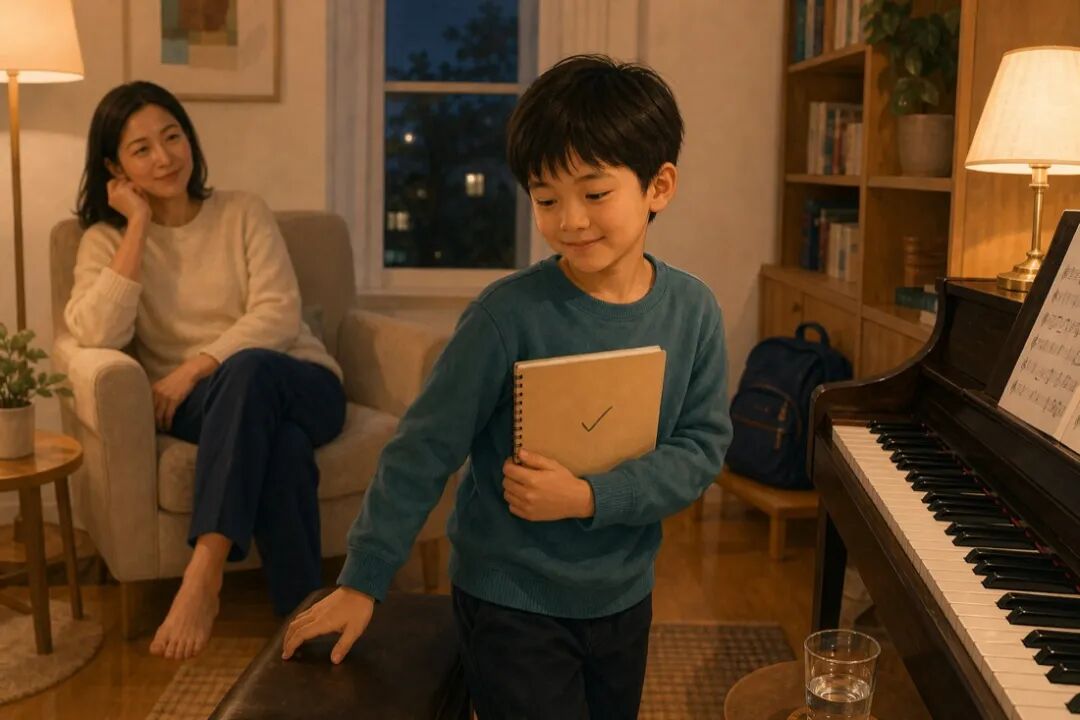
Before your child sits down, you can ask just three questions:
- Which short passage will you practice first today?
- What is the one issue you will listen for in this passage?
- What needs to happen for you to finish and close the piano?
If your child cannot answer, make the task smaller still. For example, replace “get the rhythm right” with “play four measures with your left hand in time with the beat, without stopping in the middle.”
This makes the requirement an action your child can carry out, without lowering the standard. Once one small task is complete, decide whether to continue. There is no need to put the entire evening’s practice load in front of your child at the outset.
Which Step Can the App Help With?
In this China-focused setting, if you simply want to make “where to practice first today” clearer, you can use the Wonder Piano app as a little helper for practice after lessons. Use practice in short sections to narrow the scope, let your child begin with one small task, then return to the full phrase. It cannot replace a teacher’s judgment on hand position, touch, or musical interpretation, but it can reduce the time children spend sitting at the piano without knowing where to begin.
Once school starts, piano practice is not a contest to sit longer than during summer vacation, nor does it mean meeting the same number of minutes every day. If children know what they need to resolve in the limited time available, and actually resolve a little of it, that day’s practice has meaning.
Once school starts, which step is most difficult for your child: getting started, staying at the piano, or knowing what to practice?
Source: Original WeChat article