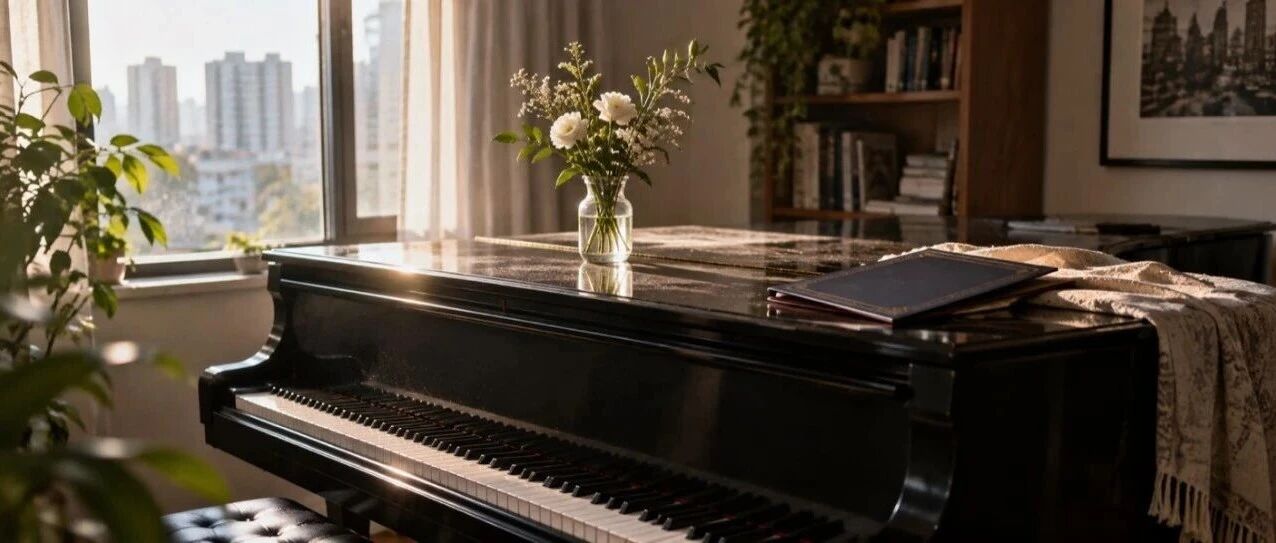
At 8:30 in the evening, another argument breaks out in the living room.
The child has played the same measure incorrectly five times. A parent’s patient “Let’s try again” rises an octave into “Are you even looking at the music?” Finally, the music stand is snapped shut. The child’s lower lip trembles, and tears fall. The adult is so frustrated that canceling piano lessons tomorrow suddenly feels tempting.
Whenever practice supervision reaches breaking point, the same thought crosses a parent’s mind: if it is this painful, perhaps my child simply is not cut out for piano?
Yet even pianists who now perform on stages around the world did not find those 88 black and white keys “easy” as children.
Yuja Wang Also Learned by Practicing Again and Again
Many people watch Yuja Wang’s performances today, marvel at her flying fingers, and assume she must have been born to play.
But her childhood also meant day after day on the piano bench.
Wang began piano lessons at around six and is said to have entered Beijing’s Central Conservatory of Music at seven. NPR described the extensive, intensive training she received as a child.
Translator’s note: the age of seven given here should not be confused with a settled date of formal conservatory attendance. In a 2011 interview with the Houston Chronicle, Wang said she attended from ages nine to fourteen; her account of studying with Ling Yuan from seven to fourteen is a separate statement.
Her teacher was Ling Yuan, a piano educator at the Central Conservatory. Wang recalled in an interview: “From seven to fourteen, I was taught by Teacher Ling.”
Seven years, the same teacher, the same piano bench. Fingers that would not move fast enough, notes that were difficult to read fluently, sounds that would not come out as intended: the author’s point is that the obstacles familiar to ordinary young piano students cannot simply be bypassed. They have to be worked through, again and again.

In a 2013 China Business News report about Wang, Ling described her already famous former pupil this way: “That girl still has the same goofy, happy laugh she had as a child.”
What Children Often Fear Is the Adult’s Expression
Now return to that evening at 8:30.
A child who keeps making mistakes already has plenty to think about: reading the score, counting beats, working out fingering, and coordinating two hands that are not yet cooperating. When the adult beside them sighs or raises their voice, the child’s attention shifts from “How do I play this note?” to “Mom is angry.”
The more anxious the child becomes, the harder playing gets. The worse the playing, the more impatient the adult becomes. In many families, practice battles build through exactly this cycle.
Struggling with a passage does not mean a child is unintelligent or careless. They may simply need more repetitions and a method broken down into smaller steps.
When difficulty no longer comes with a scolding, a child can gradually understand that getting stuck is an ordinary part of practice.
Three Steps to Help the Adult Stay Calm First
To turn each evening’s practice ordeal into a calmer routine, parents can begin by taking a small mental step back.
1. Accept that today’s playing may be worse than yesterday’s. A piece that went smoothly yesterday may be halting again after a night’s sleep. That is common in practice. Progress is not a straight line. Give your child room to revisit things, and you may feel as though your own blood pressure has dropped by half.
2. Replace “Why is it still wrong?” with “Let’s work on just these four notes.” An entire page of unfamiliar music can look daunting to anyone. Cover the rest with a strip of paper and say: “For these ten minutes tonight, we’re setting everything else aside. Let’s just make these four notes sound good.” A smaller goal brings back a sense of control.
3. If you really cannot contain your frustration, let a tool take your place beside the piano. One of the hardest stages for parents is starting a new piece and correcting mistakes note by note. The adult watches the score, hunting for wrong notes; the child feels watched. Both end up drained.
A tool that does not lose its temper can help with this step. In the China-market practice setting described on November 1, 2026, Wonder Piano breaks a piece into small levels. Children play on their real piano at home, and the app listens to the sound, marking wrong notes as they play. Clearing a sub-level lights up Magic Stars, while progress through a major level earns Magic Stones ranked S, SS, or SSS.
Even if the same note is played incorrectly twenty times, the app will not let out a sigh. When your child earns an SS Magic Stone and turns to look at you, your part is to give them a sincere round of applause.
Gradually, Facing Difficulty Becomes a Habit
In 2013, China Business News reported that Wang’s schedule that year included more than 140 concerts. In that interview, she said: “I’ve studied music since childhood. Music and my life are inseparable.”
In the author’s view, no child is born loving repetition. Turning difficulty into a habit means giving a child a steady environment whenever they get stuck, one that says: it is all right. Make it smaller, take it more slowly, and let’s try again.
Supporting piano practice asks adults to develop patience with slow progress. A child’s playing can grow gradually alongside it.
Wonder Piano is an AI practice companion for piano practice at home. Here, we write about practice methods and the difficulties families encounter when putting those methods into everyday life.