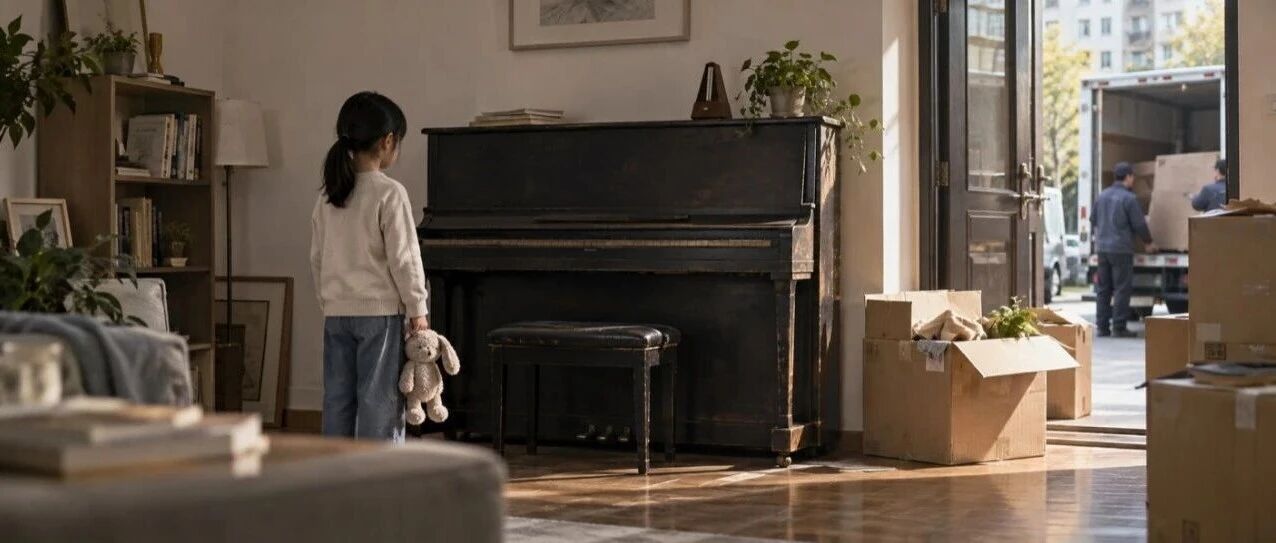
A Nie Er piano that had been used for 33 years, sold for 2,300 yuan: movers from Huolala, a Chinese moving and delivery service, carried it slowly down from the third floor of a building with no elevator. The seller was a father born in the 1980s who had learned piano as a child. According to the account discussed here, he wrote about the sale in August 2025 on his WeChat Official Account, “Seven-Thirty Dad,” and more than 20,000 people read the post.
At the end of his article, he offered parents still wrestling with the decision a stop-loss line: if, for several weeks in a row, a child resists sitting on the piano bench or frowns at the sound of the piano, change the approach sooner. Reduce the practice load, change teachers, try a different instrument, or even take a break for now.
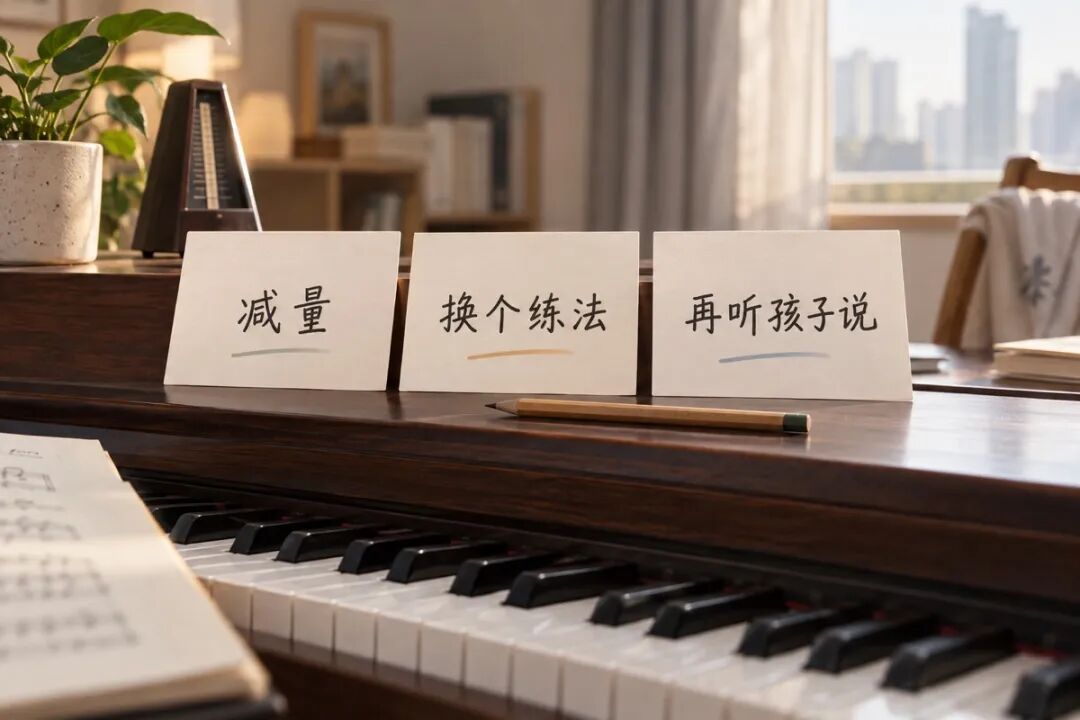
Every family with a child learning piano should consider this line, because parents deciding whether to stop often make two opposite mistakes.
Stopping at the First Tears
A child cries during piano practice. The parent softens and says, “Then let’s stop learning.”
One evening’s tears are often about a particular passage the child cannot get through that day. The next day, they manage it and forget all about the upset. Stopping at that point means abandoning something they could have overcome with a little more persistence.
The stop-loss line is about “several weeks in a row,” not “one evening.”
Gritting Your Teeth and Pushing On
At the other extreme are parents who see stopping as admitting defeat. No matter how much the child resists, they insist on carrying on.
According to the account, the most-liked comment under the father’s article said that learning piano as a child had taken away ease and freedom, but left solid fundamentals, the ability to read music, and the patience to sit still and concentrate. Those are valuable things to retain. But if a child resists every time they sit down for several weeks and is still forced to keep going, all that remains may be dislike.
First, Work Out Whether They No Longer Want to Play or Are Simply Stuck
A child’s resistance can mean two very different things. One is being stuck: they keep struggling with the same piece or passage, and the more they practice, the more frustrated they become. The other is no longer wanting to play: whatever piece you choose, however much you reduce the practice load, they avoid the piano as soon as they get near it.
If you cannot tell which it is, try this for a week: keep daily practice to just ten minutes, and include a piece the child chooses because they want to play it. During those ten minutes, they could complete one small level in the Adventure mode of Wonder Piano’s China version, as described in October 2026, and stop as soon as they clear it, so they know exactly where that evening’s practice ends. If, after a week, they are willing to sit down for their newly chosen piece, they were probably stuck. What needs changing is the practice method: break the difficult passage into smaller parts, or discuss switching pieces with the teacher. If they will not even touch the piece they chose themselves, that is the situation the stop-loss line refers to.

The father also offered an approach for families who have not started lessons yet: try lessons for twelve weeks first. After three months, see whether the child is willing to spend another ten minutes at the piano, then decide whether to continue.
Stopping comes last.
Wonder Piano is an AI practice companion for piano practice at home. Here, we write about practice methods and the difficulties families encounter when putting those methods into use.