This is Wonder Piano. In China, we offer AI-assisted support for piano practice at home, and we also take a harder question seriously: what should families do when children do not want to practice, struggle to engage with practice, and parents do not know what to say? Here, you will find practice methods as well as the difficulties that can arise when families put those methods into action.
As the original article observes, over the years, media outlets outside China, music-review organizations, and independent music publishers have periodically released various lists of the “world’s top ten pianists.” Names such as Lang Lang and Yuja Wang often appear near the top. Yet comparing several lists from different years and organizations can reveal differences of more than ten places for the same pianist. Someone ranked third on one list may not even make the top ten on another.
The article recounts that a parent, noticing that their child’s favorite pianist had dropped in the rankings, came to us and asked: “Does that mean he isn’t playing as well as he used to?”
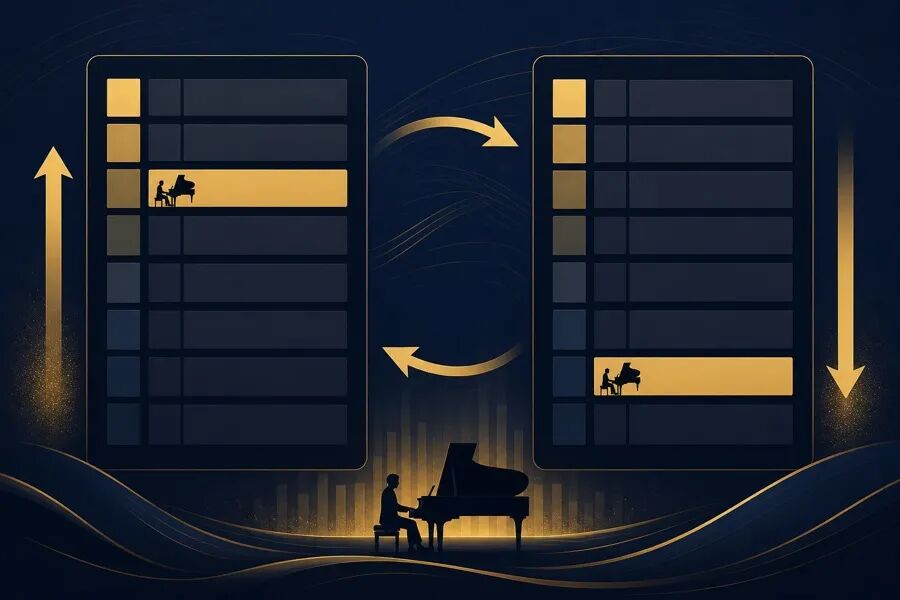
It is a natural question, but the article’s answer may be surprising: fluctuations in rankings have little to do with a pianist’s actual ability. More often, they reflect the preferences of those compiling the list, the topics attracting attention that year, or even changes in who is voting.
Rankings Often Measure Something Other Than “How Well Someone Plays”
Music rankings differ from placings in sports competitions. In a running race, it is clear who crosses the finish line first. But there has never been a single, objective, quantitative standard for deciding “who is the better pianist.” Different lists value entirely different things: some emphasize technical difficulty and demanding repertoire; others prioritize the emotional impact of live performances and stage presence. Still others simply focus on who has received the most news coverage that year, who has just released an album, or who is trending on social media.
That is why the same pianist can appear in very different positions on two lists at the same time. The lists are evaluating different things, even though both present their results as “rankings.”
In the author’s view, what truly reveals a pianist’s ability is never their position on a particular list, but more specific questions: when they play a slow movement, is there enough breathing space between the notes? In demanding, fast passages, does the rhythm remain steady? After playing the same piece for ten or twenty years, has their interpretation changed as their understanding has deepened? These qualities cannot be reduced to a ranking, yet they are precisely what knowledgeable listeners pay attention to.
One Thing Parents Can Do Together with Their Children
If your child likes a particular pianist, instead of worrying about “where they rank this year,” find recordings of that pianist playing the same piece in different years. Play them for your child and ask: “What differences do you hear between these two versions?” Your child may not have the technical vocabulary at first. But if they can hear that “this version is a little slower” or “the dynamics are different here,” they are already beginning to understand music through their ears rather than through rankings.
The author’s point is that this does more to help children understand music than memorizing positions on a list, and its value lasts longer. After all, next year’s rankings will probably shuffle the order again.
Does your child have a favorite pianist? Tell us who it is in the comments. Perhaps we can find recordings from different stages of that pianist’s career and listen together.