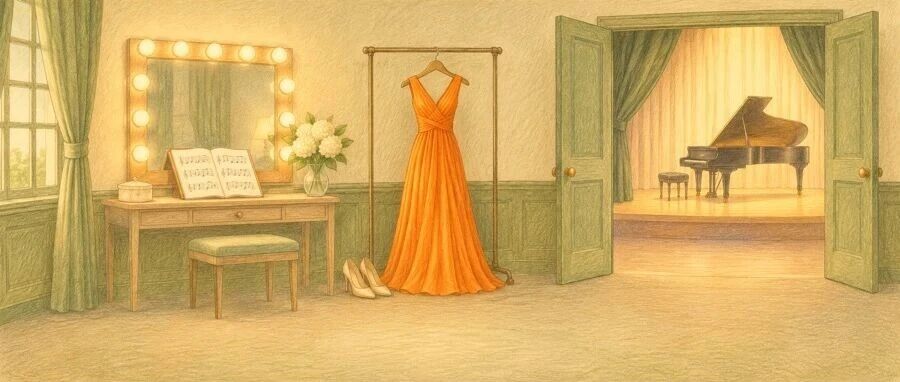
When a child’s hands shake at the piano onstage, or they forget the music as soon as someone is watching at a grade exam or student recital, many families fall back on the same reassurance: “Don’t look at the audience. Be a little braver.” It’s easy to assume that stage confidence is something children are born with and that naturally bold children simply don’t get stage fright. But consider Yuja Wang, one of the classical pianists whose clothes get the most attention. Behind her command of the keyboard under some of the world’s most critical scrutiny is a boundary she’s built over years of training: tune out the chatter and use her own ears to judge her playing.
The sunglasses in Vancouver in 2020: Staying composed by connecting with listeners through music
Ever since Wang rose to prominence, her short skirts, high heels, and brightly colored gowns have drawn criticism from music reviewers. In a 2013 interview with the classical music site GetClassical, the 26-year-old answered plainly: “I am like a chameleon, reacting and adapting to my surroundings.” She said the criticism revealed more about the critics than about her choice of dress. She also said she never read reviews: “once it’s done, it’s done.”
Her February 2020 solo recital in Vancouver, Canada, showed what that composure looked like under pressure. According to Wang’s statement, reprinted in Pianist, she was detained and questioned for more than an hour at Vancouver International Airport on the day of the recital. She found the experience humiliating and deeply upsetting. When she reached the concert hall, her eyes were still red and swollen from crying. She put on sunglasses, went onstage, and played the entire recital. After some listeners took the sunglasses as a sign of disrespect, Wang explained that she had been determined to go ahead. “Everything I do on stage is about connecting with people,” she wrote. Her response illustrates the difference between playing defensively and playing expressively. A child with stage fright might walk onstage thinking, “Which mistakes will they notice?” That worry is about being judged. An experienced performer, even after something deeply upsetting, can sit down at the piano and shift their attention back to sharing the music with the audience.

Why can she skip the reviews? She listens critically to her own recordings
Where does that confidence come from if she never reads reviews? In the same 2013 interview, Wang said she began performing very young and came to know her repertoire by playing it in concert. Later in the interview, she described listening back to a take during a recording session: “I play, then I go listen, I hate it.” She’d hear the recording and think she could play it much better. The two habits help build confidence: performing often from a young age and holding your own playing to clearer, more demanding standards than anyone else does can help you stay steady onstage under scrutiny.
In many households, a child plays the final note and the feedback comes before their hands leave the keys. “You got the second line wrong again.” “Why did you speed up at the end?” If children always look to a parent’s face to find out how they did, they get little practice using their own ears. Then, when they sit down at the piano in front of a row of strangers and can’t look to Mom or Dad for reassurance, the confidence they relied on can vanish.
Let children listen and judge for themselves by giving them a low-pressure stage at home
Start with small performances, such as playing when guests come over or at a class event. Let children make a few choices of their own, from what to wear to how to bow at the end. The most important habit is to play all the way through and then listen back. In Wonder Piano’s China edition, Challenge mode lets children play a piece all the way through on a real piano at home, even if they make mistakes. Afterward, they can review pitch accuracy, rhythm, tempo, and how much of the piece they completed. They can also play back the recording of that performance. Hold off on pointing out errors so children can listen first, as Wang does, and decide for themselves what to work on. Other people will always have opinions. A child’s own confidence grows each time they perform and each time they listen back for themselves.
#Piano #EarlyPianoLearning #KidsLearningPiano #GuidedPianoPractice #PianoFamilies
Wonder Piano makes an AI practice companion for families practicing piano at home. We write about how to practice and the challenges families face when they put those methods to work.