
When schoolwork feels overwhelming and her spirits are low, a 16-year-old girl sits down at the piano by herself and plays a few pieces she likes. She studied piano for five or six years and decided for herself to stop taking lessons at around 15.
Her father wrote about this in June 2026 on the WeChat Official Account “Wai Di Nan Gua.” He said that once you have met people with real talent, you realize that differences in talent can be orders of magnitude apart; none of his three children had the talent to become a pianist. In another article, a mother described her son, who had studied piano for eleven years. His teacher told her plainly that he was not a naturally gifted piano student.
Without that talent, what is the point of learning piano? Read together, these two families’ experiences suggest that what remains is not recorded on a certificate. It comes from three kinds of moments the children experienced during their years of learning, each leaving them with something of its own.
A Place to Return To
The girl at the beginning is one example. The mother also said that when the pressures of middle school were at their heaviest, the piano became her son’s “emotional refuge.”
That refuge does not appear only after lessons stop. During those years of learning, a child sits down at the piano on an upsetting evening, plays a piece they know, and feels a little better. After a few evenings like that, the piano can become a place to return to.
What parents can do is refrain from adding, “You still haven’t practiced your assigned piece,” on an evening when their child comes home in tears. That day, let them play just one piece they already know, then finish there.
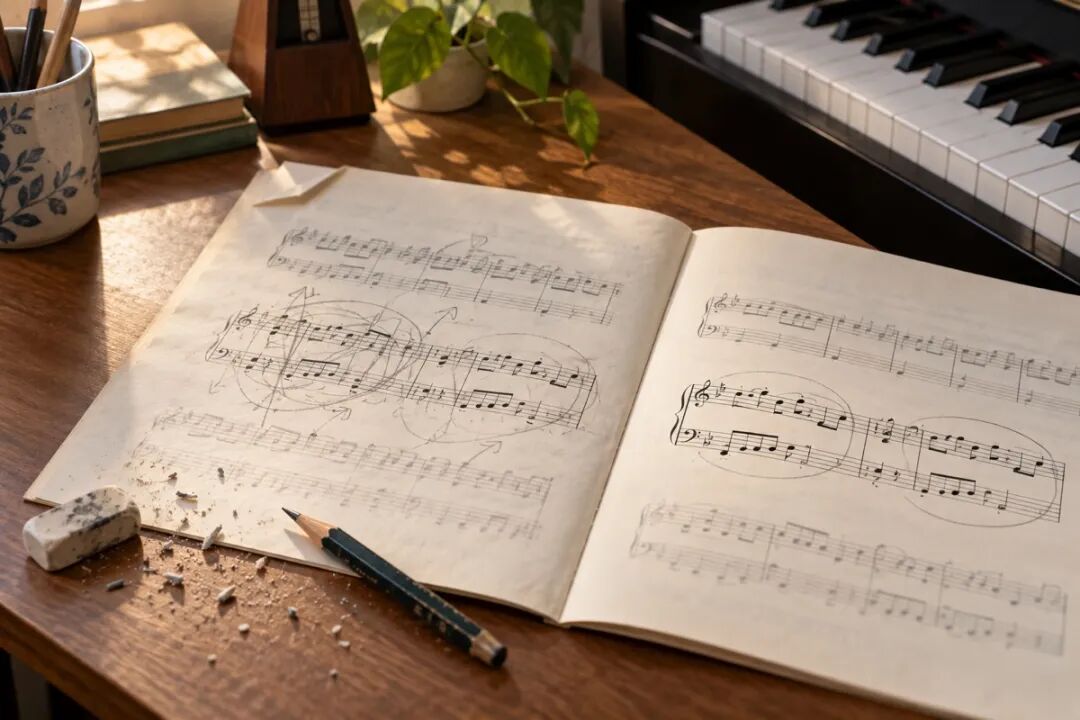
How a Passage They Could Not Play Became One They Could
The father wrote that learning piano also means learning “how to learn”: how to begin, how to repeat something, and how to practice an awkward fingering until the hands can do it on their own.
A child’s first experience of this often comes when a passage they have struggled with for two weeks suddenly flows one evening. The moment is brief; an adult says, “Well done,” and it is over. Try asking one more question: How did you learn to do it? Their answer might be as simple as, “I played the right hand first, then slowed down.” But once they have put it into words, they know where to start the next time something is difficult. What stays with them is a way to break a difficult task into smaller parts and gradually learn to do it.
Children do not have to wait for a difficult piece to have this experience. In the China version of Wonder Piano described in October 2026, Adventure mode broke a piece into small levels, with separate tasks for the right hand, the left hand, and both hands together. A mistake stopped progress at that point; playing correctly let the child move on. Almost every evening, a child can experience a small moment: a level they could not complete a moment ago is now finished. As evenings like these accumulate, they can make it easier for the child to think of isolating those two difficult measures when tackling a challenging piece from their lesson.
Being Needed by Someone, Even Once
After the mother’s son finished the zhongkao, China’s high school entrance examination, she asked in their neighborhood group chat whether anyone needed a piano practice companion. A neighbor replied, and twenty minutes later her son was helping the neighbor’s young daughter practice. After eleven years of learning, piano had become a skill he could use to help someone else.
When children are younger, these moments can be small: playing a piece for Grandma on a video call, or demonstrating a new piece for a younger cousin who has just started piano. Children are much more willing to play for one person than to be called up to perform before a room full of relatives at Lunar New Year.
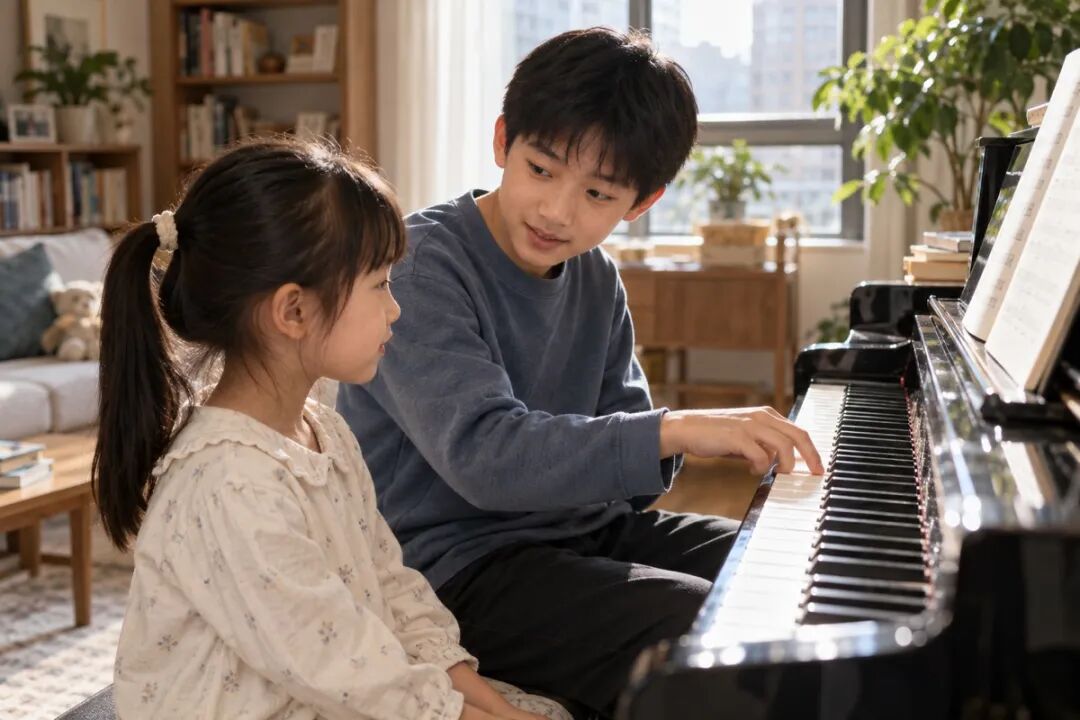
The mother said her son now puts it this way: “The piano is my friend, a friend for life.”
Wonder Piano provides AI-assisted piano practice at home. Here, we write about practice methods and the difficulties families encounter when putting those methods into use.