This is Wonder Piano. In China, we make an AI practice companion for piano practice at home, and we also take a close look at a harder question: what can families do when children do not want to practice, cannot settle into practice, and parents do not know what to say? Here, you will find practice methods, along with the difficulties families can encounter when they try to put those methods into everyday use.
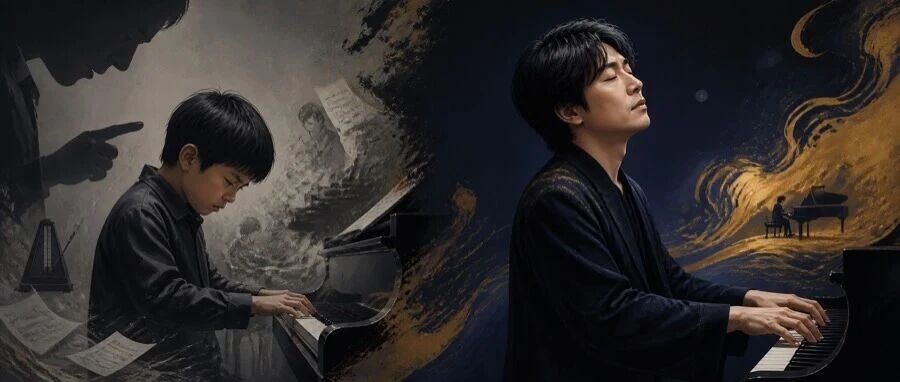
According to the original article’s account of several public interviews, Jay Chou has repeatedly described the same childhood experience: he began learning piano at four, and his mother required him to practice for a full two hours every day. At that age, he could barely sit still. Hearing other children playing outside his window made him feel particularly hard done by, and he even wondered, “Why do I have to learn piano?” His mother would often sit beside him, holding a rattan cane and supervising his practice.
The article recounts that he told this story in interviews more than once, with gratitude rather than complaint. He said he was now grateful for his mother’s persistence back then, and expressed that feeling in songs such as “Listen to Mom” (《听妈妈的话》).
This story is often offered as evidence that “forcing children to practice piano is the right thing to do.” But stopping there misses a question that deserves more thought.
The Gratitude Was Expressed Only Decades Later
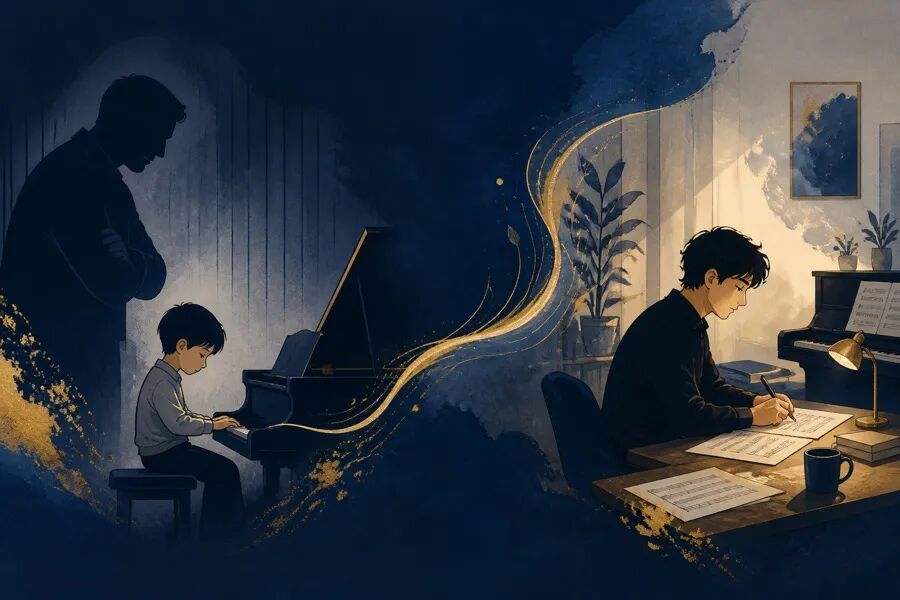
As the article tells it, by the time Jay Chou said he was grateful for his mother’s persistence, he was already a well-known musician, and the cane and the hardships of practice had become distant memories. During those years from age four into his teens, his feelings were very different: he felt unfairly treated, could not understand why he had to practice, and would rather have gone outside to play. Both sets of feelings were real; they simply belonged to different points in time.
This means that when children resist practice in the present, parents cannot get immediate reassurance from them in the form of “Thank you for making me do this.” If such gratitude ever comes, it will be many years later. At the moment they make a decision, parents have to face their child’s very real resistance, without any immediate proof that “this is the right thing to do.” That is the real difficulty in stories like this. It is also why hearing that “Jay Chou is grateful to his mother” does not resolve the question many parents still have: will my persistence now really lead to gratitude in the future?
This Story Is Not Simple Proof That Forcing a Child to Practice Always Works
One point needs to be clear: Jay Chou’s later success and gratitude do not retrospectively prove that forcing children to practice piano is a universally effective method. His family circumstances, his musical talent, and his later career choices were all specific, personal factors. They do not mean that the same persistence will produce the same result for another child. What this story offers is not a method to copy, but a perspective: a child’s resistance now and gratitude years later may not be contradictory. They simply exist at two different points in time.
Perhaps what parents can really take from this story is not the black-and-white choice of “Should I force my child to practice or not?” It is a more practical reminder: while children are still too young to give feedback on the long-term impact of a parent’s decisions, parents need to base their judgment on their own observations of how the child is doing. They cannot wait for a “thank you” that may come decades later to establish whether today’s decisions are right.
Is your child currently resisting piano practice, or have they reached the stage where they sit down to practice on their own? Share the specific changes you have noticed in the comments.