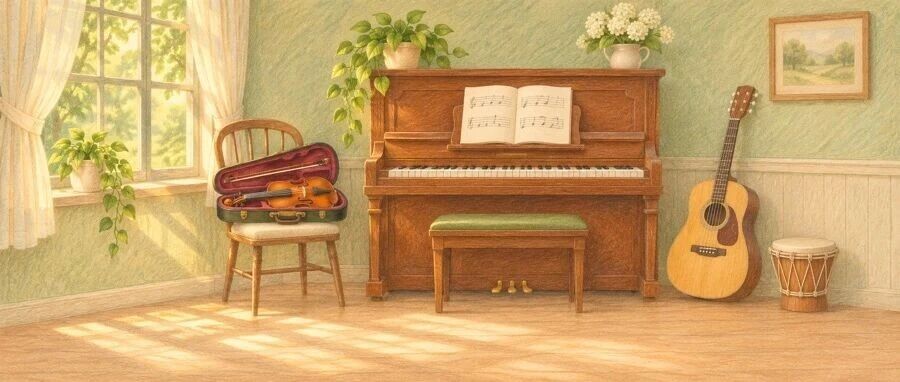
When parents hear a star recall how closely their mother supervised piano practice, a common reaction is, “Look at Jay Chou. Even he had to be made to practice. You have to be strict if you want your child to learn piano.” It’s easy to assume that the people who go on to shine onstage got there because adults kept them under pressure as children. Jay Chou and Henry Lau (known as Henry) both had mothers who introduced them to the piano at around three or four, according to early accounts. Their later recollections and their development as musicians point to two skills they built during those years at the piano: hearing how musical parts fit together and learning to make music beyond the written score. The author sees those two skills as the lasting gains from their years of practice.
What mattered more than the “stick” for Jay Chou: the piano’s distinctive foundation in two-handed harmony and musical structure
According to reports, Chou began learning piano at age three. On the talk show A Date with Luyu, he said he had been made to learn as a child and recalled his mother standing behind him while he practiced. Years later, he made the remark so many parents have quoted: “If I have a solid musical foundation, I have that stick to thank for it.” The stick is the part people remember. The heart of the remark is “musical foundation.”
Translator’s note: Reports put Chou’s starting age at three. In a 2023 interview with L’Officiel Hong Kong, Chou recalled that his mother had him start classical piano at four.
Why can classical piano training give a musician an advantage in songwriting and arranging over learning an instrument that plays one melodic line at a time? The piano is one of the few instruments that asks beginners to think in several voices across two hands. The right hand can shape the melody while the left connects chords and provides a rhythmic bass line. Ten fingers can do the work of a miniature band. The author credits the ear for harmony, quick score reading, and finger control that Chou developed day after day on the piano bench for his ability to work classical chord progressions and touches of counterpoint into pop songs.
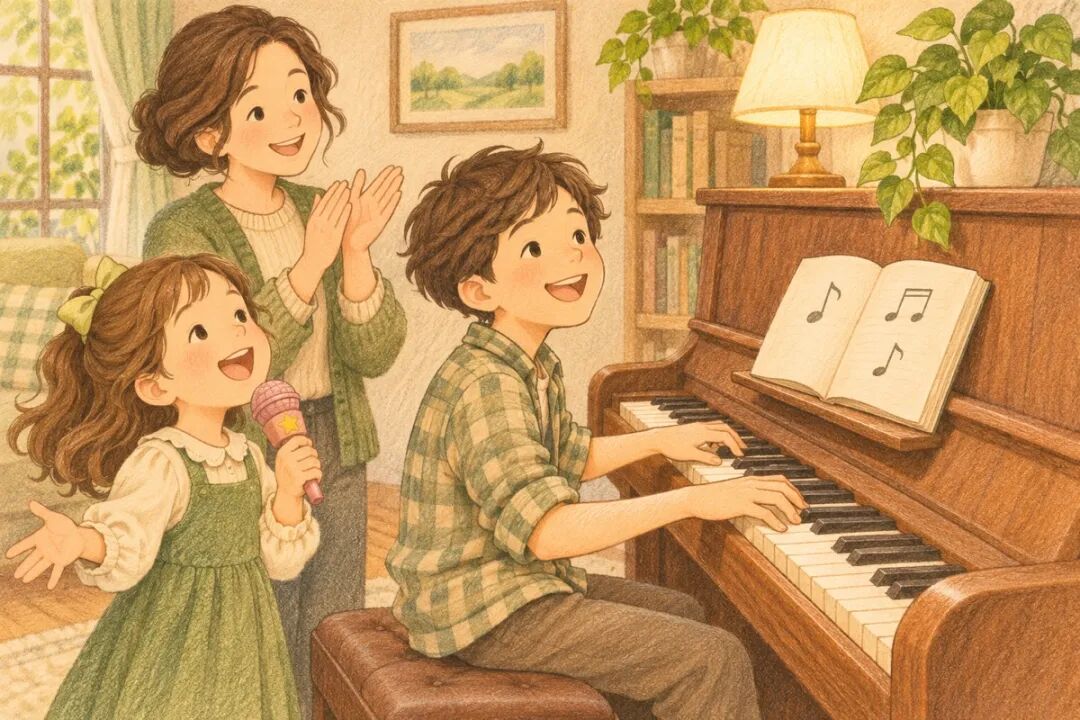
Henry Lau’s example: drilling exam pieces is like memorizing a text, while using the piano is like speaking
Chou’s story shows how much depth piano training can give a musician. Lau’s experience raises another question: how do some children go from learning piano to picking up a whole roomful of instruments? In an interview with The Laterals, Lau recalled that his mother taught him piano at about four and that he began violin lessons at five. Biographical accounts report that he reached Level 10 in both instruments at Canada’s Royal Conservatory of Music, won a regional gold medal in violin, and was accepted into both music education and violin performance at the University of Toronto. He can switch between piano, violin, guitar, and drums onstage. His path illustrates how the reading skills, musical ear, and sense of harmony he developed at the piano could carry over to other instruments. He also learned early to use instruments for accompaniment and improvisation.
Translator’s note: In a 2023 interview with allkpop, Lau put his start in music, including violin and piano, at about five or six.
Many children take piano lessons for three or four years and pass Level 5 or 6 exams, then find themselves unable to play even a note when the score is taken away and they’re asked to use a few simple chords to accompany their family singing. Playing exam pieces mechanically from the score is like learning a language by memorizing the textbook. Give children an early chance to use the chords they know to accompany a familiar song or make up a couple of melodic phrases. Using the piano this way at home helps them hold on to what they’ve learned after the exam.
From two hours under the threat of the “stick” on weekends to small daily steps with visible progress
Taken together, the two childhood stories show where families can go wrong. Treating the stick as a teaching method can put children off music before they’ve had time to build a foundation. That foundation grows in small, steady steps, with a little over ten minutes of practice each day. Once children can read music independently on their first instrument, they can branch out into new interests. In the November 2026 account of Wonder Piano’s China edition, Magic Challenge broke a piece into short practice levels. The child played on a real piano at home and the app listened. If the child played a wrong note, the score waited at that note until they played it correctly. Completing the required repetitions or earning a perfect score lit up a Magic Star. That gave children a way to finish the day’s small practice task without an adult standing behind them calling out mistakes. Looking back as adults, these musicians value the skills all those hours of practice left them with.
#Piano #BeginnerPiano #KidsLearningPiano #PianoPracticeSupport #PianoFamilies
Wonder Piano makes an AI-powered practice companion for families who practice piano at home. We write about how to practice and the challenges families face when they put those methods into practice.