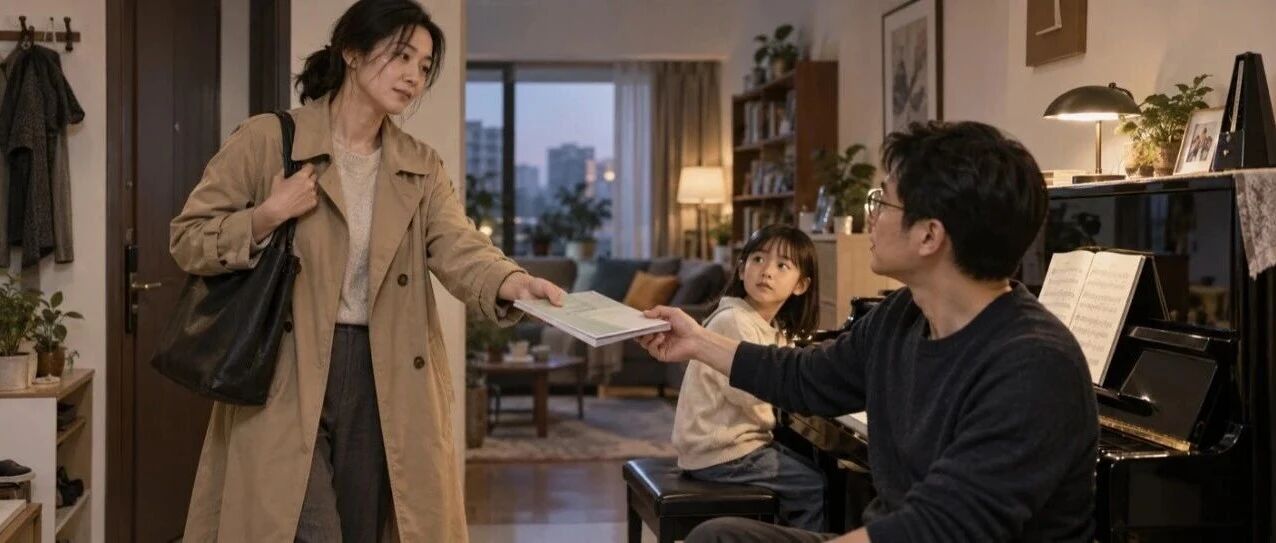
At eight in the evening, the scene is much the same in many homes where children learn piano. Mom sits beside the piano bench, commenting after every phrase the child plays; Dad is at the other end of the living room, occasionally glancing over. Only when their voices grow louder does he walk over and say, “Shall I take over?”
In May 2026, Music Weekly (音乐周报) published an article by piano teacher Yu Qianru. In her lessons, she observed that mothers were usually the ones accompanying children as they learned piano, yet fathers were often the ones who asked questions that went straight to the heart of the issue. When a mother’s high expectations led to conflict with her child, the father could help ease the tension between them.
How Dad Joining In Can Mean Fewer Arguments
It is not that Dad is better at sitting through practice. The person newly taking a seat does not carry the frustration built up over the previous few evenings. Mom has already heard the child get stuck in the same spot for five days running. By the sixth day, her patience is exhausted. Dad is hearing it for the first time, so his first question is, “What’s happening here?”
There is another factor. When one person sits through practice every day, it is easy for support to turn into watching for mistakes, with a comment following every wrong note. A change of person naturally changes the rhythm of the session, giving the child room to breathe.
One Parent Takes the Lead; the Other Steps In
Yu Qianru’s suggestion is for one parent to take the lead in supporting practice and communicating with the teacher, while the other joins in at suitable moments.
At home, the roles can be divided like this. The lead parent handles the daily routine: sitting beside the child each day and checking in with the teacher once a week about how that week’s practice has gone. The other parent steps in at a few specific times: on evenings when the lead parent is clearly tired, when an argument is about to break out, and at the weekend to hear the child play all the way through.
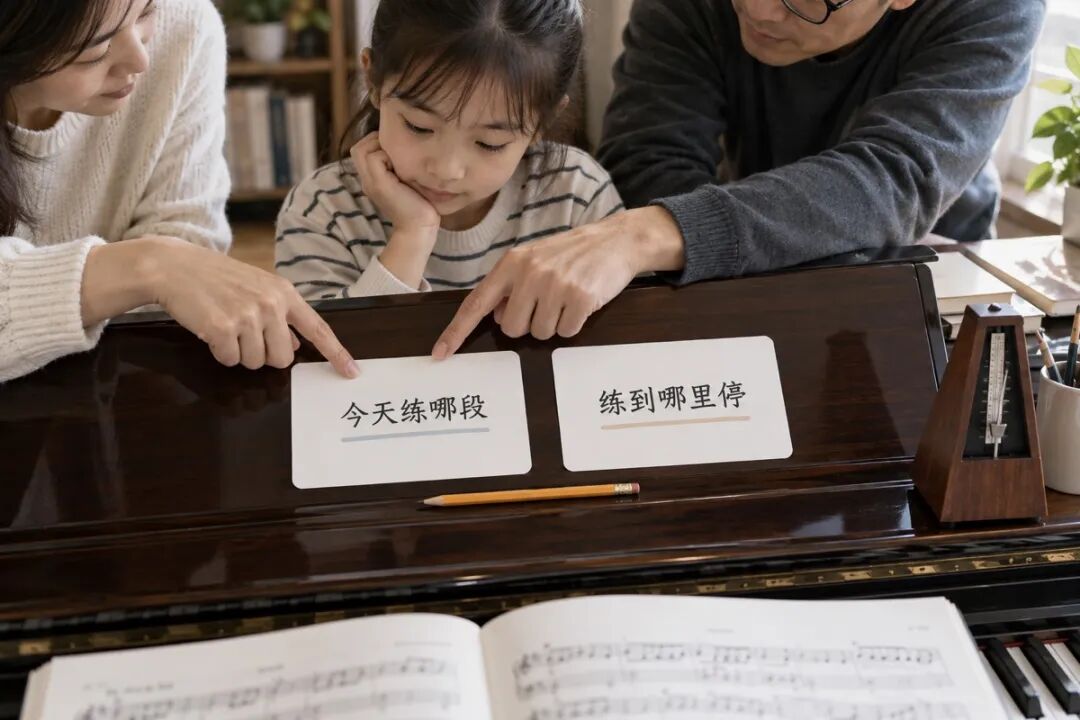
When the other parent takes a seat, the first question should not be “How is practice going?” but “Which passage are you practicing today?” Change the person, not the rules. The lead parent has decided which passage to practice each day and what counts as finishing. The parent stepping in follows that plan, without adding another repetition on the spot or introducing a different set of instructions.
The parent stepping in often knows little about piano, and that need not be an obstacle. In the China-market app described on October 1, 2026, Wonder Piano can help with wrong notes: the child practices in Adventure mode, and when a note is played incorrectly, the score stops advancing and highlights that note, moving on only once it is played correctly. The parent stepping in does not need to work out what went wrong, but can simply check whether the child has passed that evening’s level. With the person beside the child waiting for them to pass rather than pointing out mistakes, there is one less reason for an argument that evening.
When Both Parents Give Instructions, the Child Has the Hardest Time
The biggest problem is both parents giving instructions at once. Mom says to slow down; Dad says to play it again. Mom says this line does not need to be played today; Dad asks to hear it from the beginning. The child has to follow two sets of instructions in one evening and eventually stops listening to either.
So it is enough for the lead parent to check in with the other parent once a week: what the teacher said that week, where the child is getting stuck, and which passage to practice next week.
During China’s National Day holiday in October 2026, if one person still sits through every practice session from start to finish, try switching for one evening. Have the other parent take a seat. Keep the rules the same; change only the person.

Wonder Piano provides AI-assisted support for piano practice at home. Here, we write about practice methods and the difficulties families encounter when putting those methods into action.