
When Fu Cong shirked piano practice as a child, Fu Lei’s response was to lock the piano.
In his account of the father and son, the writer Ye Yonglie recorded Fu Cong’s description of his father: “When Father lost his temper, it was like fierce winds and driving rain, like lightning and thunder.”
Yet before his son’s most important competition, this same father wrote something quite different.
In 1955, Fu Cong competed in the Fifth International Chopin Piano Competition in Warsaw. Before the competition, Fu Lei advised him in a letter: “Do not attach too much importance to the ‘competition.’ Try to put gains, losses, success, and failure out of your mind. Seek only to do everything you can, with a clear conscience.”
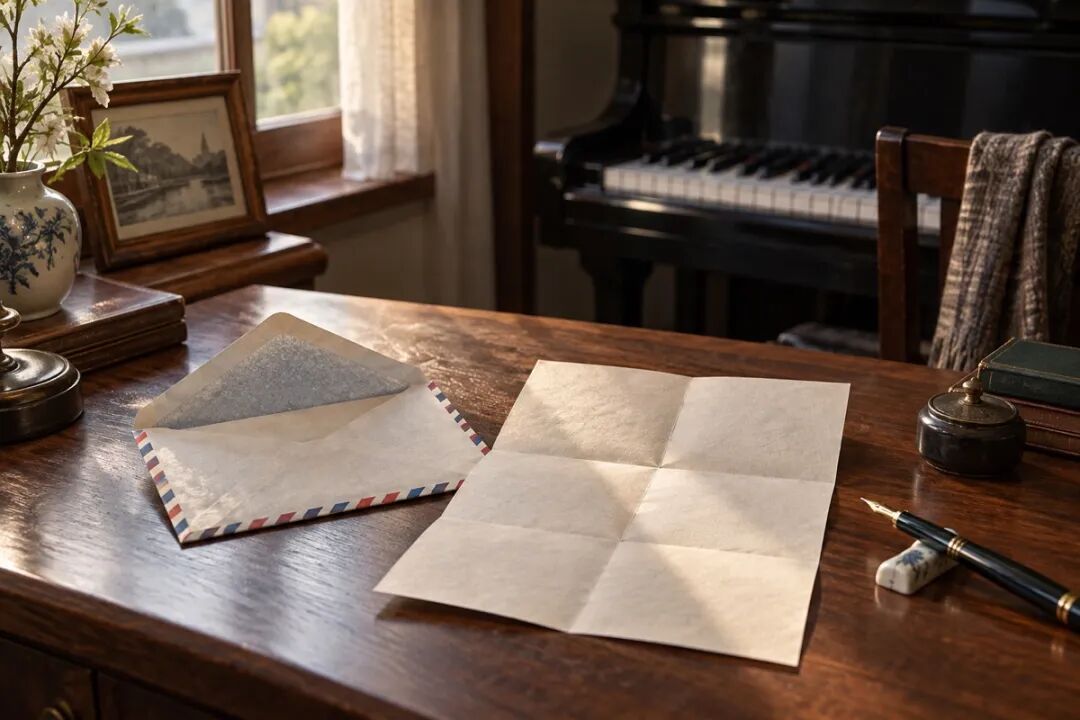
That year, Fu Cong won third prize and the prize for the best performance of mazurkas.
Did the Father Who Locked the Piano Change Later?
It would be inaccurate to say that Fu Lei simply became gentler.
Accounts of Fu Cong’s practice describe him returning to Shanghai in 1951 and practicing eight hours a day even in the fierce summer heat, without stopping when his clothes became soaked with sweat. After arriving in Poland, he wrote home: “I practice more than eight hours every day; each of them practices no more than five.” Some of that determination had been instilled by Fu Lei’s demands from childhood. As late as 1965, Fu Lei was still writing in his family letters: “Loving children is certainly important; developing discipline is equally important.”
Fu Lei never relaxed his expectations for practice. What changed was what he said, and when he said it.
In everyday life, he expected discipline: sitting down to practice every day and doing justice to the instrument. When a competition brought the moment of judgment closer, however, he put the outcome second, asking only that his son do everything within his power. In a 1954 letter, he said he wanted “an artist with both moral integrity and artistic accomplishment, and an outstanding character.” There was no ranking in that sentence.
What This Means for Families Today
For most children today, the next event will not be a competition in Warsaw. But each year brings graded music exams, competitions, and school recitals. Many families do the opposite of Fu Lei: they set few expectations day to day, leaving practice to the child’s mood, then become more anxious than the child as an exam approaches, asking every day, “Will you pass?”
There are at least three things parents can take from this episode in the Fu family’s story.
Everyday expectations can be firm, but the emphasis should be on “sitting down to practice every day,” rather than “putting in a certain number of hours every day.” Fu Cong’s eight-hour days belonged to someone pursuing a professional career. For an ordinary child, sitting down consistently for twenty or thirty minutes a day is discipline in itself.
As an exam approaches, ease back on what you say. In the week or two beforehand, perhaps the most useful message is the one Fu Lei offered: doing everything you can is enough. Children already know an exam is coming. They do not need an extra burden of anxiety from their parents.
The third lesson lies in the locked piano itself. Fu Lei had to be both a father and the person who watched his son practice and became angry when he caught him slacking. When both roles fall to one person, it becomes difficult for father and son to speak gently to each other.
Parents today can hand over part of that work. For example, the China-market version of Wonder Piano was described on October 14, 2026 as a way for children to practice daily before an exam, one level at a time: a short passage forms a level, and when a wrong note is played, progress through the score pauses and the note is marked. Progress resumes once it is played correctly. The screen shows what still needs correcting, so a parent does not have to stand beside the child and pick out every wrong note. Parents can use the space this creates for something else: before their child sits down on the bench outside the exam room, they can say, “Just do your best.”
In this account, Fu Cong went on to become a pianist and maintained the habit of daily practice throughout his life. He also remembered the locked piano—and his father’s words, “Try to put gains, losses, success, and failure out of your mind”—for the rest of his life.
Wonder Piano provides AI practice support for piano practice at home. Here, we write about practice methods and the difficulties families face when putting those methods into use.