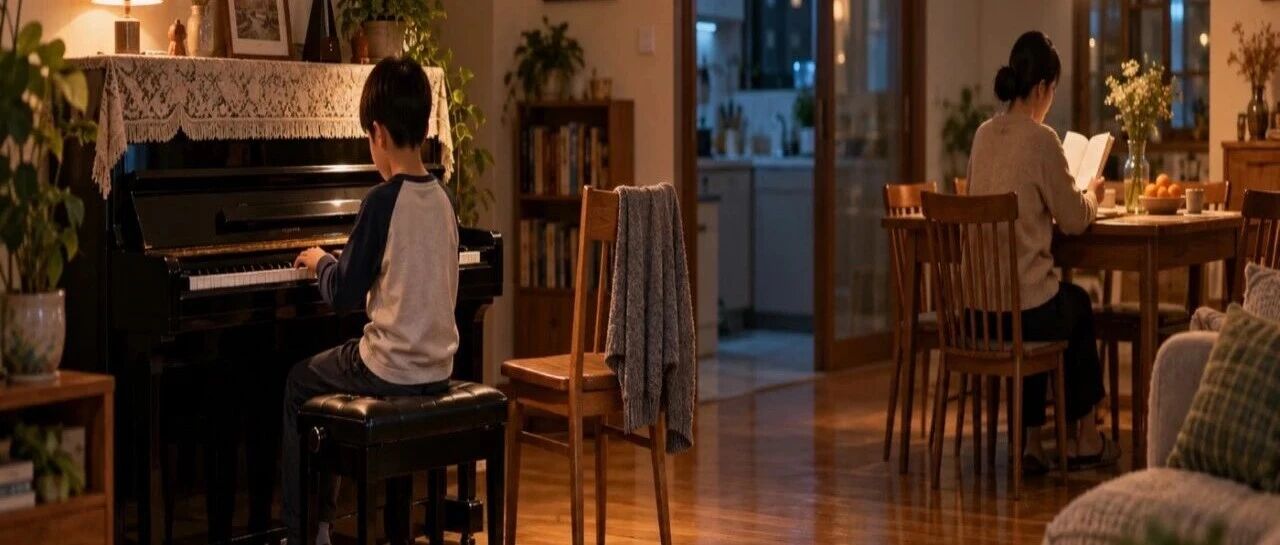
When her older son was learning piano, she supervised his practice for six or seven years. With her younger son, she has barely done so at all.
One mother, two children learning piano.
She goes by the screen name Wenxin (雯訫). In October 2025, she published a long post on Xiaohuasheng, a Chinese parenting community, about her older son’s 11 years of learning piano. In the comments, another parent asked how she actually supervised everyday practice. Her answer was candid: supervising practice is hard work. It takes mental effort, and it takes time.
According to her account, her older son started lessons at five. During those early years, she watched him practice the assignments his teacher set and made sure he worked on the problems the teacher had pointed out in lessons. It was not a smooth journey: they changed piano teachers several times. Some shouted at him, and he would tense up as soon as a lesson began. Both parents considered giving up.
It was not until sixth grade that he began attending piano lessons and practicing on his own. She switched to checking in with his teacher once every month or two. Later, she largely stopped asking about it.
From age five to sixth grade: six or seven years.
And her younger son? She set fewer demands, and his teacher was less strict too. He practices on his own for around 40 minutes a day, without anyone sitting beside him.
During Those Years of Slow Progress Toward Independence, She Held On to Three Responsibilities
Taking a long time to let go is not just a matter of a child’s age. The difference lies in how much the parent keeps in their own hands.
What we call “supervising practice” actually involves three responsibilities:
Listening: Who decides whether the playing is correct?
Passing on feedback: Who brings the teacher’s comments home, and who makes sure the problems are addressed?
Managing practice: Who decides whether to practice today, for how long, and which passage to tackle first?
In her older son’s early years, his mother held all three responsibilities. From the very beginning, she set a rule: 45 minutes to an hour of practice every day. Later, passing on feedback and managing practice were handed over one after the other. With her younger son, she held less tightly to managing practice from the start.
Letting go is not about removing the chair beside the piano. It is about handing listening, passing on feedback, and managing practice over to the child, one at a time.
Hand Over the Three Responsibilities in This Order
Start with managing practice. You can hand that over tonight.
For example, at 7:30 p.m., before your child sits down, let them say for themselves: “Tonight, I’ll practice the second line first.” At the end, ask just one question: “Have you got the second line right?” Even if their choice was not ideal, resist changing it immediately. Let them run into a difficulty once or twice and learn from it.
Next, hand over passing on feedback. You can try this in second or third grade.
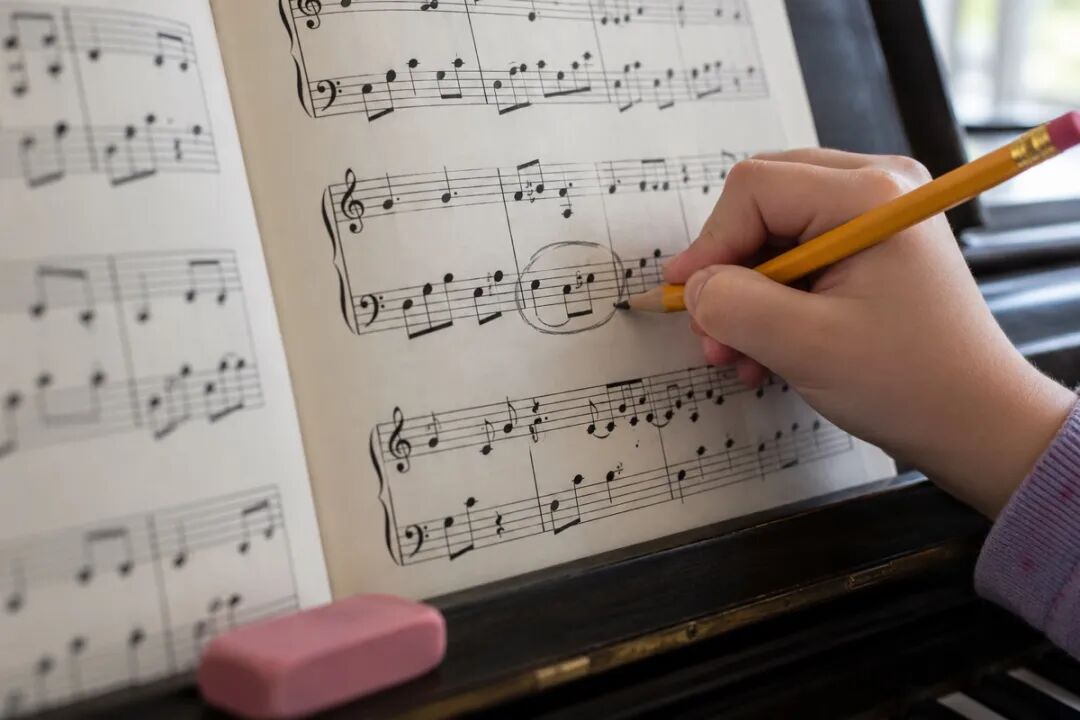
On the way home from a lesson, instead of repeating what the teacher said, ask: “Where did your teacher stop you today?” Your child might need a long time to think before saying, “Bar 8, left hand.” At home, have them circle it on the score in pencil. If they cannot remember, that is all right too. Next lesson, they will have a reason to listen more closely.
Hand over listening last. It is the hardest part.
Children often cannot hear their own mistakes. Parents who do not play piano may not hear them either. Parents who do play may start pointing out errors as soon as they speak, and their very presence beside the piano can feel like pressure.
For this step, a helper can be useful. Wonder Piano does not judge whether a child’s playing sounds good or whether their hand position is correct; those are matters for the piano teacher when reviewing the child’s playing in a lesson. What it does is make problems such as wrong notes, missed notes, and unsteady rhythm visible. Children can play through a complete performance on their own in Challenge mode, then see results for pitch accuracy, rhythm, tempo, and completeness. On the detailed results page, they can see which notes were marked correct or incorrect and replay the recording of that performance.
The parent’s role changes from “sitting beside the piano and listening” to “spending two minutes looking at the results together afterward.” Whatever is flagged becomes the focus of the next attempt.
After reviewing the results a few times, your child might point at the screen before you say anything: “I rushed these two notes again.”
At that moment, listening has become their responsibility too.
In These Situations, Sit Beside Them Again for a While
During the first week or two of a new piece, when reading the score is still uncertain; in the final stretch before a graded exam or competition; or when your child gets distracted as soon as they sit down and keeps playing only the few bars they already know. Sitting beside them again for a while in these situations does not mean letting go has failed.
There is another situation to take to the teacher: your child has been practicing independently for a long time, but the teacher keeps pointing out the same problem at each lesson. More often than not, the issue is not that you stepped back too soon. The practice method needs adjusting. Ask the teacher first.
When Wenxin’s younger son practices for those 40 minutes each day, no one sits beside him. It is not that someone removed the chair one day. His parents simply held on to fewer responsibilities from the beginning.
Wonder Piano provides AI-assisted piano practice at home. Here, we write about practice methods and the difficulties families encounter when putting them into everyday use.