
If you have a child who takes piano lessons, you’ve probably seen this before.
They wipe away tears, sniffle their way through the piece, and keep muttering, “I can’t do it.” And somehow, that turns out to be their most accurate play-through of the day.
You don’t know whether to laugh or cry. How come they couldn’t play it that well before the tears?
Here are some of the most familiar moments in families with young piano students. See how many you recognize and what your child might be trying to tell you in each one.
01 Playing Most Accurately Through Tears
What’s behind it: When children cry, they often stop rushing to get through the piece. Their fingers naturally slow down, and their attention shifts back to the few notes in front of them. Playing more slowly and focusing on those notes can help them play more accurately.
How you can respond: Once your child has calmed down, resist the urge to say, “See? You can play it well even when you’re crying.” Try asking, “You played that one slowly. Did it feel easier than usual?” Let them discover for themselves that slowing down a little can help.
02 The Pre-Practice Ritual
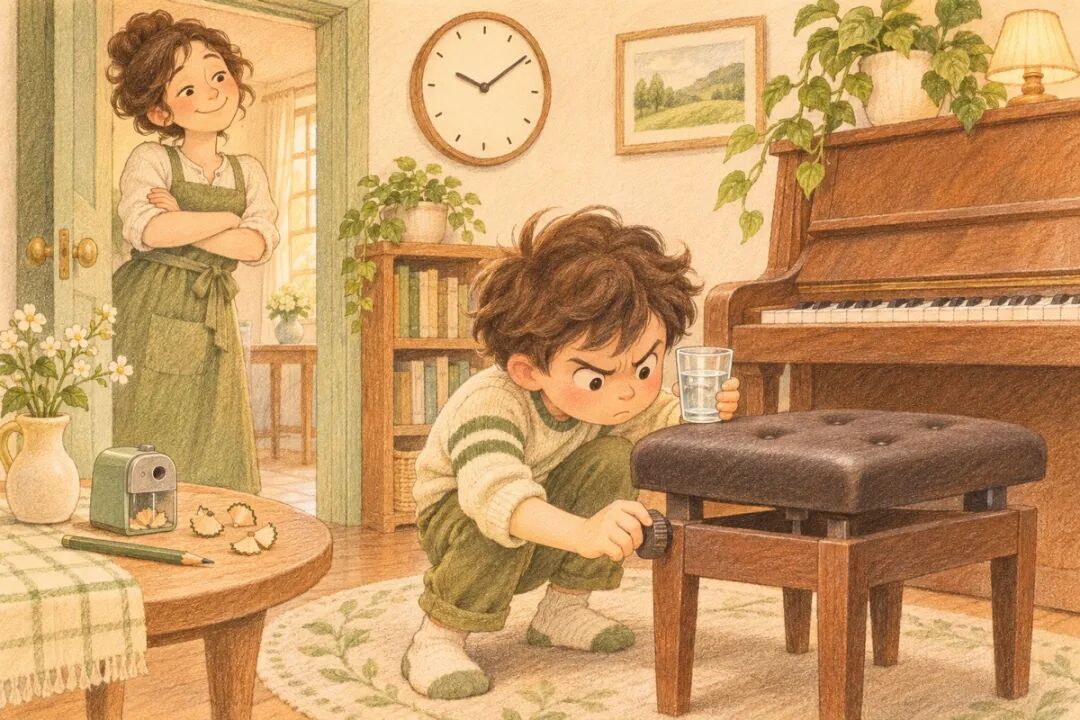
Have a sip of water. Go to the bathroom. Sharpen a pencil. Find an eraser. Raise the piano bench, lower it, then raise it again. Ten minutes later, they still haven’t played a note.
What’s behind it: Often, the child is willing to practice but has no idea where to start. With a whole page of music in front of them, they feel unsure and do all the little things they know how to do first.
How you can respond: Swap “Hurry up and start” for a small, clear first step. Try, “Let’s start with the first line of music today. You can take a break when you’ve played it.” The smaller the first step, the shorter the ritual.
03 It Falls Apart in the Lesson, Then Flows Again at Home
They’ve been playing it smoothly at home. The moment they sit down to play it for their teacher at the next lesson, their fingers seem to have a mind of their own. Back home after the lesson, they play it through without a hitch.
What’s behind it: At home, they know the piano and the room, and they can relax because mistakes are okay. Put them in a different room with someone watching, and nerves can throw off their playing.
How you can respond: Skip “But you could play it at home, couldn’t you?” Every so often, play the “teacher” at home. Pull up a chair and listen while your child plays so they can get used to having someone listen.
04 “How Many More Times Do I Have to Play It?”
They ask after every run-through, then the bargaining starts. “Is three times okay?” “How about two and a half?” Sometimes the second run-through somehow becomes the “third.”
What’s behind it: When children can’t see what counts as done, all they can do is count repetitions. Soon everyone is focused on how many times are left, and how well they’re playing falls by the wayside.
How you can respond: Shift the goal from how many times they play to how they play. For example, “Play these two measures straight through correctly once, and you’re done for today.”
That’s one of the problems we set out to solve when we designed Adventure for the China-market Wonder Piano app. In November 2026, children using this mode played on a real piano at home while the app listened to their playing. A Magic Star lit up on the screen when they reached the required number of play-throughs for a sub-level or earned a perfect score. When children can see the finish line, there’s less to bargain over.
05 A Halfhearted Étude, Then a Cartoon Theme Played with Gusto
They play the piece their teacher assigned like a chore they’re checking off. The moment you say, “You can play something you like for a bit,” they sit up straight and happily play it three times.
What’s behind it: They like playing the piano. They just haven’t warmed to the piece they’re working on yet.
How you can respond: Before you dismiss their favorite song as a distraction, try treating it as “dessert” after practice. Once they’ve finished practicing the assigned piece, leave a few minutes for their favorite. It can make them more willing to sit down at the piano.
06 A Final Thought
In the moment, these scenes can leave you impatient or even angry. A few years later, they’re often among your family’s funniest memories.
Behind each of these moments that leaves you unsure whether to laugh or cry is a child who is trying hard.
#Piano #BeginningPiano #KidsLearningPiano #PianoPracticeSupport #PianoFamilies
Wonder Piano is an AI piano practice companion for families. We write about ways to practice and the challenges families run into when they try them at home.