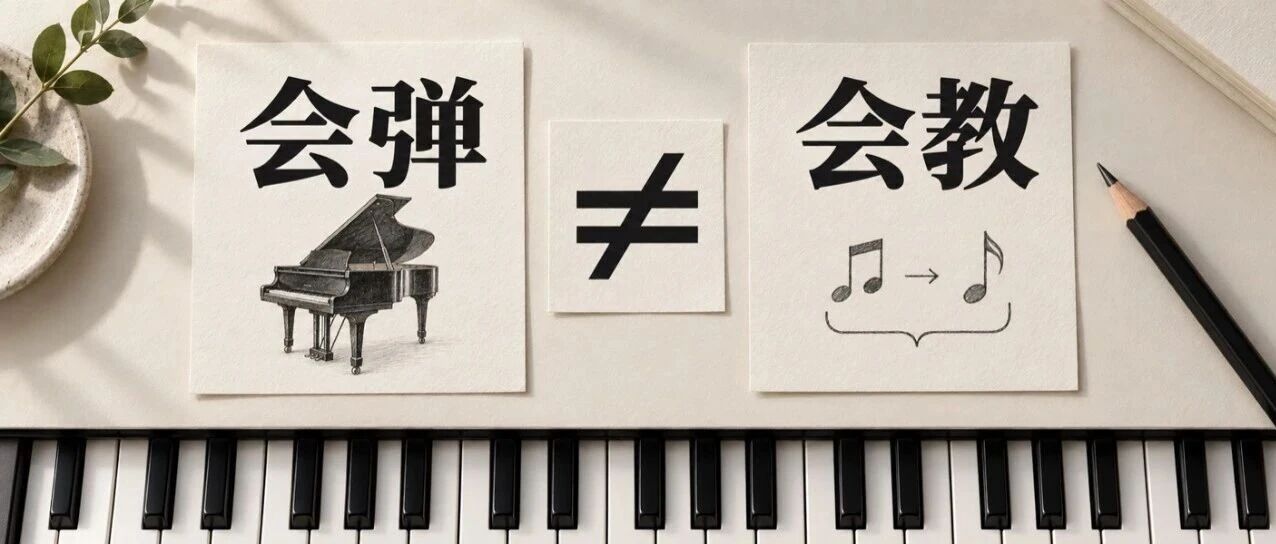
More than 2,000 yuan spent on lessons, yet the teacher had never demonstrated even once. Piano teacher Piano Miyang came across a post describing this experience in May 2025 and included it in her article. She had also taken on a transfer student who said their previous teacher wore headphones throughout the lessons.
That prompted her to compile a checklist for parents without a musical background, identifying six types of teachers to watch out for: those who can play but have a bad temper; those who are gentle but not demanding; those whose credentials are overstated; those focused on selling; those who treat students differently depending on who they are; and those whose words or behavior are inappropriate. At the end of the checklist, she suggested observing these issues during trial lessons and when sitting in on classes.
But a trial lesson lasts only twenty minutes. Most of these six types take a month or two to reveal themselves. Whether a teacher becomes impatient emerges when a child keeps making mistakes over several weeks; whether the teacher maintains high standards becomes clearer from the child’s playing after six months. In twenty minutes, the first thing a parent can readily observe is whether the teacher demonstrates.
Two Kinds of Demonstration
A teacher playing the piano does not necessarily amount to a teaching demonstration.
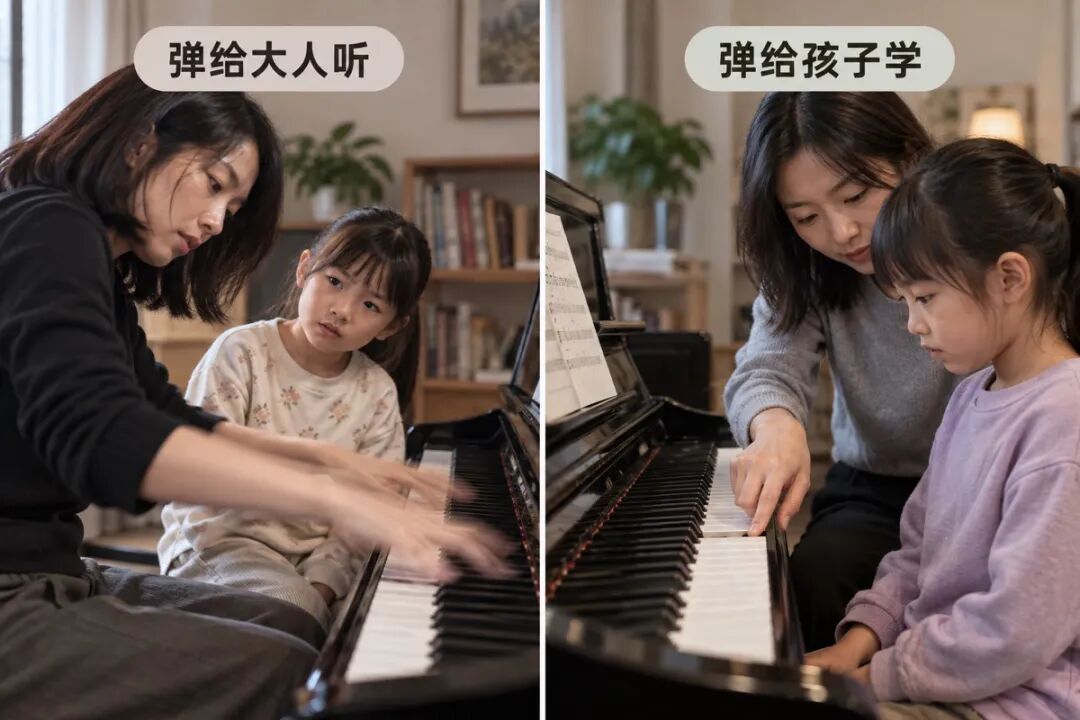
One kind is a performance for the parent: the teacher sits down and plays an entire piece at its intended tempo. It sounds beautiful and reassures the parent. But that performance does little for the child, who cannot remember it or keep up.
The other kind is a demonstration the child can learn from: when the child struggles with a phrase, the teacher plays just that phrase slowly, then immediately asks the child to try it. Sometimes the teacher plays only two notes so the child can hear clearly whether they are separated or connected.
During a trial lesson, look for the second kind.
What the Teacher Does When the Child Makes Their First Mistake
The most revealing moment in a trial lesson is the child’s first mistake.
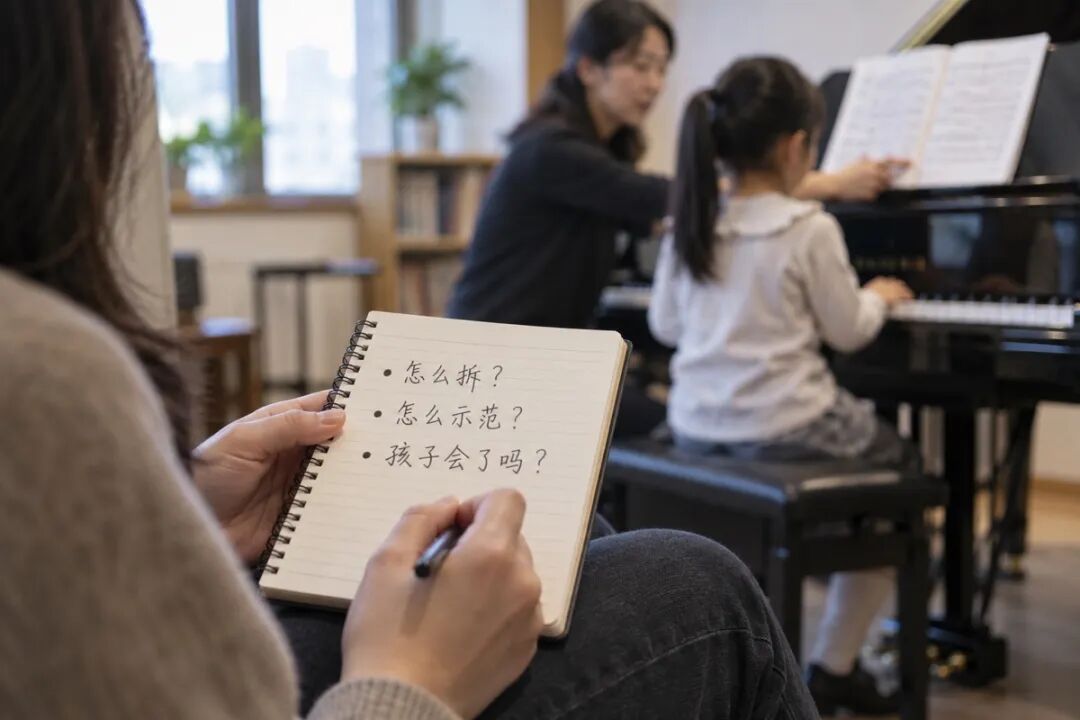
A teacher who only says, “That’s wrong. Try again,” leaves the child to guess what went wrong. A teacher who first plays the passage for the child and then asks them to try is teaching. If the child gets it wrong again and the teacher changes the approach—playing it more slowly or demonstrating only the left-hand part—that teacher has more than one way to help.
Miyang also wrote that she reminds new teachers not to demonstrate too much, to prevent students from becoming dependent on it. But doing no demonstrations at all, she said, is impossible.
Parents can also ask for a demonstration: “Could you play the phrase my child just struggled with a little more slowly?” A teacher who is willing to play it, and can slow it down, usually explains it clearly too.
Back at home, there is no teacher there to demonstrate. With a new piece, the child can at least listen first: in the China version of Wonder Piano described in October 2026, pieces in the music library could be listened to before playing. Hear the phrase first, then sit down to play it.
Observe the Other Types During the First Month
A trial lesson offers only a glimpse of the other types on the checklist. Observe them gradually during the first month.
When the child keeps making mistakes, does the teacher’s voice become impatient? Does the teacher let clearly wrong notes pass? In the last five minutes of the lesson, are they discussing what to practice next week, or which piano to buy and which competition to enter? Miyang put it bluntly: the teacher focused entirely on selling is not teaching at all, but acting as a salesperson for the music school.
Inflated credentials are the hardest issue to spot. She gave an example involving a classmate’s child, who studied with a well-known teacher charging high fees. Before a competition, a video of the child’s playing was sent to Miyang. The entire piece was played legato, even though the score clearly called for staccato. A certificate can only tell you that the teacher can play.
Wonder Piano provides AI-assisted support for piano practice at home. Here, we write about practice methods and the challenges families face when putting them into use.