
She started learning piano at six and gave it up two years later.
The reason sounds small: whenever she practiced, the little finger on her left hand kept sticking up on its own. An hour of practice was painful for her, and the constant reminders about her little finger left her embarrassed. Eventually, she found all sorts of excuses to get out of practicing.
Many years later, she was a mother living in Australia. In October 2021, she wrote a personal column for the Australian broadcaster SBS titled “I Once Gave Up Piano; Now I Am Learning Again with My Children.”
Her name is Angie Cui.
How She Came Back
During pandemic lockdown, the children were home all day. She wrote that the days felt empty, with nothing new happening, and she found herself turning back to her old nemesis: the piano.
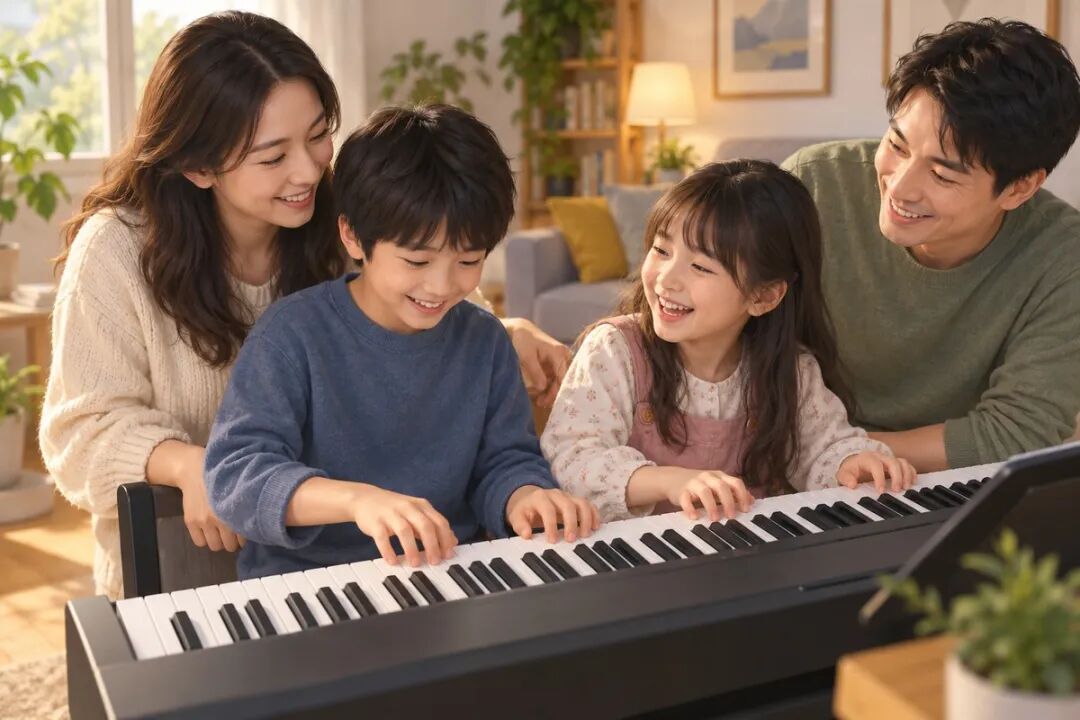
She bought a digital piano with keys heavier than those on a typical electronic keyboard. It fitted into a corner of the living room without taking up much space.
Her husband, who had never played piano, sat down to try it too. In her article, she described his large hands moving around the keys.
At the time of her 2021 account, they were playing for ten to fifteen minutes a day. They played simple little pieces and duets, sometimes with four hands and sometimes with six, the family squeezed together at one piano.
Why She Came Back
Reading her account, three things stand out.
First, the story had never really ended. Calling the piano her old nemesis suggests that it had stayed somewhere in her mind all those years. As a child, it was the little finger and the hour-long practice sessions that had driven her away, rather than a wish to stop playing.
Second, this time no one was forcing her. Ten to fifteen minutes, no graded exams, no rush to keep up with a schedule: whether to play and for how long were her own choices. The hour that had made her miserable as a child had become a short stretch of time the whole family wanted to share at the piano.
Third, what she wanted to give her children had changed. In her article, she said that nurturing interest and enthusiasm mattered more in the long run, and that she did not want to be a tiger mother. What she offered her children was those ten to fifteen minutes together at the piano, rather than a practice schedule.
One Thing Parents Can Try
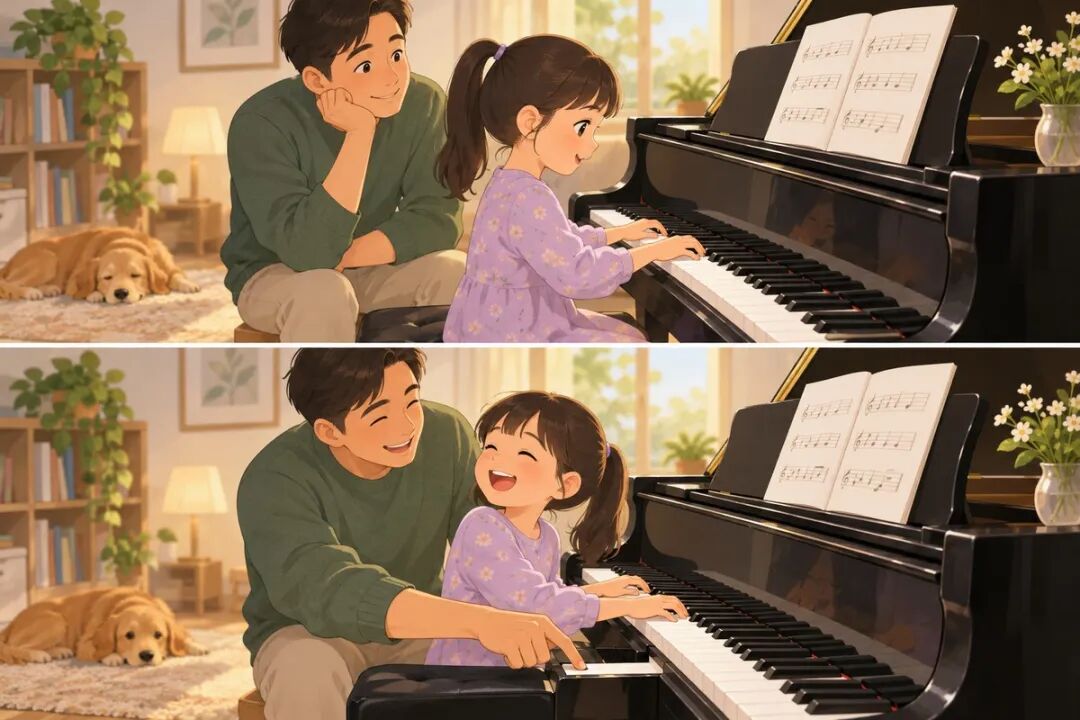
Her experience offers parents a practical idea: whether you learned piano yourself or have never played, you can sit down with your child after their practice and play a very simple piece together.
Start with three steps:
Choose one of the simplest pieces your child already knows.
Let your child play the melody while you play just one note in time with the beat. It is fine to get it wrong.
Play it just once a day, for no more than five minutes.
Those five minutes are a chance for the family to do something musical together, rather than another practice session. Children get to see that adults make mistakes and laugh too.
At the end of her article, Angie Cui wrote that she planned to find a teacher who could teach the whole family and set herself some small goals. She did not say whether that little finger still stuck up.
Wonder Piano provides AI-powered support for piano practice at home. Here, we write about practice methods and the difficulties families encounter when putting them into use.