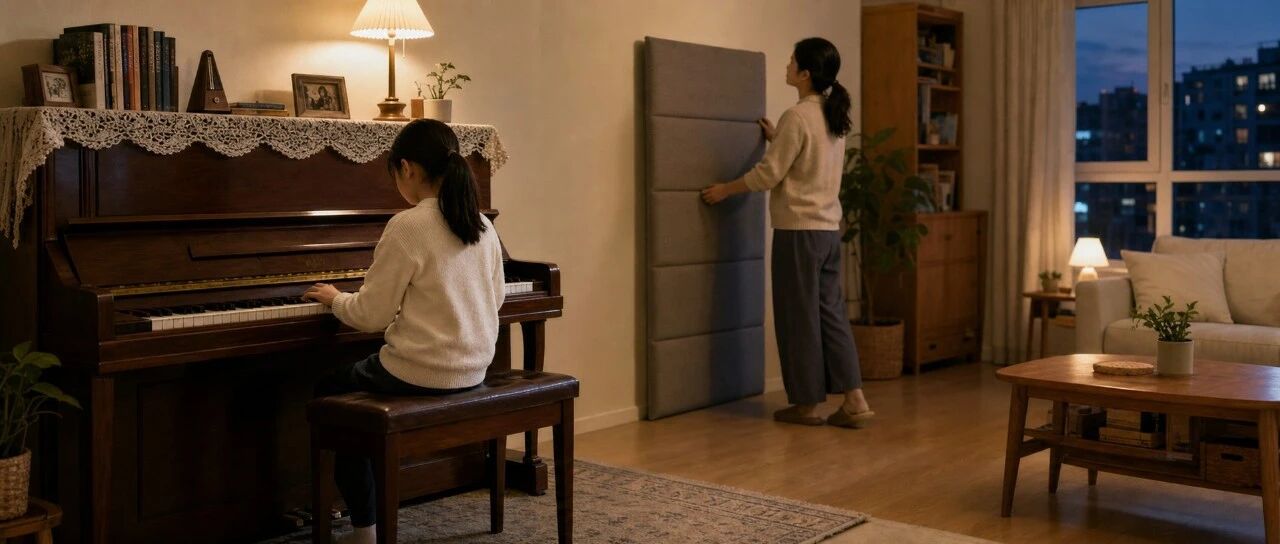
When the sound of piano practice reaches a neighbor’s home, the hardest part is never deciding who has the stronger argument. Taking care of three small things first—timing, sound, and communication—helps children practice with peace of mind and neighbors live peacefully too.
“My child’s piano practice makes noise. Will the neighbors mind?”
When families actually face this problem, many feel a little unfairly treated.
Practicing piano is not throwing a party, nor is it deliberately making noise. But to someone in the room next door, repeated scales and a few bars played in fits and starts can indeed interrupt rest, studying, or getting a child to sleep.
The hardest part is not deciding who is right or wrong.
It is that a child learning piano needs regular practice, while the family next door also needs a quiet home.
Set a Practice Time Before Deciding How Long to Practice
After school, many children have homework, dinner, and other commitments. Piano practice often gets pushed back until it becomes the last task of the evening.
Once it is postponed, it can easily run later and later.
Yet evening practice is often less productive too. The child is already tired, and the parent starts getting anxious. A small task that could have taken twenty minutes turns into an hour of back-and-forth.
Try setting aside a fairly consistent time slot for practice first.
It does not have to be very early, or exactly the same every day. But it helps if the child knows: when this time comes, we will work on just today’s smallest section.
When practice no longer always feels like “catching up on homework before bed,” there can be a little less noise, emotional strain, and pressure between neighbors.
Quilts Can Muffle Some Sound, but They Cannot Solve Everything
To avoid disturbing others, some families add soft fabric or rugs near the piano, or change where it stands.
These approaches are worth trying, but they should not be treated as universal soundproofing solutions. Sound travels differently in different homes, with different pianos, and on different floors.
Rather than focusing on a temporary way to reduce the sound, it is more worthwhile to do two things first:
-
Try not to place the piano right against a shared wall.
-
Work on passages that need repeated practice during the day or early evening, rather than leaving them until very late.
If a later practice session really is the only option that day, switch to quieter tasks: reading the score, tapping out the beat, silently reading rhythms with the piano lid closed, or simply reviewing one short passage the teacher has highlighted.
There is no need to play the entire piece from beginning to end every day.
What Neighbors Often Care About Most Is Whether They Have Been Considered
When people live close together, hearing some of one another’s everyday sounds is unavoidable.
What tends to strain relationships is not a single practice session, but not knowing how much longer the sound will continue, or whether anyone has listened when a concern is raised.
If a neighbor has already brought it up, start by showing consideration.
You can say honestly: our child is learning piano. We will try to finish earlier and adjust the practice time. If there are particular times when you need quiet, please let us know in advance.
This is not giving in.
It is a concrete example for your child: take your own commitments seriously, while also respecting the lives other people are living.
Make Just One Small Adjustment Tonight
Do not wait until a neighbor brings it up to start thinking about practice times.
Tonight, work out a plan with your child: which twenty-minute slot tomorrow is best for practice? Which short passage will you work on? If there is not enough time, which part can be worked on by reading the score and tapping out the beat?
Children do not need to prove how hard they are working by playing more loudly late at night.
Completing a little practice quietly and attentively at an appropriate time is a routine that is easier to sustain.