When a child hits a plateau in piano lessons, many families start to wonder, “If my child isn’t going to pursue classical music professionally or give solo recitals in concert halls, what’s the point of spending years working through classical études note by note?” Many parents see classical piano as a path that leads only to graded exams and the classical stage. Yet three Grammy-winning superstars in Western popular music, soul singer Alicia Keys, R&B singer-songwriter John Legend, and Lady Gaga, all grew up studying classical piano one beat at a time.
The Classical Lessons She Begged to Quit Taught Her Hands and Ears How Music Is Put Together
Alicia Keys began studying classical piano at seven in New York, where her mother raised her on her own. In a September 2004 interview with O, The Oprah Magazine, Keys recalled that the classical pieces she was first given left her cold, and that she even hated them. With money tight at home, she begged her mother to let her stop taking lessons. Her mother refused. One biographical account says that when Keys felt overwhelmed shortly before turning 13, her mother took some time out with her and encouraged her to keep focusing on piano. Years later, Keys looked back on that training in ASCAP’s Summer 2005 issue of Playback. She said, “Classical piano totally helped me to be a better songwriter and a better musician.”
Why would a pop and soul star look back on classical piano with such gratitude? From a piano teacher’s perspective, classical training develops skills that go well beyond finger speed. When children play classical polyphony and sonatas, the left hand traces the bass line and provides the harmonic framework while the right hand shapes and phrases the melody. At the same time, they have to balance several voices and keep track of the piece’s structure. Playing those parts together at the piano gives children a direct experience of how music is put together that playing a single melody line or taking a crash course in accompaniment cannot provide on its own.
Classical Training Gives Children a Framework. Playing by Ear Gives Them a Reason to Keep Going.
It’s easy to hear that Alicia’s mother refused to let her quit and conclude that making a child work through sheet music all year is enough. The other two musicians’ childhoods show what helped them stick with the piano when practice got tedious. At four, John Legend asked his mother for piano lessons and began studying classical piano. At around seven or eight, he also started learning to play gospel music from his grandmother, who played the organ at their church. He recalled both kinds of training in conversation with D Smoke. Lady Gaga was also playing by ear at four. Her mother, Cynthia Germanotta, recalled at Billboard’s 2015 Women in Music event that the family then asked if Gaga wanted to take piano lessons at school and that she decided to study piano and music theory. Gaga later recalled studying classical piano from a very young age. As a child, she preferred listening and finding melodies on the keys to following the sheet music note by note.
In music education, reading classical scores teaches children to translate what they see on the page into precise movements. Picking out tunes by ear and playing music they love builds an intuitive connection between what they hear and what their fingers do. Legend told Smithsonian magazine that his grandmother shaped his musical style from the beginning. Classical lessons gave him solid technique, and her gospel playing helped him find his own sound. Developing both skills gives children more ways to make music at the piano.
To Keep the Classical Foundation, Make the Daily Lesson Assignments Manageable
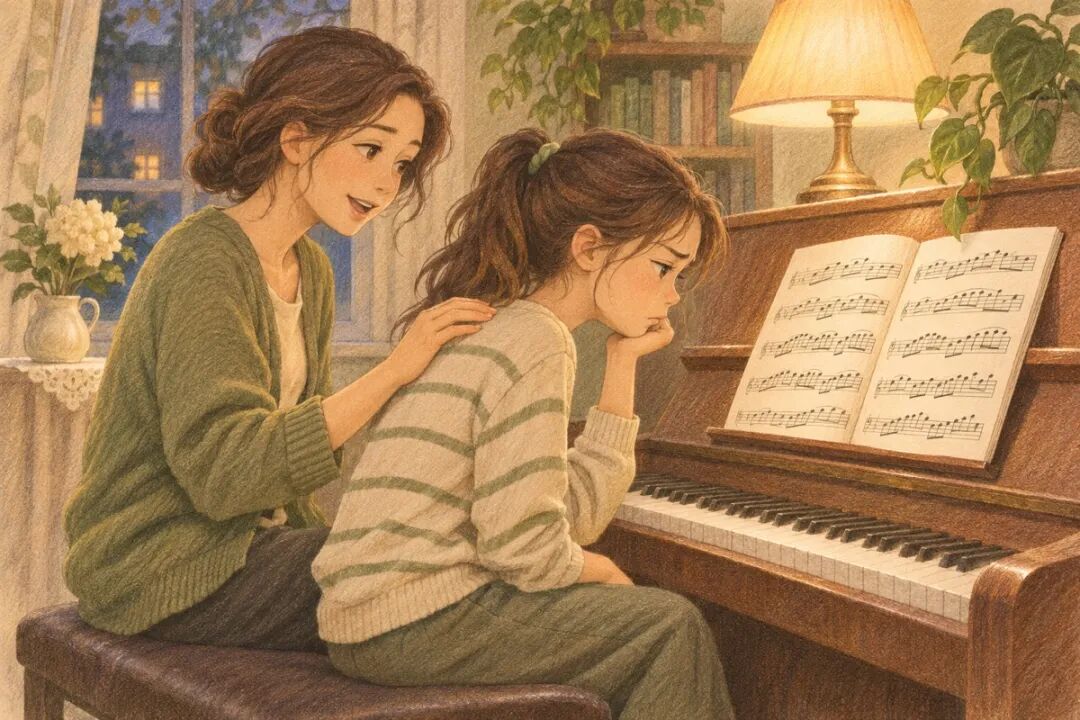
In many families, piano practice becomes more frustrating as the evening session drags on. Getting through the piece the teacher assigned can take all the energy everyone has. A parent watches for wrong notes, the child stalls on the piano bench, and there’s no time left to try a tune the child actually wants to play. In the China-market version of Wonder Piano described on November 21, 2026, Adventure Mode divided pieces into short practice levels with clear goals. Children played on a real piano at home while the app listened. Completing the required number of play-throughs for a level or earning a perfect score lit up a Magic Star. Once the day’s assigned work is done, save the last five minutes for your child to pick out a few phrases from a favorite cartoon theme or pop song by ear. Even if classical piano never takes them to the classical stage, it can give them a solid foundation for whatever music they make later.
#Piano #EarlyPianoLearning #KidsLearningPiano #PianoPracticeSupport #PianoFamilies
Wonder Piano is an AI piano practice companion for families in China. We write about ways to practice and the challenges families run into when they try them at home.