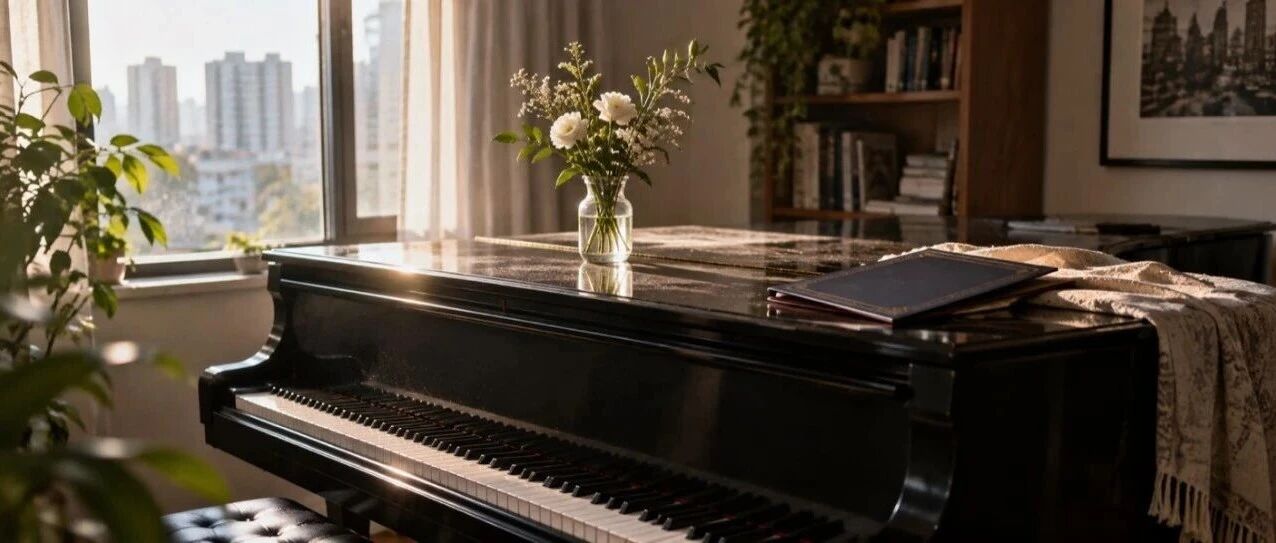
The piano boom in China has cooled, but parents of young pianists have hardly been taking it easy.
The author’s observation of China’s piano market over the past two years is that piano shops have closed and used pianos have struggled to fetch a good price. Many parents feel uneasy: if piano learning has fallen out of favor, should my child still learn?
At the same time, though, schools in China are putting more emphasis on music.
The Piano Tide Recedes as Arts Education Rises
In February 2026, China’s Ministry of Education issued its Guidelines on Comprehensively Advancing the Development of Healthy Schools. One passage deserves a second look from parents of young pianists:
“Offer the full range of arts courses, with sufficient teaching hours and high-quality instruction; advance reforms in arts and aesthetic education within subjects; enrich arts club activities; and help students develop one or two specialized artistic skills through their learning at school.” Ministry of Education policy
The enthusiasm for spending heavily on piano lessons and competing over exam grades is indeed cooling. Yet giving every child an artistic skill has become an explicit part of schools’ responsibilities.
What is receding is the idea of “learning piano for admissions advantages or certificates.” Music itself has not receded.
So where have smart parents redirected their energy? One father offered an answer nearly a century ago.
What Qian Xuesen’s Father Chose
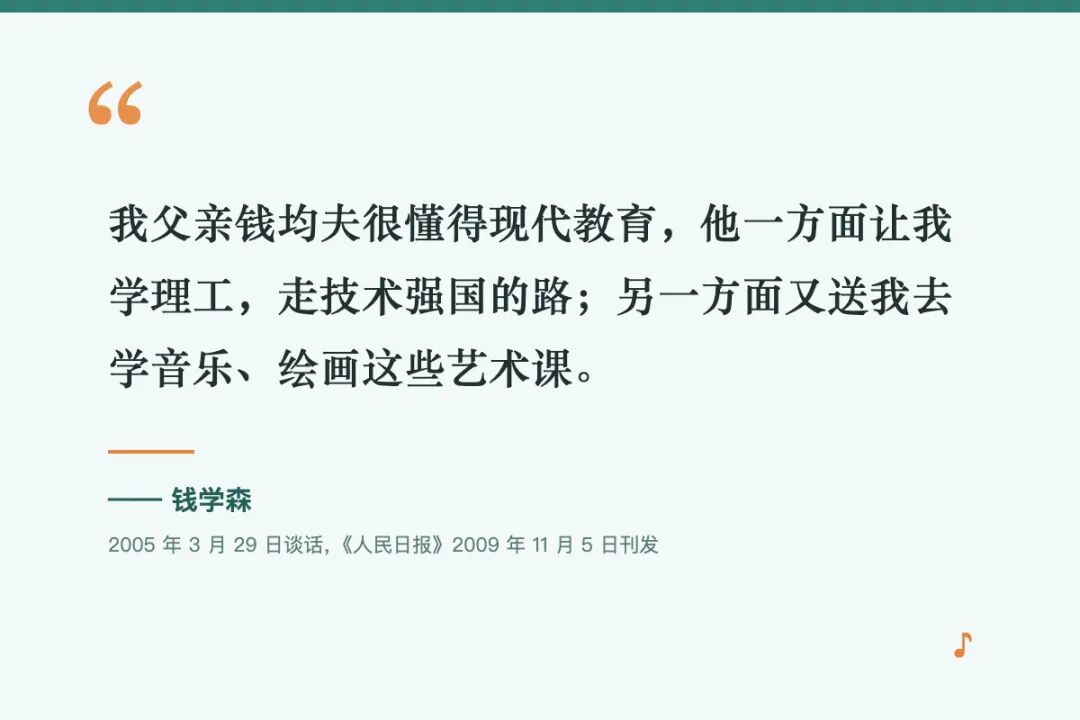
In March 2005, Qian Xuesen gave his last extended, systematic talk while in hospital. When he spoke about his childhood, he began with his father:
“My father, Qian Junfu, understood modern education very well. On the one hand, he encouraged me to study science and engineering, following a path of strengthening the country through technology; on the other, he sent me to study music, painting, and other arts.”
In the author’s telling, music lessons in that era brought neither admissions advantages nor certificates. Qian Junfu was looking for something else.
Decades later, Qian Xuesen explained what that was: his grounding in the arts had taught him “the wide-ranging, big-picture visual thinking found in art.” He believed this was “very important” in inspiring scientific innovation. His remarks appeared in People’s Daily on November 5, 2009, and are reproduced by the Chinese Academy of Sciences.
“He understood modern education very well”: that was Qian Xuesen’s assessment of his father. In today’s terms, he was describing a smart parent.
Smart Parents No Longer Fixate on Exam Grades
As the piano tide has receded, smart parents have quietly shifted their attention.
From “What exam grade have you reached?” to “Who can you play for?” Imagine a family gathering at Lunar New Year: a child sits at the piano and plays an old song that Grandma can hum along to. What that moment leaves behind can last longer than a certificate.
From “Practice for a full hour every day” to “Sit down at the piano every day.” Sessions can be short; the point is to keep them going. Picture this scene in a Chinese family’s home: a child opens Wonder Piano, and today’s level is just four measures long. The child plays on the family’s real piano while the app listens to the sound; when the notes are played correctly, Magic Stars light up on the screen. Before closing the piano lid, the child turns back and says, “Tomorrow I’ll clear the next level, too.” One short passage each day keeps the habit going.
From “Dropping them off at the piano studio is enough” to “There is music in our home.” Play the original recording of a piece your child is practicing during dinner, or attend a performance at the school’s arts festival together over the weekend. Then the piano at home becomes more than another assignment to finish.
A Music Plan for Smart Parents
Here is the music education plan laid out by age. Save it and revisit it whenever your child moves up a school year.
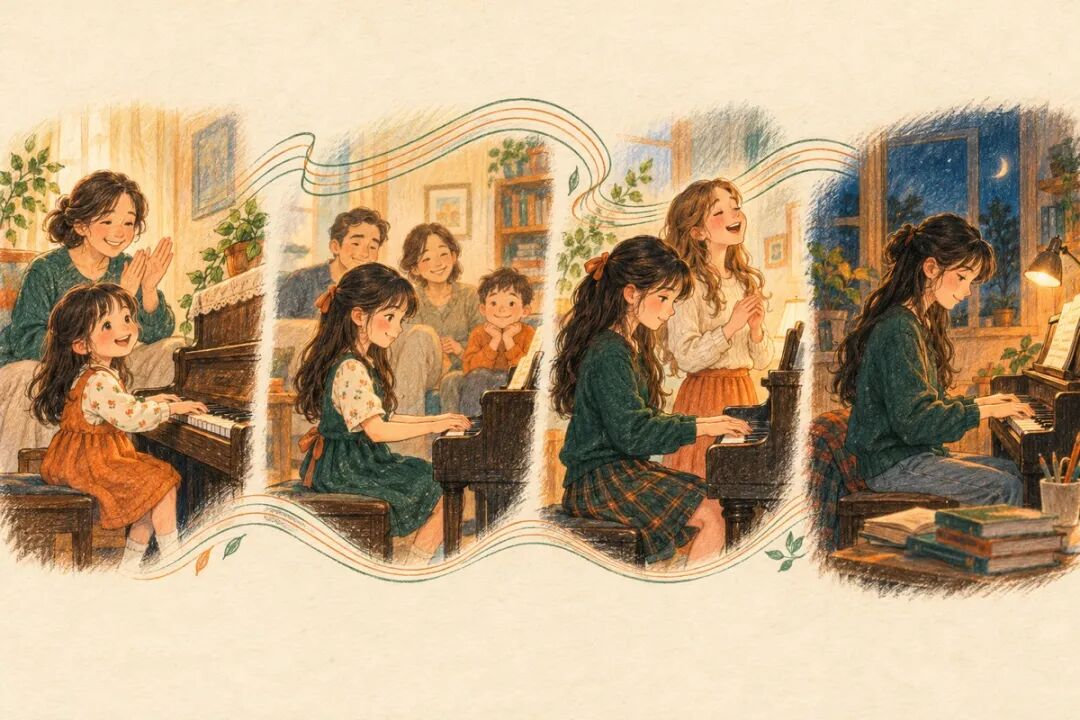
Ages 4–6: Learn to love listening before learning to play. Listen, sing, and clap rhythms often. It is fine to treat the piano as a toy at first; there is no hurry to read music or take graded exams.
Ages 7–9: A short passage each day, one “signature piece” each year. Short practice sessions are fine. Aim to add one piece each year that your child can play all the way through for the family.
Ages 10–12: Let children choose their own pieces. Learn to accompany a song. Treat graded exams as a checkup, rather than the goal.
Middle school: Protect a regular weekly slot at the piano. However busy schoolwork gets, keep a fixed time for playing, and connect it with the school’s arts clubs and specialized arts classes.
The piano tide may recede. Do not let the music in your child’s heart recede with it.
We will continue exploring each of these age groups and filling in the details of the plan. If you would like to follow this path, stay with us for the next installments.
In China, Wonder Piano provides AI-assisted support for piano practice at home. Here, we write about practice methods and the difficulties families face when putting them into daily life.