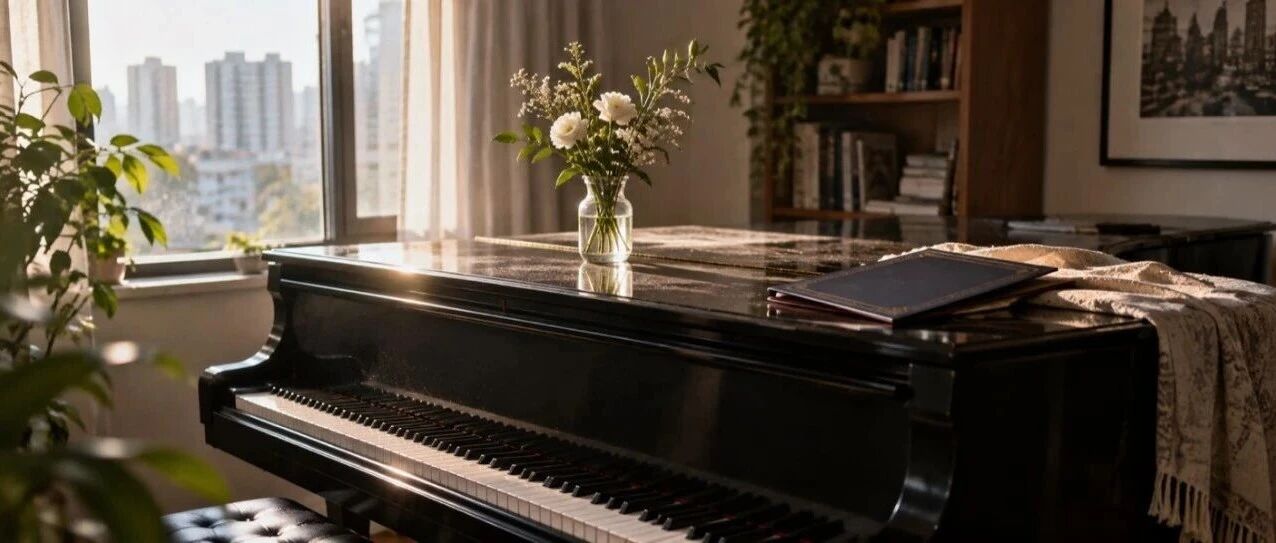
A child starts piano lessons at five, and the parents feel they have given them an early enough start. By fifteen, the piano lid never opens anymore.
Many young piano students follow this path. The article cites a study by two researchers at Goldsmiths, University of London, who followed secondary school students aged 10 to 17 in the UK and Germany. It reports that roughly half of the children who had studied music had stopped by age 17, with the largest number stopping between 15 and 17.
Many of the pitfalls are set in place during those first few years.
Pitfall 1: Thinking the Earlier They Start, the Better
“Other children started at four. Are we too late at six?”
In that study, the researchers also included the age at which children began learning an instrument in their analysis. According to the article’s account, once the musical environment at home was taken into account, starting age was not a key factor in whether children gave up.
Starting a year earlier or later matters less than you might think. The following points matter more.
Pitfall 2: Thinking Musical Talent Is Already Fixed
“My child doesn’t have much of an ear for music. Maybe they’re just not cut out for it.” Say this often enough, and your child may start to believe it too.
The study also examined how children viewed musical ability: as something innate, or something they could develop through practice. The article reports that children who more strongly believed musical ability was innate were more likely to give up.
When your child plays a wrong note, say “You have no talent for this” less often, and “Practice this part a few more times and it will flow more smoothly” more often.
Pitfall 3: Having a Piano at Home, but No Music
The piano sits in the living room, but the family never listens to music, and nobody touches the instrument except during the child’s half hour of practice.
According to the article’s account of the study, the strongest influence was the musical environment at home: whether parents played or sang, whether there were instruments in the house, whether the family listened to music together, and whether parents encouraged practice. Children with more music in their home lives were less likely to give up.
You can leave piano lessons to the teacher. A musical home environment has to come from the family.
Pitfall 4: Sticking with Lessons Even When They Are Boring
The article also cites a 2009 UK study that asked children who had stopped lessons why they had quit. One of the leading reasons was that lessons were too boring.
When a child says “Lessons are boring,” it is not necessarily an excuse to avoid effort. Sit in on a lesson first, and see whether the difficulty lies with the child or the lessons.
Pitfall 5: Feeling They Are Never Making Progress
Another common reason reported in the same study was feeling that progress was too slow and becoming increasingly discouraged.
Progress at the piano is often slow and hard to see. After two weeks working on a piece, an adult may hear some improvement, while the child remembers only “I got it wrong again.”
This is where making progress visible can help. Wonder Piano breaks a piece into small levels. Children play on a real piano at home, and the app listens to the piano’s sound. Completing a level lights up Magic Stars; working through a major level also earns Magic Stones ranked S, SS, or SSS. Children can see for themselves how far they have progressed through a piece.
For example, imagine a child looking at the screen one day and saying, “I’ve already got SS on this piece.” That evening, the child plays it one more time, without anyone reminding them.
Pitfall 6: Thinking a Solid Start Means Everything Will Go Smoothly
This is the easiest one to overlook.

The article describes the research as finding that giving up peaks around age 15, rather than in the first few years of learning. Schoolwork becomes heavier, other interests multiply, and children reach adolescence.
Yet many of the answers to whether a child will give up at fifteen are already taking shape in those early years: whether there is music at home, whether the child believes practice can help them improve, and whether the years spent learning are enjoyable.
Early piano education needs to look ahead to whether your child will still want to open the piano lid at fifteen.
Wonder Piano provides AI-assisted piano practice at home. Here, we write about practice methods and the difficulties families encounter when putting them into everyday use.