This is Wonder Piano. We develop AI-assisted practice tools for families practicing piano at home, and we also take a harder question seriously: what should families do when a child does not want to practice, struggles to engage with practice, and their parents do not know what to say? Here, you will find practice methods, as well as the difficulties families can encounter when putting those methods into everyday use.
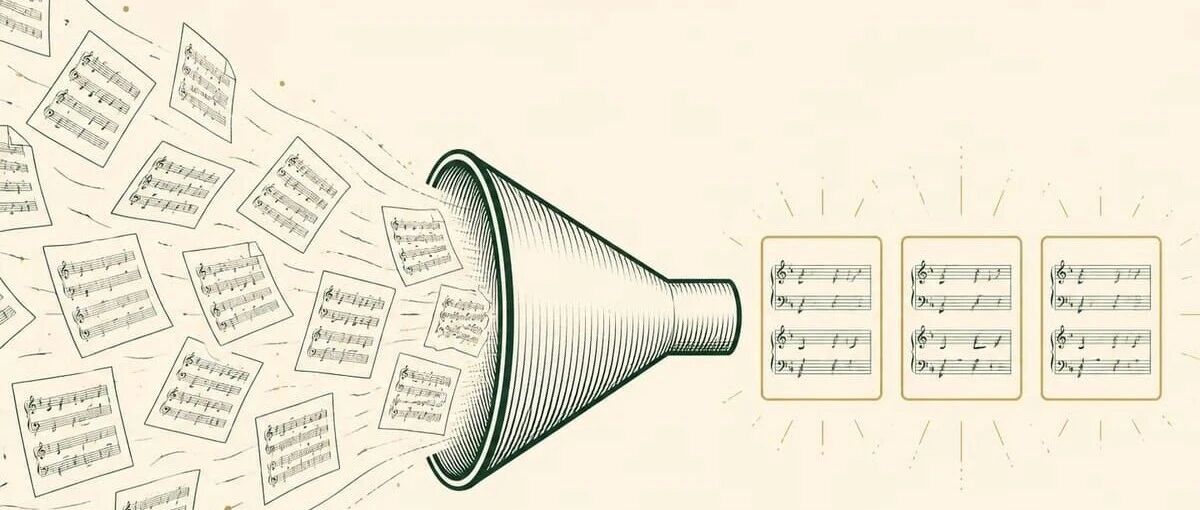
According to the official application figures for the 20th Ettlingen International Piano Competition, 437 young pianists from 39 countries applied. Following recording-based preselection, 85 were admitted to the competition: 41 in Category A, described in the source article as for those under 15, and 44 in Category B, described as for those under 22. More than 80% of applicants did not make the cut, and all of this happened before the competitors actually took the stage.
Translator’s note: The source article says “under 15” and “under 22.” The official list of admitted participants instead gives ages up to and including 15 and 22. The 2026 rules specify birth dates after August 1, 2010, and August 1, 2003, respectively.
One clarification is necessary: the public materials cited by the source article give the number of applicants, their nationalities, and the list of admitted participants, but do not explain the specific criteria the judges used to eliminate more than 350 applicants. The discussion that follows is our analysis of recording-based preselection as a format, rather than judging criteria disclosed by the competition organisers.
There is a fundamental difference between recording-based preselection and a live competition. In a live competition, judges can observe a competitor’s stage presence, coordination with an orchestra, and ability to adjust in the moment. In recording-based preselection, however, they have only a recording of finite duration. There is no live atmosphere, and no opportunity for the competitor to add an explanation such as, “I deliberately interpreted this passage that way.” What the competitor can present to the judges is limited to the information conveyed by the recording itself.
Translator’s note: The source’s reference to limited recording duration is a general observation; the Ettlingen 2026 rules explicitly impose no time limit on preselection recordings. The reference to orchestral coordination is also a general example, rather than a description of Ettlingen’s prescribed solo repertoire.

When a recording has to speak for itself, several things become especially important. First, does the repertoire match the player’s ability? If the chosen piece is clearly beyond what they can reliably handle, flaws in the recording become more conspicuous, without the scope of a live performance to compensate for them. Second, is the musical expression consistent throughout the recording? Does the treatment of a phrase remain coherent from beginning to end, or can the listener clearly hear the tempo speeding up and slowing down because of nerves? Third, can the performer convey musicality clearly within the available listening time, rather than simply demonstrate technical difficulty?
These are not judging criteria explicitly stated by the competition. They are qualities that, in our analysis, a format that assesses someone solely through a recording naturally brings to the fore. It is similar to screening résumés before an interview: a clearly formatted résumé with prominent key points is more likely to attract attention, even if the interviewer has not formally specified that as a criterion.
The same reasoning applies to children in China preparing for competitions or graded music exams that require recordings. Many families approach competition preparation by thinking, “Let’s choose a piece that shows as much difficulty as possible and demonstrates our child’s technical ability.” But if the child has not yet practiced the piece enough to perform it consistently from beginning to end, recording-based preselection will expose that instability first. This carries more risk than choosing a slightly easier piece that the child can play cleanly and confidently.
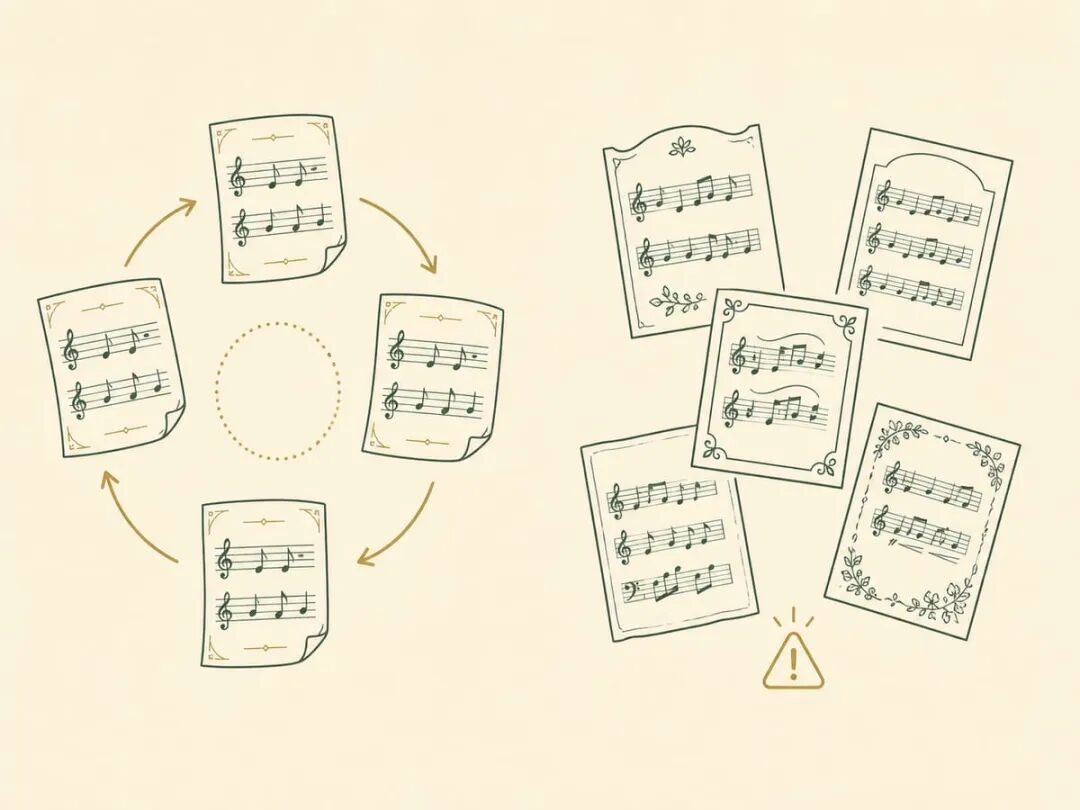
Another easily overlooked detail is the quality and presentation of the recording itself. Judges can assess the performer only through that recording. In our view, a noisy recording environment, awkward edits, or clearly audible signs that part of the performance has been rerecorded can affect their impression of the overall polish, even if the playing itself is sound. This reminds families that making the recording is part of the preparation. Simply setting a phone beside the piano and casually recording a take is not enough.
For children preparing to compete and their parents, this reasoning is also a reminder: the first test in a competition is often less about whether their technique is strong enough than about whether they can communicate their ability clearly within a limited opportunity to demonstrate it. Choosing repertoire that fully reveals their strengths while leaving enough room to avoid being stretched to the limit throughout, and recording a performance that remains steady from beginning to end, will often take them further than choosing a technically harder piece with inconsistent overall expression.
If your child were preparing for a competition’s recording-based preselection, would you prioritise a piece that showcases their strengths, or the “hardest” piece?