![10 Classic Music Films Worth Taking Your Time to Watch with Your Child! [Save This]](https://static.lianmuse.com/image/blog/770de35ac94fd3510196a18e3d1bc912.jpg)
A music film does not have to become a “piano-learning assignment.” Choose a suitable film and leave time for a little conversation, and your child may discover the joy, persistence, and self-expression in music through its story.
Once a child has been learning piano for a while, conversations at home can easily come down to just two words: practice and results.
How many times did you play this week? Have you mastered this piece? Have you finished the homework your teacher assigned?
These questions certainly matter. But music has always been about more than getting the notes on a score right or wrong. It can also be about how someone expresses themselves, connects with others, and resists the urge to give up when things get difficult.
So when you occasionally watch a film about music with your child, there is no need to add an assignment to “write about what you thought afterward.” Just treat it as a relaxed experience you share.
Take your time choosing from the following 10 films, considering your child’s age, what they are comfortable with, and your family’s viewing habits. For films involving growing up, separation, or war, parents can read a synopsis first before deciding whether to watch together.
First, Help Your Child See That Music Can Bring People Together
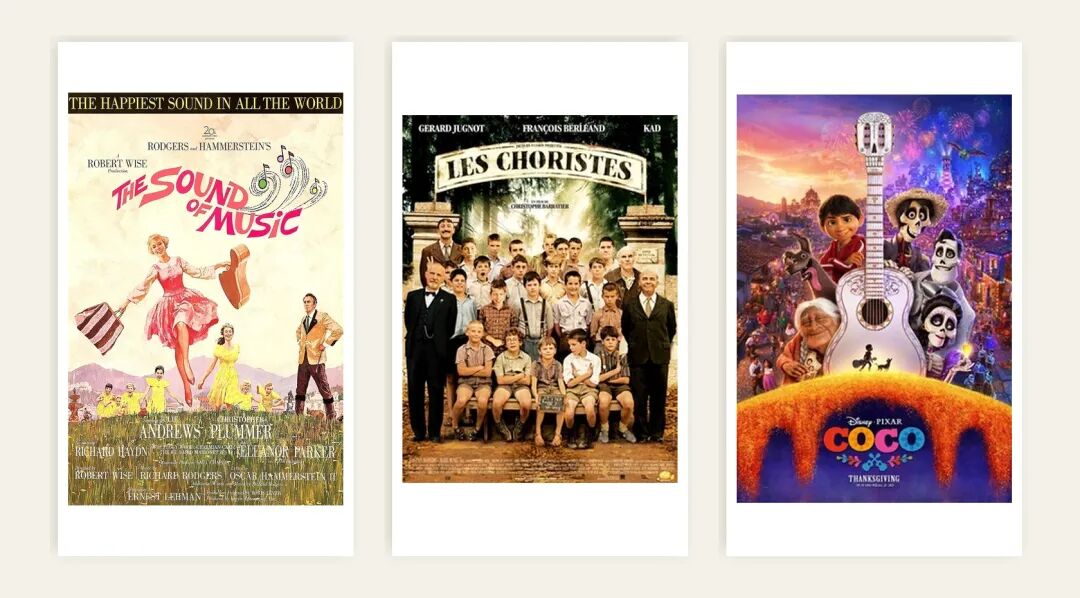
The Sound of Music, The Chorus, Coco, Soul
These four films have very different settings and styles, but they share something: music is not there to compare who is better.
It helps people feel heard and gives an outlet to emotions they could not put into words.
After the film, there is no need to rush into asking, “What did you learn?” You can talk about just one small question:
“Which musical moment made you feel that this person was finally understood?”
Your child’s answer may be simple. But once they start noticing “what the music is expressing,” they are experiencing something beyond merely checking whether they played the right notes.
Next, See That Loving Something Does Not Mean Everything Goes Smoothly
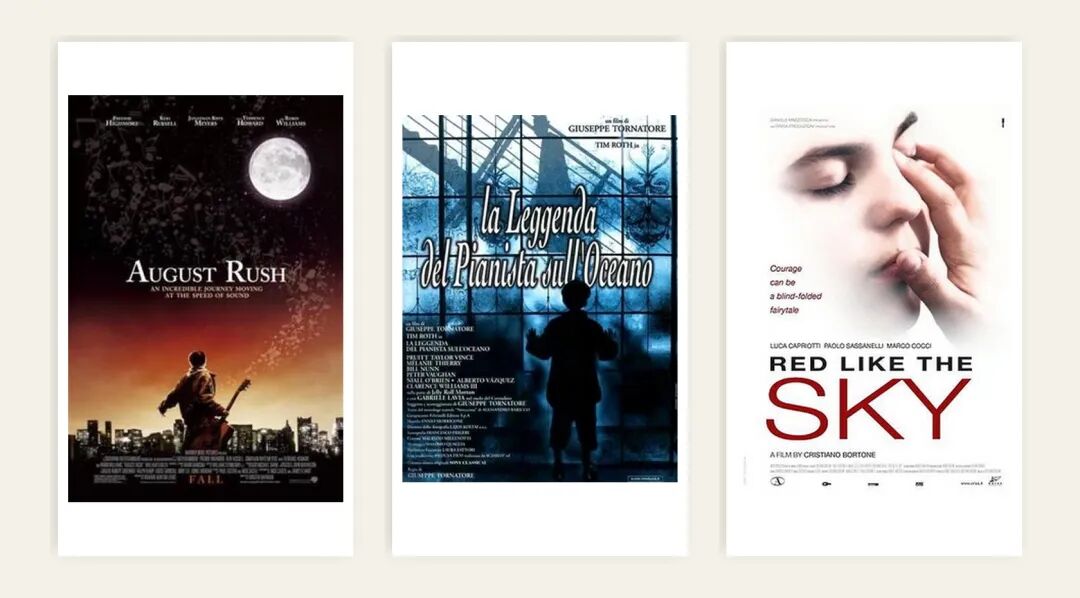
August Rush, The Legend of 1900, Red Like the Sky
Some children interpret “I love the piano” as “I should always feel happy when I play.”
Yet people who truly connect with music also get stuck, lose their sense of direction, and struggle with themselves. A film does not need to deliver a grand lesson for us. It simply lets children see that loving something does not mean the whole journey will be easy.
Here, you can ask a different question:
“If you were this person in the film, when would you most want to stop?”
Talking about difficulties first makes it easier for children to speak honestly than immediately saying, “You need to keep going, too.”
Finally, Leave Room to Relax: Music Can Also Be Just for Fun
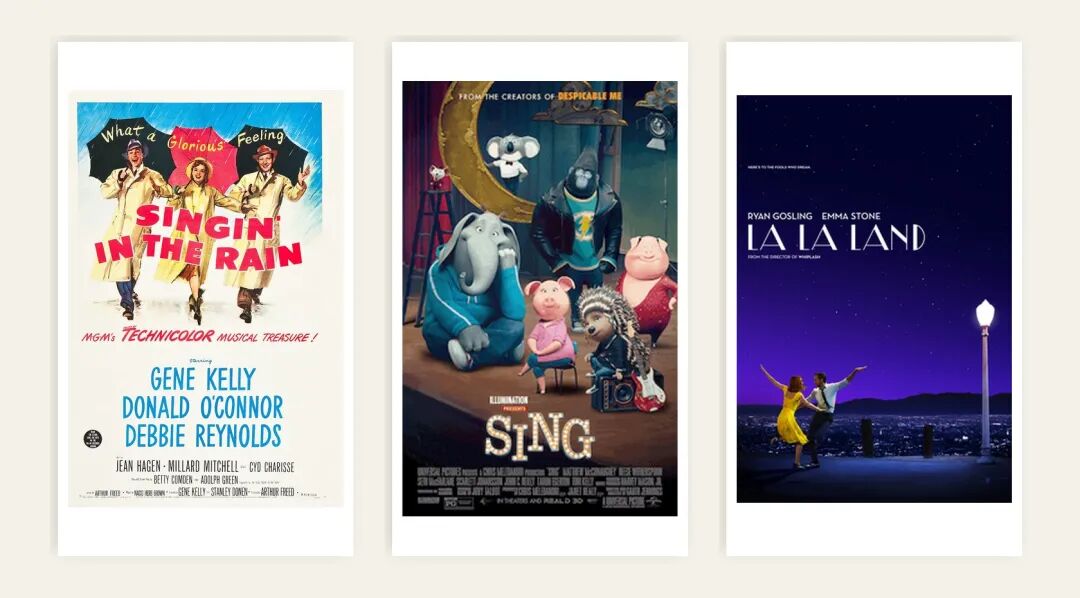
Sing, Singin’ in the Rain, La La Land
Learning music can easily become serious: keep a steady beat, get your hand position right, and read the score carefully.
But music has another side. It can make you want to hum along, take a few dance steps, or put the feelings you could not quite describe that day into a melody.
This group is better suited to relaxed viewing. There is no need to discuss “meaning” afterward. One question is enough:
“Which part would you like to hear again?”
Wanting to listen again, hum along, or say “I like this bit” can all be the beginning of a child’s relationship with music.
Do Just One Small Thing Each Time You Watch
There is no need to watch several films in one evening or turn this list into another learning checklist.
Choose one film, set aside enough uninterrupted time to watch it, and let go of the idea of “fitting in some piano practice while we’re at it.” Afterward, let your child choose the music they most want to hear again, or share one line they remember.
What makes music truly stay in a child’s heart is often not finishing one more page of homework.
It is the day they suddenly discover that the sounds coming from the piano keys can tell stories, too, and keep someone company as they grow up.
Which of these 10 films would you most like to watch with your child first?