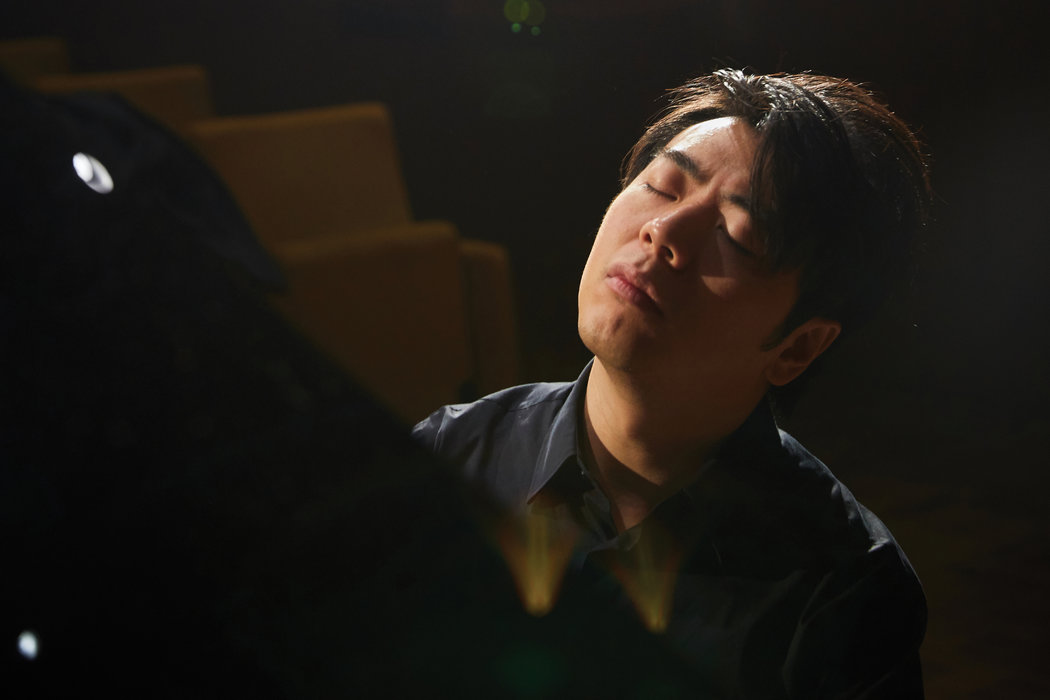
Why 90% of Kids Eventually Quit Piano — and What Lang Lang Can Teach Parents
Pianist Lang Lang recently announced his 2025–2026 global concert season.
This season, he will perform the complete set of Beethoven piano concertos, along with Rachmaninoff’s Second Concerto, Tchaikovsky’s First Concerto, Gershwin’s Rhapsody in Blue, and twelve concertos in total.
On top of that, he has over 30 solo and chamber recitals lined up, collaborating with world-class orchestras including the Berlin Philharmonic and the Vienna Philharmonic. (His full tour schedule is listed at the end of this article.)
This ambitious lineup leaves countless people asking once again: how has he kept going all these years? Then you look around at the kids nearby — most of them quit piano within a few years, complaining it’s too tiring or too boring, before quietly giving up. The reality is that over 80 or even 90 percent of children never make it to the “sticking with it” stage.
So here’s the real question: why do most kids eventually quit? And what can we learn from Lang Lang’s journey?
The Data Speaks for Itself: Quitting Is the Norm, Not the Exception
Many parents assume their child quit because they “didn’t try hard enough” or “weren’t talented enough.”
Surveys suggest that among people born in the 1990s who once learned piano, fewer than 5% still play as adults. Some parents even share that after their child passed the highest grading exam level (equivalent to ABRSM Grade 8), the piano lid was basically never opened again.
Another study surveying over 800 parents found that only about 10% said they would “do whatever it takes” to keep their child learning. In other words, nearly 90% of families eventually choose to stop.
The reasons are practical: some children resist and suffer through practice, some families find the costs too high, and others discover that learning piano doesn’t actually provide the academic advantages they expected.
Industry data tells a similar story. In major markets, piano sales have been declining steadily — in China, the world’s largest piano market, annual sales dropped from 390,000 units in 2019 to 190,000 by 2023, nearly cut in half. The number of students taking grading exams has also fallen, with some regions seeing declines of over 20%.
Interest is cooling, and the dropout rate is rising. This isn’t a problem with any particular child — it’s a widespread phenomenon.
So when a child quits, it doesn’t mean they weren’t good enough. It means this path was never one that most people could follow to the end.
Why Was Lang Lang Able to Keep Going?
At this point, many people will ask: what about Lang Lang? How did he manage to stick with it — and even reach the world stage?
The answer is actually quite simple: Lang Lang’s perseverance was the result of talent, effort, environment, and opportunity all coming together.
He started playing piano at a very young age and practiced intensively every day — far more than most children could handle. Behind him were parents who invested enormously, along with access to top-tier resources and support.
More importantly, he always had a clear goal to chase. As a boy, it was getting into the conservatory. As a teenager, it was competing on the international stage. As an adult, it was collaborating with the world’s finest orchestras. At every stage, he found new challenges and motivation — supported by his family every step of the way.
That’s the difference. An ordinary child may spend five or ten years practicing without ever seeing such a clear destination. The meaning of practice gets squeezed out by homework, overshadowed by parental anxiety, and naturally becomes harder to sustain.

Why Do Most Kids Give Up?
Beyond the rare case of someone like Lang Lang, the vast majority of children face a reality where their interest is gradually worn away.
At first, children are full of curiosity about the piano. They find it exciting that “the black and white keys can make beautiful sounds.” But as lessons progress, practice becomes tedious: repeating the same passage dozens of times, correcting fingering, keeping steady rhythm, and being reminded over and over about every wrong note. What was once fun slowly becomes a burden.
At the same time, academic pressure builds. By upper elementary and middle school, homework and exams become a wall, and the time children can squeeze out for practice shrinks by the day. Many parents want their child to keep up academically while also continuing piano — and end up caught in the middle.
Financial pressure is another factor. Buying a piano, tuning, teacher fees, competitions, performances, exam registration — these are all significant, ongoing expenses. After doing the math, many families feel the return doesn’t justify the investment and decide to stop.
Then there’s the psychological side. Children often practice for a long time without seeing noticeable improvement. Parents’ high expectations and constant comparisons only add to the pressure. When both interest and a sense of achievement disappear, “quitting” becomes the path of least resistance.
So children don’t quit because they aren’t smart enough — they quit because the real-world pressures far exceed what they can handle.
What Can We Learn from Lang Lang?
Lang Lang’s story isn’t meant to make us feel that “ordinary kids don’t stand a chance.” Instead, it reminds us of a few important things:
First, the value of persistence.
Lang Lang can tour the world because he practiced consistently for decades. While your child doesn’t need to become the next Lang Lang, the focus, patience, and self-discipline that come from sticking with piano are valuable qualities that will serve them well throughout life.
Second, the importance of environment.
For children, a good teacher, a supportive atmosphere, and small opportunities to perform can all spark motivation.
Third, the power of having goals.
Lang Lang had clear goals at every stage, and children need them too. Even something as simple as finishing a piece or performing at a recital can provide a meaningful source of motivation.
In other words, we don’t need our children to replicate Lang Lang’s life — but we can borrow his approach of “sustained, clear, and supported” learning.
The Meaning of Persistence Goes Beyond the Stage
Lang Lang’s story shows us what the pinnacle of professional excellence looks like. But for most children, the value of learning piano isn’t about performing at Carnegie Hall — it’s about showing up day after day, and letting music become a part of who they are.
If 90% of children eventually quit, the remaining 10% didn’t all become concert pianists either. What they gained might be a love of music, the ability to focus and persevere, and a certain quality that stays with them for life.
So don’t worry too much, parents. Sticking with piano isn’t about raising the next Lang Lang — it’s about giving your child one more source of strength to carry with them on life’s journey.
As the team behind Wonder Piano, many parents ask us: is there a way to make practice effective without turning every day into a battle?
That’s exactly why we created Wonder Piano. It’s not about pushing every child toward a professional path. Instead, through real-time AI feedback, game-like challenges, and storybook adventures, it helps children stay interested during practice and reduces frustration.
With this kind of support, children find it easier to keep going, and parents can track practice records — making the whole experience much less stressful for everyone.
It’s not about pushing children into pressure — it’s about helping them go further on their musical journey.