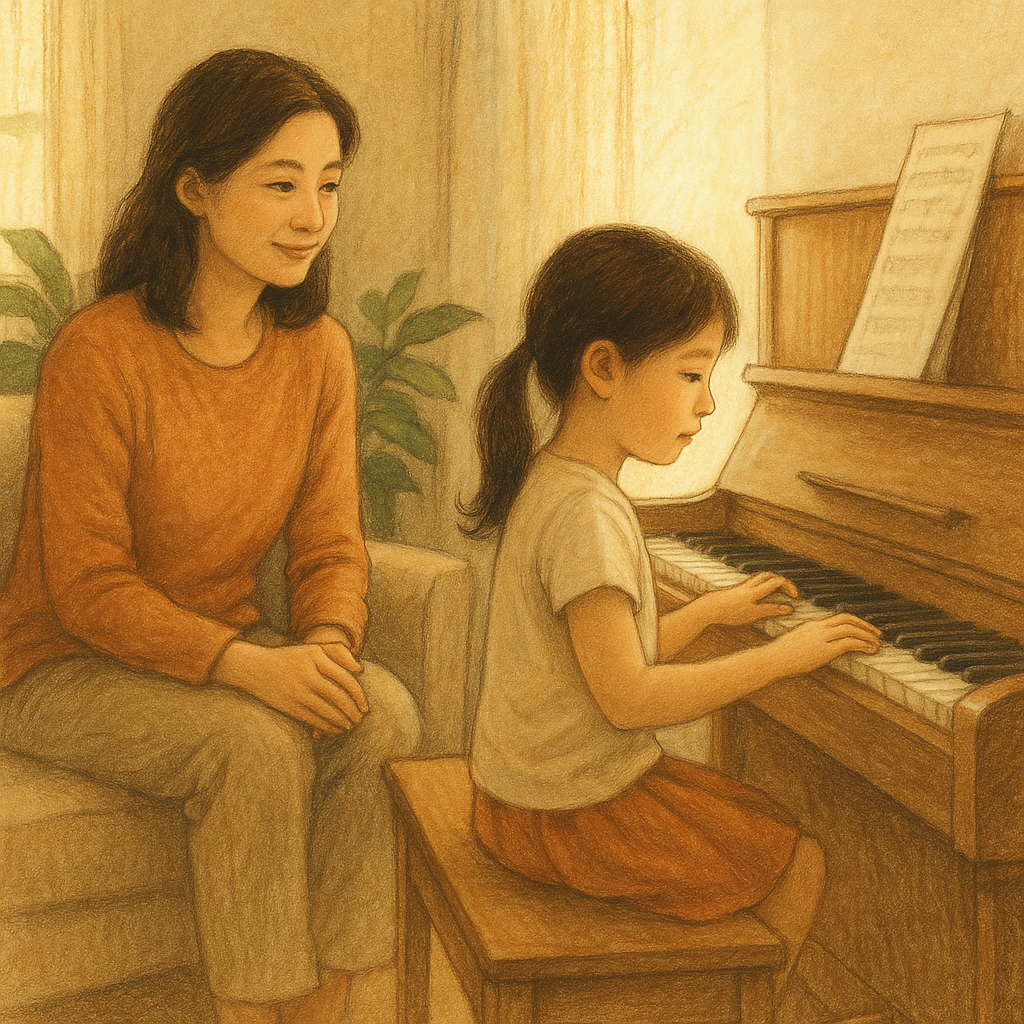
Two Years of Practicing with My Daughter, and I Could Pass the Grade 10 Exam Myself
“Two years of practicing with my daughter, and I could pass the Grade 10 exam myself.” This self-deprecating quip from a parent online has become the rallying cry of countless piano parents everywhere.
The child is practicing piano, but the parent is the one being tested. As one parent joked: “We’re not learning piano at our house — we’re learning patience.”
One rendition of “Twinkle, Twinkle, Little Star” can stretch from the living room to the bedroom, from afternoon to well past bedtime.
But behind the laughter, every parent knows the truth: learning piano isn’t just about the child’s growth — it’s a journey for the whole family.
From “I Don’t Understand” to “I Heard a Wrong Note”: A Parent’s Unintentional Upgrade
Many parents are completely lost on their first day sitting in on practice. “I couldn’t understand a word the teacher said about accents or legato.”
Two years later, things quietly change. You start hearing where the rhythm drags. You can read those dense clusters of symbols on the sheet music. You can even tell whether your child is having an off day.
But this kind of “growth” doesn’t come easy. Sometimes, practice sessions turn into family battlefields: “Sit up straight!” “You just played that wrong!” “Do it again!”
The child practices piano, mom practices patience, and dad practices being invisible
Most parents who sit through practice sessions go through these five stages:
The honeymoon phase: Recording videos and posting them on social media.
The breakdown phase: Yelling yourself hoarse with no one listening.
The understanding phase: Beginning to realize how hard it is for your child.
The turning point: Shifting from controller to companion.
The letting-go phase: Trusting your child to practice on their own.
As many parents say: “Piano practice isn’t really about finger technique — it’s about the parent-child relationship.”
The Real Challenge of Practice Sessions: Getting the Role Wrong
What frustrates parents most during practice isn’t how much time it takes each day — it’s figuring out what role they’re supposed to play. Teacher? The child pushes back. Parent? Emotions run too high. Supervisor? The mood drops to freezing.
Research shows that when parents act as critics rather than supporters during practice, a child’s motivation to learn drops by nearly 40%. In other words, the more anxious the practice session, the more likely the child is to start resenting the piano.
That’s why the most important thing during practice isn’t teaching — it’s guiding and empathizing: “That rhythm you just played sounded great!” or “Mom doesn’t know how to play either — you’re already doing amazing.”
When children feel respected, they become more willing to explore. Parents don’t need to become piano teachers — they need to become their child’s learning partner.
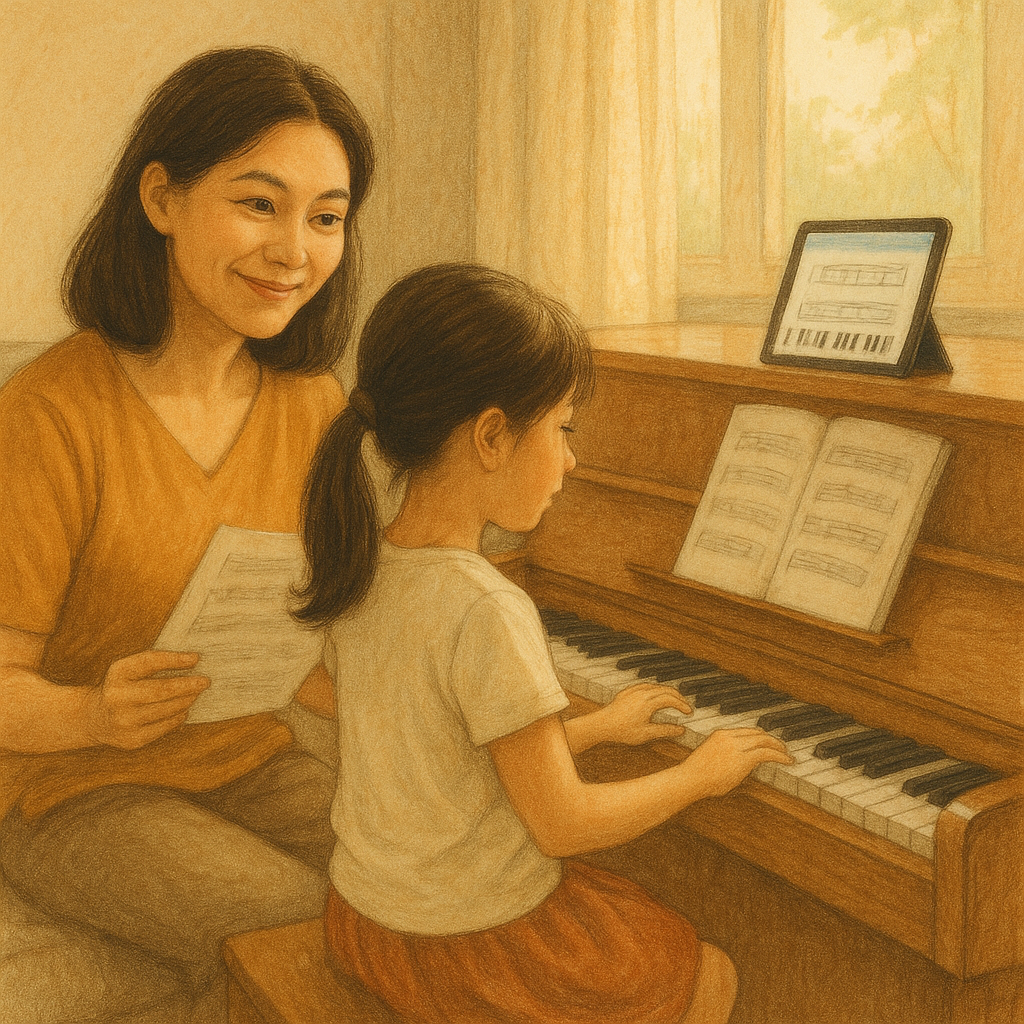
Technology Makes Practice Sessions Less of a Battle
The core problem with practice sessions comes down to a gap between “time” and “expertise.” Parents have the time but don’t know music; teachers know music but don’t have the time. AI-powered practice tools were born to bridge exactly this gap.
Take Wonder Piano as an example. It’s not about “replacing the teacher” — it’s about making practice sessions lighter and more effective.
It can: recognize notes in real time and gently prompt when something is off, so parents don’t have to keep correcting; use stories and game-like challenges to make children actually want to practice; and automatically track practice data so parents can see their child’s progress at a glance.
One parent shared: “Practice used to feel like going to war. Now I can sit nearby and enjoy a cup of tea.” That’s what technology should look like — not a cold, impersonal tool, but a “third practice partner” that lifts the burden and helps repair relationships.
Two years of practicing with my daughter, and I could pass the Grade 10 exam myself. Parents who say this with a laugh are hiding countless moments of patience, breakdowns, and perseverance.
But when technology steps in, we no longer have to trade anxiety for progress. Children can practice through stories, and parents can accompany them without the stress.
Because in the end, practice isn’t about who wins — it’s about growing together. Wonder Piano helps children practice on their own initiative, and makes the journey lighter for parents too.