How to Nurture Your Child’s Interest in Piano Using Science-Backed Strategies
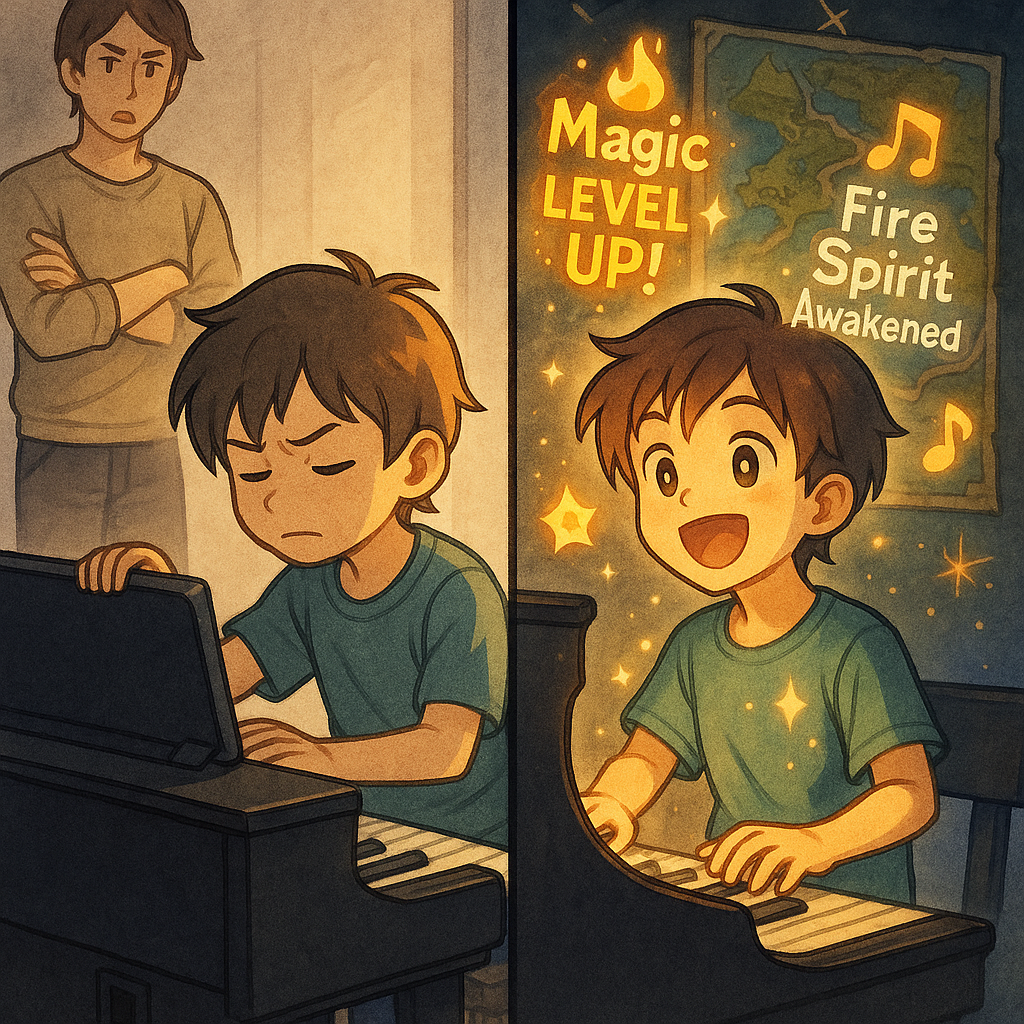
Many parents notice a familiar pattern: when children first encounter the piano, their eyes light up with curiosity and excitement. They’re captivated by the simple magic of pressing keys and hearing beautiful sounds. But once the novelty wears off and structured practice begins, that enthusiasm often fades quickly.
The shift from “I want to play!” to “I don’t want to practice” leaves many parents feeling confused and frustrated. It raises important questions: Why is a child’s interest so short-lived? Is musical interest something you’re born with? And if not, how can we cultivate it in a systematic, science-backed way?
This article draws on psychology and cognitive science to explore the true nature of interest — and offers a set of proven strategies to help transform your child’s piano journey from a tug-of-war of willpower into a rewarding adventure filled with a sense of achievement.
The Science of Interest: Why Children Go from Enthusiasm to Resistance
The shift in a child’s interest is not mysterious — there are clear psychological explanations behind it.
Intrinsic vs. Extrinsic Motivation Psychology distinguishes between two types of motivation: intrinsic motivation (driven by inner curiosity, enjoyment, and love for the activity) and extrinsic motivation (driven by rewards, pressure, or others’ expectations).
When children first sit at the piano, they’re driven by intrinsic motivation — “This is fun!” But when practice becomes a mandatory 20-minute daily task, tied to parental praise or criticism, motivation quietly shifts to the extrinsic kind. Once a child feels “I’m only practicing to make Mom and Dad happy,” their sense of autonomy disappears, and resistance naturally follows.
Self-Determination Theory: Autonomy, Competence, and Belonging Psychologists Edward Deci and Richard Ryan proposed Self-Determination Theory, which identifies three fundamental psychological needs: autonomy (feeling in control of one’s own actions), competence (feeling capable of meeting challenges), and belonging (feeling connected to others).
Loss of autonomy: When practice becomes a tightly controlled directive, children’s sense of autonomy is stripped away. Undermined competence: When practice sessions are filled with constant corrections and criticism (“You got it wrong again — start over!”), children feel they “can’t do it,” and their sense of competence plummets. Interest is rooted in the fulfillment of these three needs. Once any of them is frustrated, interest withers.
Growth Mindset vs. Fixed Mindset
Stanford psychologist Carol Dweck’s research shows that children with a growth mindset (who believe abilities can be developed through effort) are more resilient when facing challenges. Children with a fixed mindset (who believe talent determines everything) are more likely to give up when things get difficult.
If parents inadvertently emphasize “talent,” or show disappointment when a child makes mistakes, they may foster a fixed mindset — leading the child to believe “I’m not good at piano because I’m not talented” and ultimately give up trying.

Science-Based Parenting: Three Steps to Build Your Child’s Interest in Piano
Interest isn’t innate — it’s a psychological state that can be designed and cultivated through scientific methods. Here are three strategies grounded in psychological principles.
Strategy 1: Gamification — Let Dopamine Drive Practice
The principle: Gamification applies game elements (such as points, badges, challenges, and level-ups) to non-game contexts to boost motivation and engagement. Completing small tasks and receiving immediate rewards triggers the brain to release dopamine — a neurotransmitter associated with pleasure and motivation. It tells the brain, “This feels great — I want to do it again.”
How to apply it:
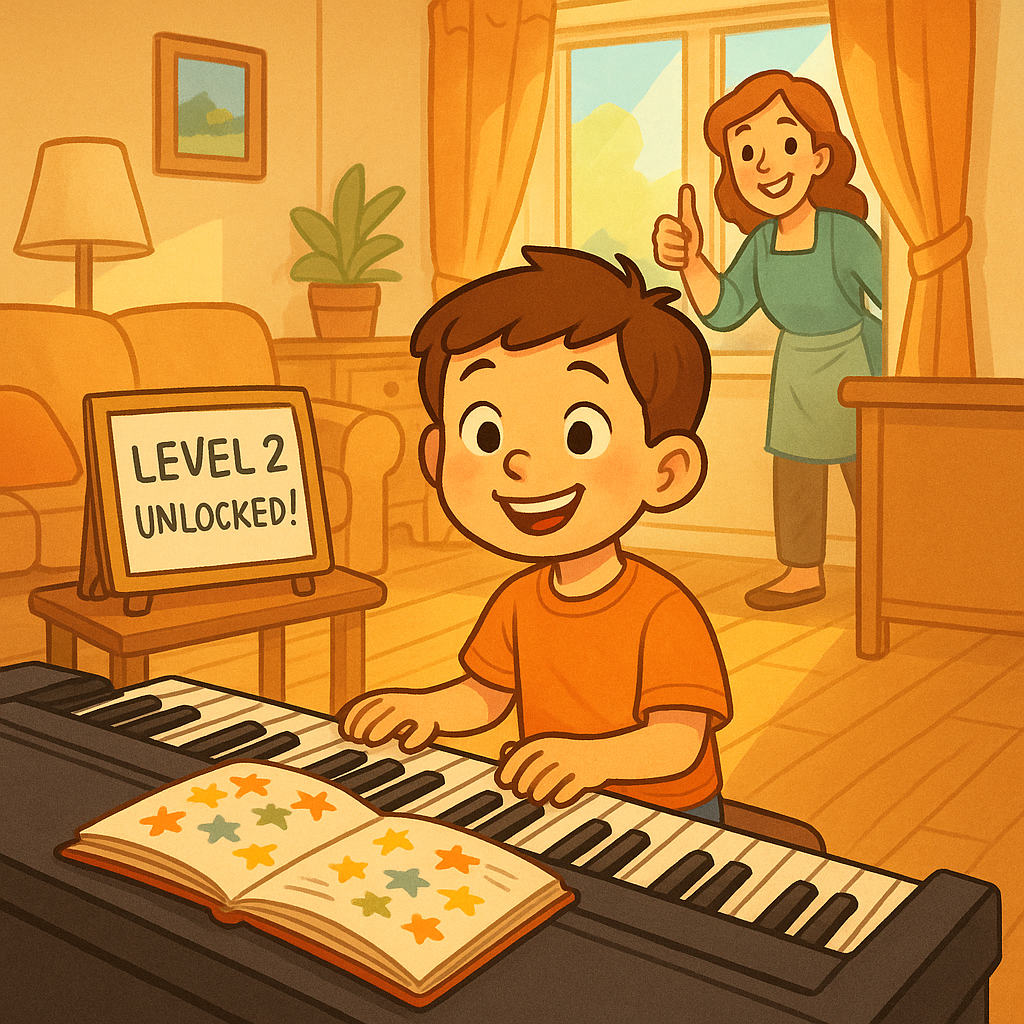
Set “missions” and “levels”: Break a piece into small tasks, such as “master the first two measures,” “practice only the left hand today,” or “play three times in a row with the metronome without mistakes.” For each completed task, give a symbolic reward like a sticker or a point on a reward card.
Introduce “random challenges”: Add variety to practice — for example, a “blind play challenge” (playing the opening notes from memory), or “role reversal” (letting the child be the teacher and evaluate how the parent plays). These turn repetitive drills into exciting explorations.
Visualize progress: Create a “skill tree” or “progress chart.” Each time a new technique is learned or a new piece is mastered, light up a new section. A clearly visible growth path is hugely motivating for children.
Strategy 2: Cultivate a Growth Mindset and Self-Efficacy
The principle: Self-efficacy, a concept introduced by psychologist Albert Bandura, refers to a person’s confidence in their ability to succeed in specific situations. Children with high self-efficacy are more willing to take on challenges. And the way feedback is given directly determines whether a child develops a growth mindset or a fixed mindset.
Focus on the process, not the outcome: Avoid praise like “You’re so talented.” Instead, acknowledge specific effort and strategies. For example, rather than saying “You played that so well,” try: “I noticed you practiced that tricky section several times with real focus — it sounds so much smoother now.” This reinforces a growth mindset.
Turn “error correction” into “treasure hunting”: After practice, don’t immediately point out mistakes. Listen to a recording together and first ask: “Which part do you think sounded most like a real musician?” Find the bright spots and affirm them. Then gently guide: “This part — I think there might be a little ‘secret’ that could make it sound even better. Want to try again?”
Give mistakes a positive meaning: Help your child understand that mistakes are a natural part of learning — they’re clues that lead to the right approach. When your child hits a wrong note, you might say: “Great! We just found a spot that needs special attention. Once we conquer it, we level up!”
Strategy 3: Leverage Technology — Provide Instant Feedback and Structured Support
The principle: Learning effectiveness depends heavily on how timely and accurate the feedback is. In traditional piano lessons, feedback often has to wait until the next weekly lesson — which is far too slow for the brain to form correct input-output connections.
Modern technology offers an excellent solution. Take Wonder Piano as an example — an AI-powered practice app designed specifically for children ages 3–12. It beautifully integrates the scientific principles discussed above into its product design, turning practice into an adventure to “save a magical world” — a perfect real-world application of gamification.
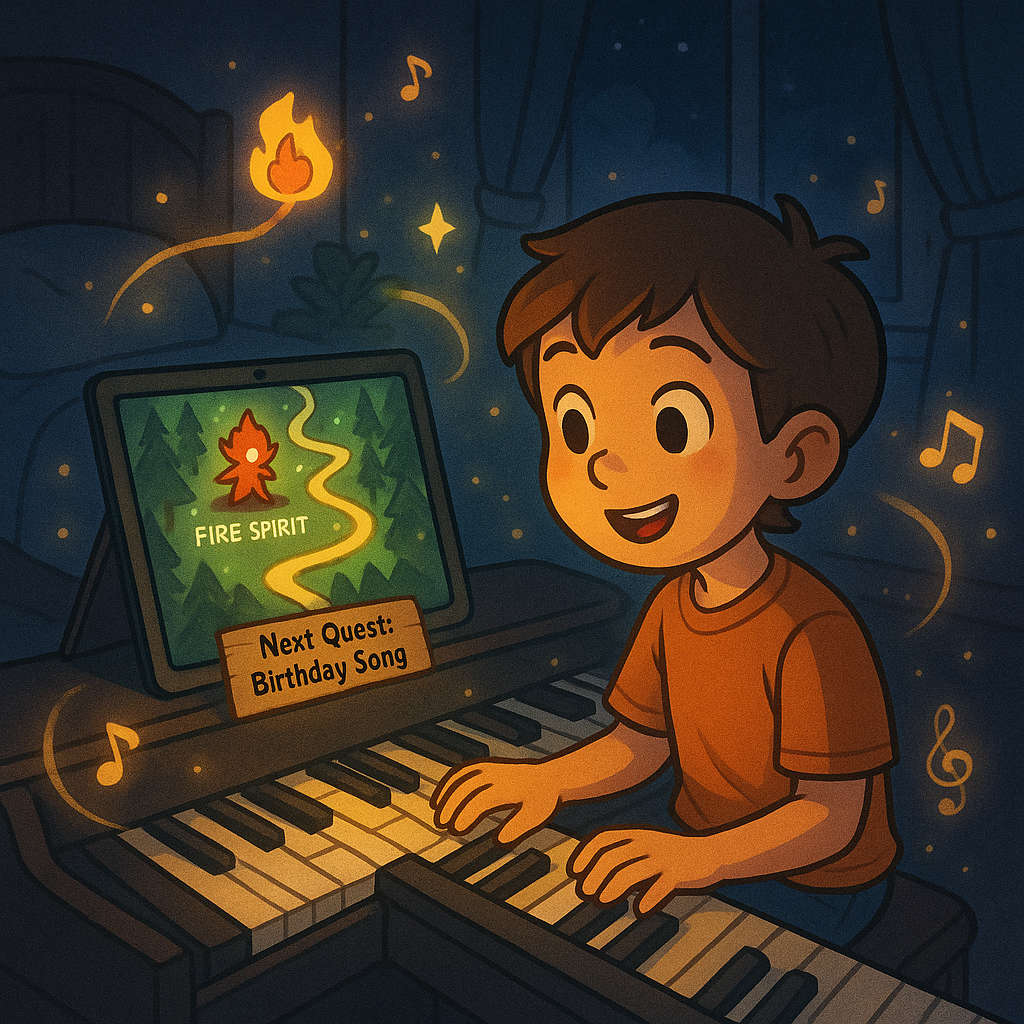
Building a positive feedback loop: It goes beyond simple right-or-wrong judgments. When a child plays correctly, the system immediately provides positive reinforcement, like “You’ve awakened the Fire Spirit!” When they make a mistake, it offers non-judgmental encouragement — “Try again, you’re so close!” — rather than harsh criticism or abrupt interruptions. This perfectly aligns with the principle of “feedback reframing,” protecting and boosting a child’s self-efficacy.
Providing a structured practice path: More importantly, tools like this can automatically break complex pieces (whether exam repertoire or popular songs) into segmented, phrase-by-phrase, hands-separate practice modes. This significantly reduces a child’s cognitive load, allowing them to tackle challenges step by step and build confidence through a series of “small wins.”
This kind of immediate, objective, and encouraging feedback loop effectively helps children build a sense of competence. Through accumulated “small wins,” they develop intrinsic motivation — ultimately making the smooth transition from “I have to practice” to “I want to practice.”
As parents, our role isn’t to be a “supervisor” — it’s to be the “designer” of our child’s learning environment. Our task isn’t to force a child to love the piano, but to use scientific methods to create an environment where they can experience autonomy, competence, and joy.
When children feel they have control over their learning, can see their progress with each small step, and find genuine enjoyment in the process — that’s when true, heartfelt interest is truly ignited.
And all you need to do, when they feel tired, is give them a hug and say: “Your effort today made you a little bit stronger.” Leave the rest to science-backed methods, the magic of music, and that curious child exploring the world through the keys.