
Is Your Child Not Making Progress? Here’s What to Focus on at Every Stage from Beginner to Grade 10
“She’s already at Grade 5 — how come she still can’t sight-read smoothly?” “He’s been learning for three years and can’t play a single piece all the way through!”
Parents often wonder: my child has been learning piano for so long — why isn’t there a real breakthrough? The problem might be this: you haven’t helped your child hit the right milestones at each stage.
Today, we’ll break the piano learning journey into five stages and walk you through the key priorities at each one, so your child can avoid common detours.
Stage 1: Getting Started (Grades 1–2) — Interest Over Technique
This stage determines whether your child will fall in love with the piano. You’re planting a seed of passion.
Priority 1: Build Musical Sense and Interest
Learning through play is what matters most. Don’t rush into pieces or obsess over finger positioning. Use music games, picture-based scores, and body movement activities to develop your child’s instinct for hearing rhythm and staying in time.
Priority 2: Establish Good Posture and Hand Position
Sitting straight and keeping hands relaxed matters more than playing the right notes. Bad posture and stiff hand position, once they become habits, take twice as long to correct — a costly mistake.
Advice for parents: Instead of saying “You played that wrong again,” try “Wow, your rhythm there was really great!” Protecting your child’s early enthusiasm and confidence is more important than anything else.
The Wonder Piano app features a story-based adventure system with magic star rewards designed specifically for beginners. Practice isn’t a boring chore — it’s a quest. Finishing a section advances the story, sparking your child’s motivation to keep going.
Stage 2: Building the Foundation (Grades 3–4) — Habits Over Difficulty
Your child is entering more structured training: scales, arpeggios, sight-reading, rhythm… The musical “skeleton” is being built.
Priority 1: Develop a Consistent Practice Routine
More important than tackling harder pieces, the key is whether your child can commit to 20–30 minutes of practice every single day. The goal is to make practice as automatic as brushing teeth or eating meals — just part of daily life.
Priority 2: Lock In Rhythm and Pitch Accuracy
Rhythm and pitch are the “foundation” of music. If these aren’t solid at this stage, the problems snowball — by Grades 5 or 6, they become overwhelming obstacles that are extremely hard to overcome.
Common mistake: Focusing only on “being able to play a complete piece” while overlooking whether your child can read music independently and keep accurate time. The first is imitation; the second is real ability.
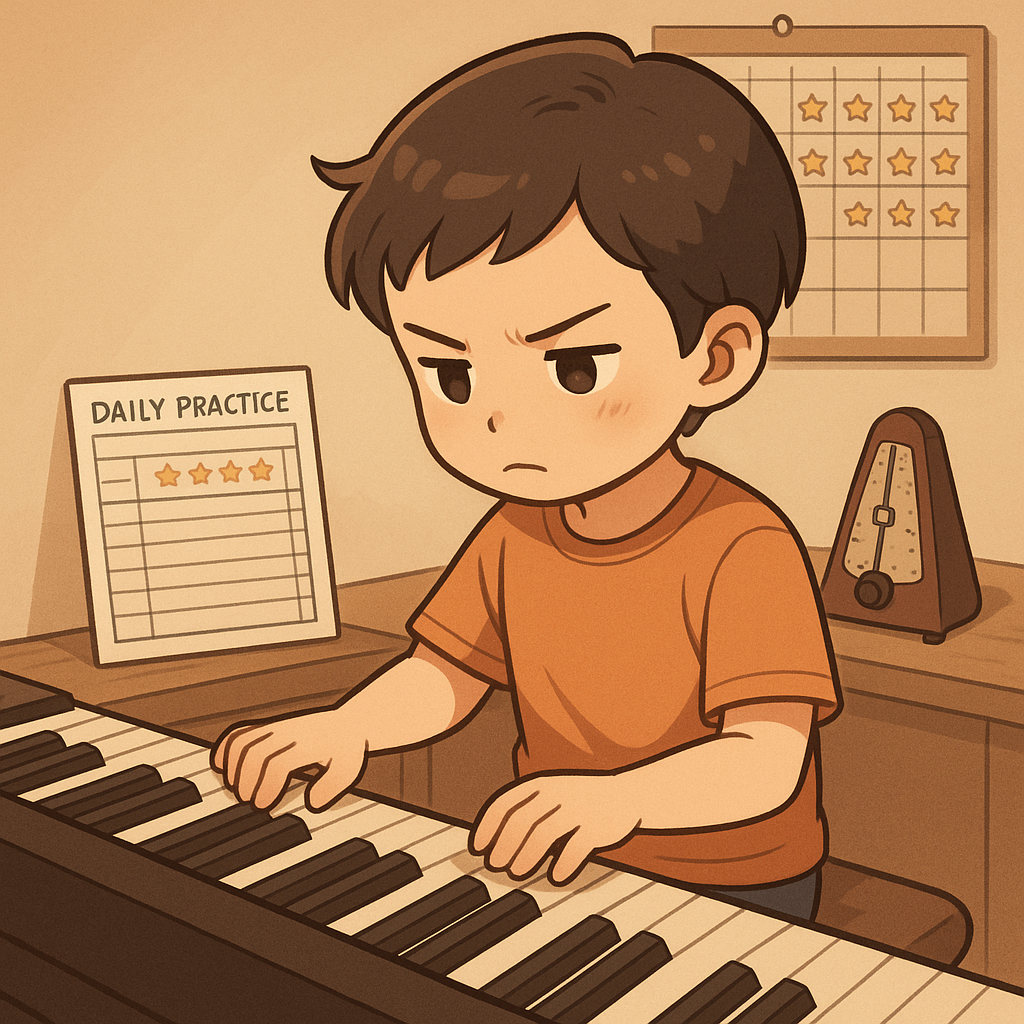
Stage 3: Technical Transition (Grades 5–6) — Technique Meets Expression
Your child has moved past “learning from scratch” and entered the plateau of going “from competent to good.” This is where technique and musicality begin to diverge.
Priority 1: Hand Coordination and Clarity
Polyphonic pieces and fast passages start appearing, demanding greater finger independence, wrist flexibility, and mental coordination. The goal is no longer just “getting through the piece” but “playing it clearly.”
Priority 2: Awakening Emotional Expression
Don’t let your child play like a “typing robot.” Guide them to understand the mood of a piece: “This one feels like a relaxed walk through a forest” or “This section sounds like a storm rolling in — very tense.”
Breakthrough tip: Participate in small performances, music workshops, or grading exams. The stage is the ultimate test — one successful experience can fuel your child’s motivation for a long time.
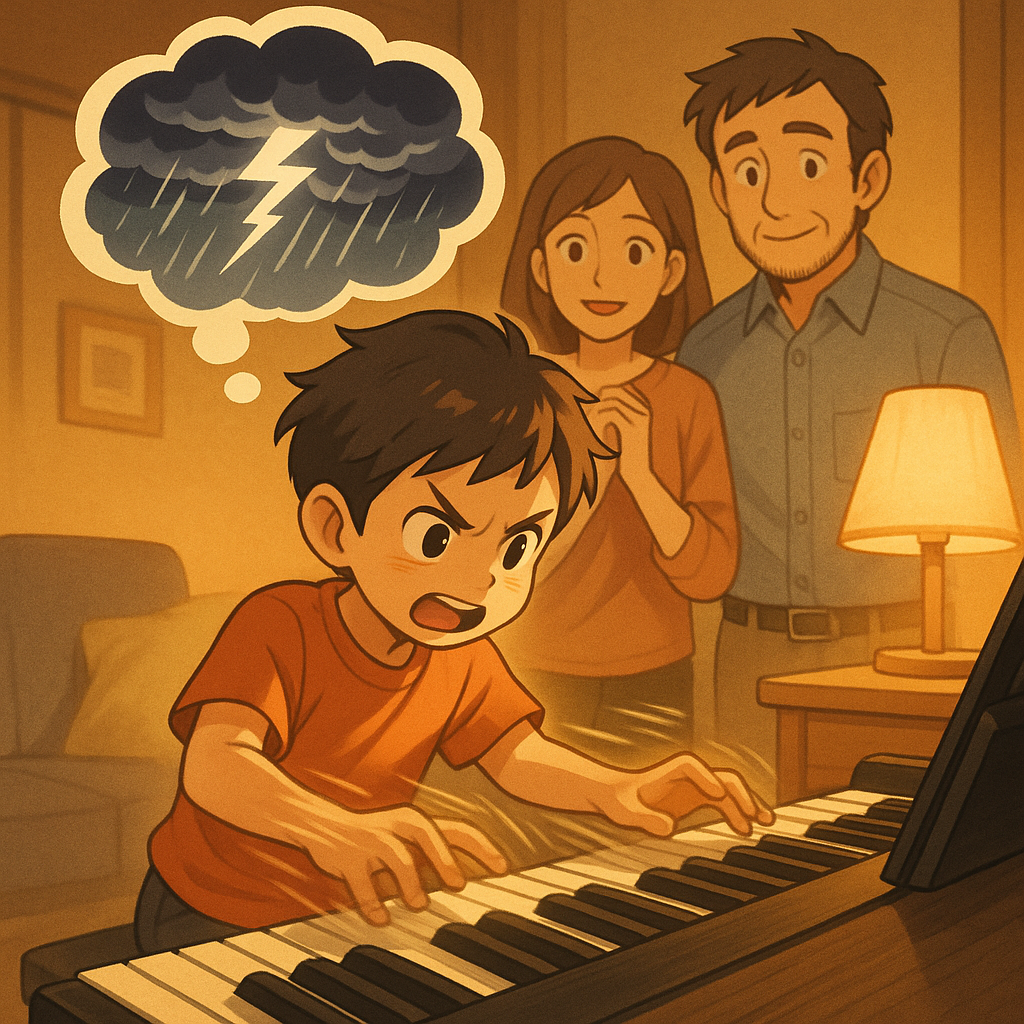
Stage 4: Advanced Refinement (Grades 7–8) — Precision and Style
Repertoire difficulty takes a big leap, and practice plateaus hit more often. This is the stage that tests perseverance the most — and where many students give up.
Priority 1: Detail Work and Slow Practice
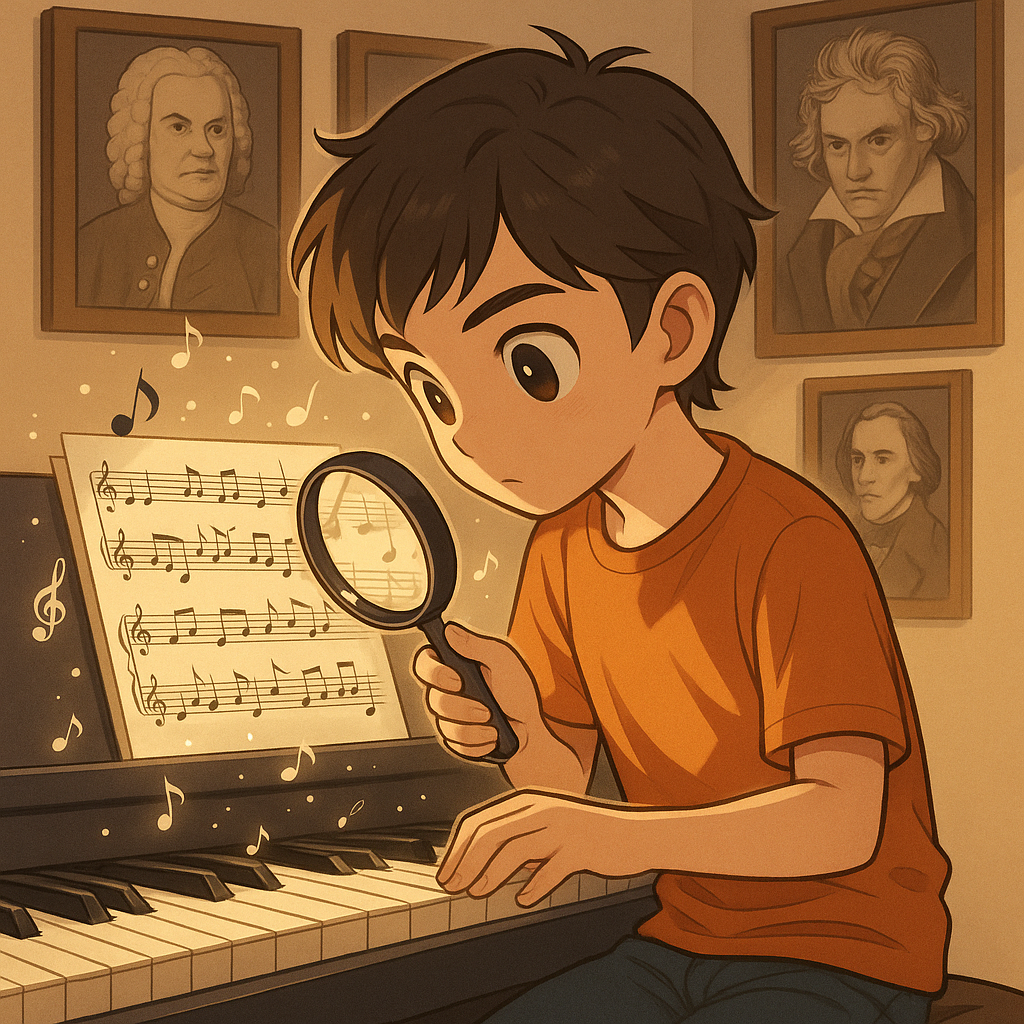
No more “playing through from start to finish and calling it done.” Your child must learn to practice slowly, practice hands separately, and practice in sections — like a detective finding mistakes, like a craftsman polishing every detail.
Priority 2: Developing Style Awareness
Bach demands discipline and restraint. Chopin calls for romantic phrasing. Beethoven requires power and conviction. Encourage your child to listen to different recordings and understand what each composer was trying to express.
The parent’s role: Shift from “supervisor” to “teammate.” When your child says “It’s too hard, I don’t want to practice,” your job isn’t to criticize — it’s to empathize and be present: “I know this is tough. Let’s figure out together how to work through it, okay?”
Stage 5: Advanced Performance (Grades 9–10 and Beyond) — Understanding and Expression
If your child has made it this far, they’re among the rare few. The competition is no longer about finger mechanics — it’s about musical depth and artistic taste.
Priority 1: Deep Musical Understanding
A piece is no longer about “playing what’s on the page” — it’s a personal interpretation, a creative re-expression. Encourage your child to attend concerts, read composer biographies, and learn about the historical context of the works they play.
Priority 2: Merging Control with Emotional Impact
Dynamics, tempo, tone color, pedaling… every technique should serve as a tool for musical expression. The goal is not just “playing correctly” but “bringing the music to life” and connecting with the audience.
Shifting roles: The teacher’s role becomes increasingly important, requiring higher-level guidance. Parents should fully transition from “practice partner” to “support system and biggest fan.”

The Hidden Challenge: Mental Resilience
Learning piano is less about training the fingers and more about running a marathon of willpower.
Can your child handle the frustration of a difficult piece? The nerves before a performance? The disappointment after a competition setback? Can they stay committed when all their friends have quit?
Mental resilience is the hardest “hidden level” — tougher than any piece of music. This challenge tests not just the child, but the wisdom and patience of the parents.
Walk Beside Them at Every Step, and They’ll Have the Strength to Reach the Top
The piano journey isn’t a sprint — it’s a long climb.
If you want your child to take each step steadily and with genuine motivation, take a look at the Wonder Piano app. With AI-powered error detection, gamified practice motivation, and a massive sheet music library, it helps children build independent practice habits — and saves parents the stress and energy of hovering over every session.
Don’t let “missed priorities” turn into “missed passion.” The more patience you give, the more courage your child will find.