Is Your Piano Really in the Right Spot?
A piano might be the most expensive — and most demanding — piece of “furniture” in your home. You were full of excitement when you bought it, but once it arrived, the whole family was left scratching their heads. Where on earth should this massive instrument go? It seems like a simple question, but it can spark a full-blown debate about aesthetics and space planning.
Today, let’s have a serious (but lighthearted) talk about where your piano should actually live.
1. First, Figure Out What Kind of “Piano Home” You Have
When it comes to piano placement, households generally fall into three categories:
✅ Type A: The Dream Setup A dedicated music room + double-pane windows + climate control + the piano looks like a piece of art. If this is you, congratulations — you’ve already won. Just hire an interior designer for some acoustic treatment, and feel free to skip the rest of this article.
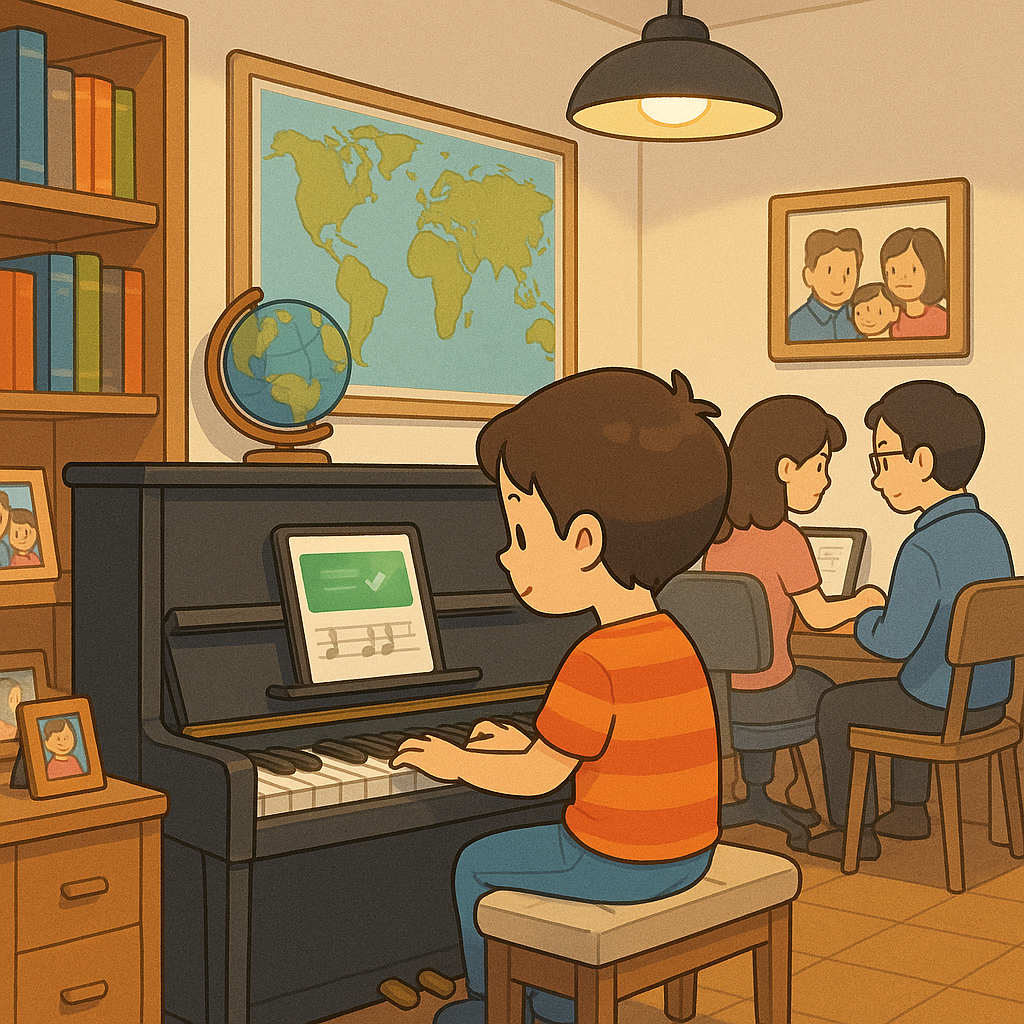
✅ Type B: The Multi-Purpose Room The piano shares space with the dining table and the study desk. Your child is practicing, mom is working on her laptop nearby, and dad is cooking dinner in the kitchen. Whether the piano can actually be heard over all this chaos is anyone’s guess — but its tuning is definitely resonating with keyboards, pots, and pans year-round.
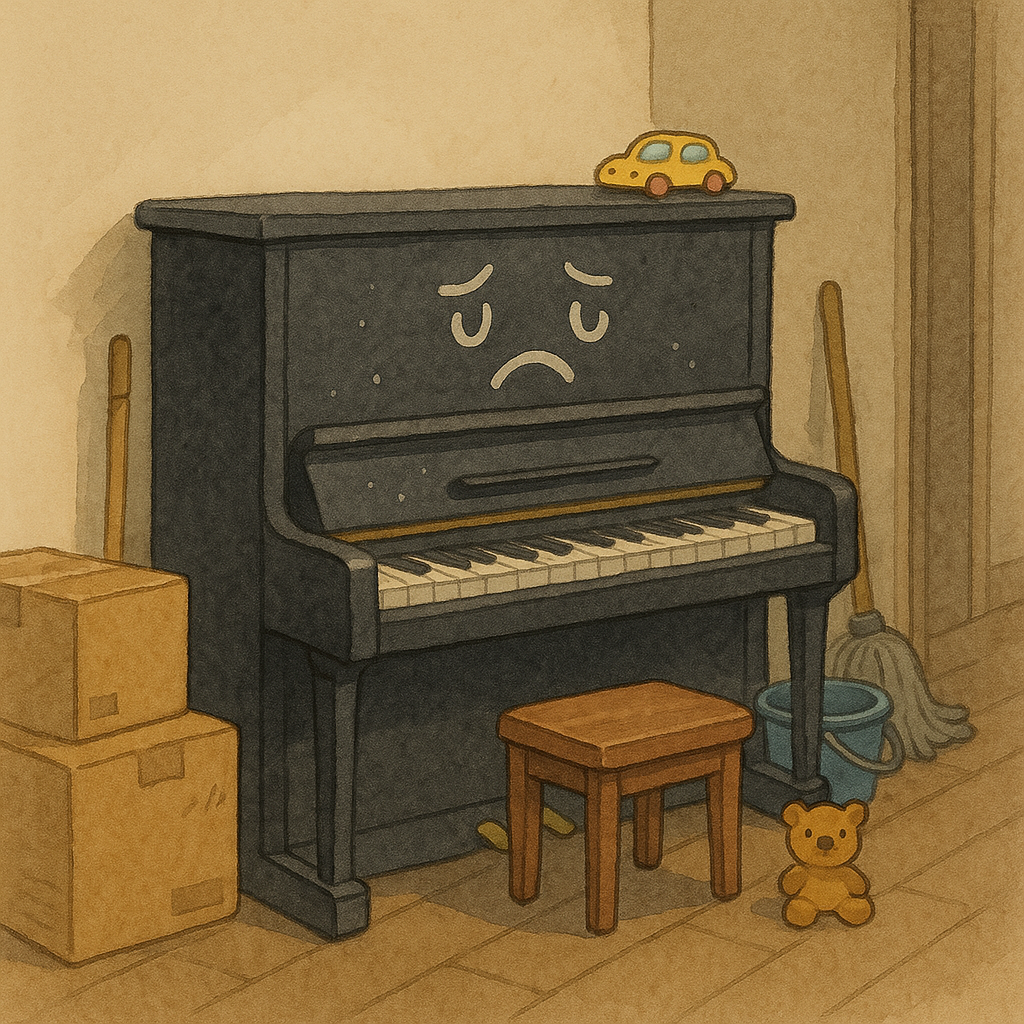
✅ Type C: The “Wherever It Fits” Approach When you first moved in, the piano held pride of place in the living room. Then you bought a projector and nudged it aside. Then you got a cat and nudged it a bit more. Now it sits alone at the end of a hallway, buried under a week’s worth of mail and clutter, like a retired artist quietly waiting to be remembered.
2. Get the Location Wrong, and Three Big Problems Come Knocking
Seriously though — where you put your piano doesn’t just affect your child’s motivation to practice. It directly impacts the piano’s lifespan and your family’s harmony (pun intended).
Problem 1: Shortening Your Piano’s Life — Invisible Physical Damage A piano is a precision wooden instrument, and it’s surprisingly delicate. Placing it in the wrong physical environment is like putting it on a slow path to self-destruction.
Sun exposure + high heat = cracked soundboard: Placing it on a balcony or near a window exposes it to UV rays and temperature swings that can fade the finish, warp the wood, and even crack the soundboard — the piano’s most critical component. Repairs are extremely expensive. You didn’t buy a piano; you bought an expensive piece of firewood.
Humidity + poor ventilation = moldy keys: Placing it near the kitchen, bathroom, or in a stuffy corner means excessive moisture can make the hammers sluggish, the keys sticky, and internal parts rusty and moldy. Your music might literally start to smell off.
Problem 2: Neighborhood “Wars” — Unavoidable Noise Issues Pianos are loud and incredibly penetrating. Upright pianos are especially problematic — when the soundboard is pressed against a wall, your neighbor essentially gets a free heavy metal concert. If the back of your piano faces your neighbor’s bedroom wall, twenty minutes of your child’s practice could have the neighbor next door ready to file a noise complaint. Give it three days, and they might show up at your door with a “gift” (or a strongly worded letter).
Problem 3: Your Child Suffers — Unbearable Psychological Pressure Poor placement can create two extremes of psychological pressure for your child:
Too isolated (too quiet): Some parents, worried about noise, stuff the piano into a converted storage closet. It seems peaceful, but the reality is that the child practices alone every day like a monk in solitary meditation — no audience, no encouragement, no connection. The usual outcome? Two minutes of practice, then two minutes investigating how to disassemble the pedals.
Too exposed (too visible): Other parents place the piano front and center by the entrance. Every visiting relative says, “Play something for us!” This fishbowl effect turns practice into a performance obligation, creating enormous pressure and making the child more anxious with every session.
3. So Where Should It Go? Here’s the Straightforward Advice
The ideal location balances “physical safety” with “psychological comfort.”
🎯 Best spot: Against an interior wall in the living room or a corner of the study This is the household “sweet spot.”
Spacious, with relatively stable temperature and humidity, protecting the piano from direct damage.
Part of daily family life, so your child doesn’t feel alone — they know they’re not fighting this battle solo.
Not in the visual center or a high-traffic pathway — parents can read or work while casually listening to their child play. There’s a sense of companionship without the pressure of surveillance. And when they hit a wrong note, you can gently say, “Sweetie, that last note sounded a little… creative.”
🚫 Worst spots: Balcony / near the bathroom / next to the kitchen / directly in front of an AC or heater vent Remember: any location with dramatic temperature or humidity swings is a “no-go zone” for your piano.
4. Once You’ve Picked a Spot, Don’t Forget These 3 Things
1. Get a piano cover + blackout curtain: They protect against dust, moisture, sun, cat claws, and curious little fingers. It adds a nice touch and keeps your piano safe.
2. Get a hygrometer and manage humidity regularly: A simple hygrometer (just a few dollars) is your piano’s best friend. The ideal humidity range is 40%–60%. This is especially important in humid climates — be sure to run a dehumidifier during rainy seasons.
3. Make sure there’s an outlet nearby: Many kids now use AI practice apps, which means tablets or phones need charging. Don’t wait until practice time to discover the battery is dead — your child will seize the moment to say, “I guess that’s enough for today,” and all your efforts will be wasted.
A Side Note: The Right Spot Isn’t as Important as the Right Method
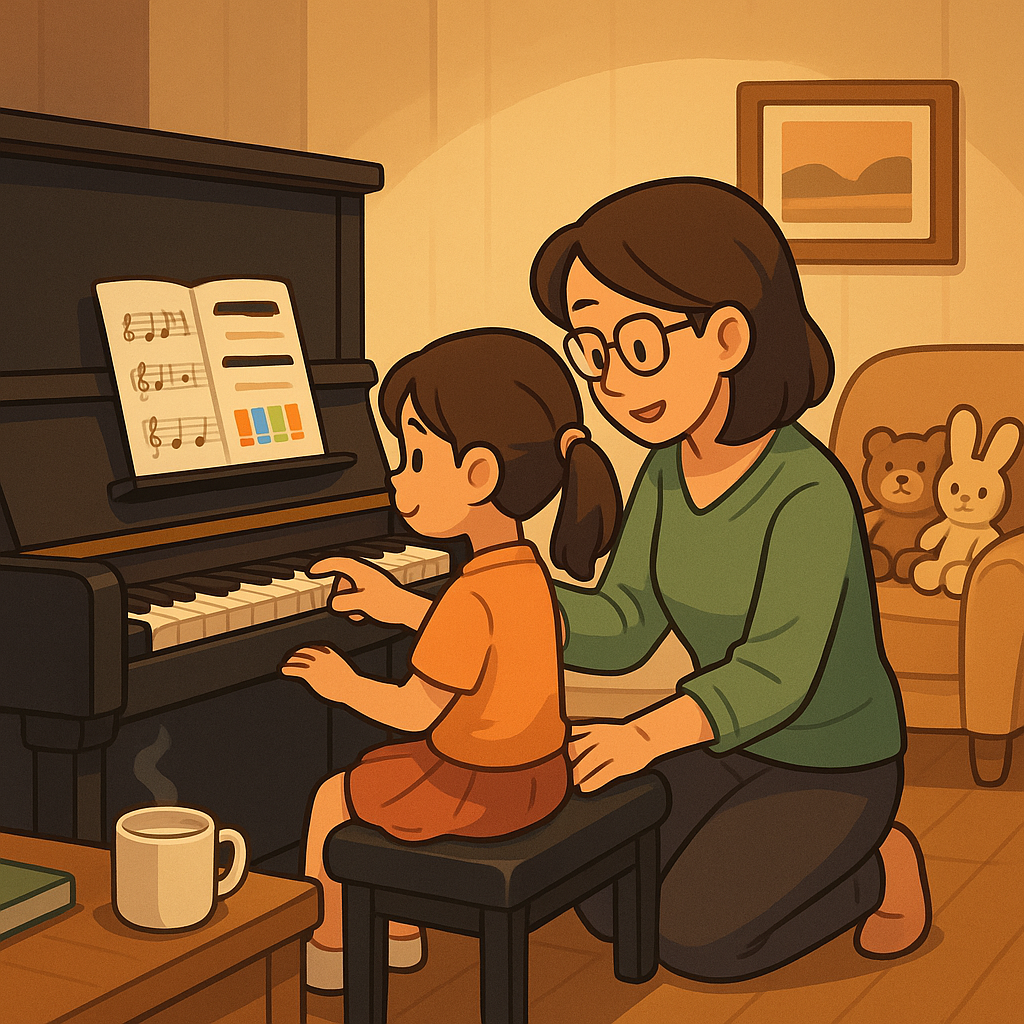
We’ve gone through all this trouble to find the perfect “home” for the piano, solving the physical environment and family atmosphere challenges. But ultimately, it all comes back to the core question: How do you get your child to willingly sit down at the piano and practice effectively?
Many parents find that even with the perfect placement, they still end up playing the role of “supervisor” and “error detector” — exhausting work that often leads to parent-child conflict. That’s because traditional practice methods are inherently boring and lack instant feedback.
Fortunately, technology has given us new options. Many families are now turning to AI practice apps like our product, Wonder Piano. When kids open the app, it’s like entering a magical world: completing levels, collecting magic stones, and advancing through a storyline — all while playing the piano to “save the magic kingdom.” The AI listens in real time, catches wrong notes and rhythm issues, and provides guidance, so parents don’t have to hover the entire time.
With the right tools, the piano stops being just “furniture” and becomes a gateway to an extraordinary world.
Summary: The Ideal Piano Placement Guide
Physical environment: Avoid direct sunlight, stay away from heater/AC vents, and keep humidity between 40%--60%. (Right location)
Acoustic environment: Keep the back of the piano 10--15 cm from the wall. If possible, add an acoustic panel behind it, and avoid placing the back directly against a neighbor’s bedroom wall. (Right wall)
Psychological environment: Place it in a family activity area (like the living room or study), but not in a high-traffic pathway. Create an atmosphere of “companionship without pressure.” (Right vibe)
The best home for a piano isn’t as an expensive piece of furniture or a status symbol — it’s as a warm, living part of your family life, a musical companion that happily fills your home with sound.
Find the right spot, and let the music play. When the piano sounds good, the whole family smiles.