How Good Does My Child Need to Get at Piano to Call It a Success?
On the last day of the school semester, I was waiting outside the piano room for my child to finish his lesson. Two parents nearby were chatting, and one of them whispered, “What grade is your child on?” The other shook her head: “They haven’t taken the exam yet. The teacher said to wait until they finish the Beyer method book.” The first parent sighed, “My child just passed Grade 5, but I feel like they still can’t play as well as the Grade 7 kid in our neighborhood. That kid is already playing Liszt’s La Campanella…”
I quietly looked down as my child came out carrying his music book. He hadn’t taken any grading exams. Lately he’d been working on a cheerful practice piece, and he seemed pretty happy about it. But on the way home, one question kept circling in my mind: How good does a child really need to get at piano before we can call it a “success”?
Is it about the grade level? Winning competitions? Or becoming “that amazing kid” other parents talk about? Many parents default to thinking: passing Grade X counts as success; performing on stage counts as success; getting into a music school or earning an arts scholarship — that’s the ultimate success.
I kept thinking about a girl in our neighborhood named Liang Xin. At a gathering last month, the adults asked her to play something, and she performed Chopin’s “Farewell Etude” beautifully. Afterward I asked her mother, “What grade is she?”
Her mother smiled: “I have no idea. She’s never taken the exam. She’s been learning for eight years, just following the repertoire.” In that moment I realized: True “success” isn’t necessarily written on a certificate.
What Does “Success” in Piano Actually Mean?
Let’s be honest with ourselves: when we talk about “success” in piano, what are we really hoping for? The truth is, parents, children, and teachers all define “success” quite differently. Parents care about “what grade are they on” and “is this useful” — ideally it helps with school applications or earns bonus points.
Children care more about “is this fun” and “do I feel accomplished when I play something.” Teachers might hope their students develop “musicality,” “solid technique,” and “accurate rhythm.”
And the piano itself? It asks nothing of you. It simply waits for you to come closer
So how should we actually judge “success”? Here are a few unofficial benchmarks I’ve put together:
Your child willingly sits down to practice — no resistance, no avoidance
You no longer have to chase them every day asking “have you practiced?” Instead, after dinner, they walk over and open the piano lid on their own. Maybe they don’t play perfectly today — the rhythm is off, the hand position needs work — but the fact that they want to practice is more important than anything.
I remember last summer, my child spent every afternoon playing “Soldiers’ March” for nearly two weeks straight. I asked him, “Doesn’t that get boring?” He said, “No, I want to get that phrasing in the middle section clearer.”
I didn’t say anything, but inside I was thinking loud and clear: That’s it. That’s success.
They can solve practice problems on their own, without “waiting for the teacher to explain”
The older generation always said “the teacher knows best,” but when it comes to learning piano, 99% of practice time is your child alone, working through the score and their fingers.
I’ve seen plenty of children who, even when they’re only playing a sonatina, will mark fingerings on tricky passages, break sections down for slow practice, or even record themselves on their phone to listen back and check their steadiness.
These children may not have high exam grades, but they are absolutely learning well. Because what they’re developing through piano isn’t just technique — it’s the ability to solve problems independently.
They can express emotions through music, not just “complete the assignment”
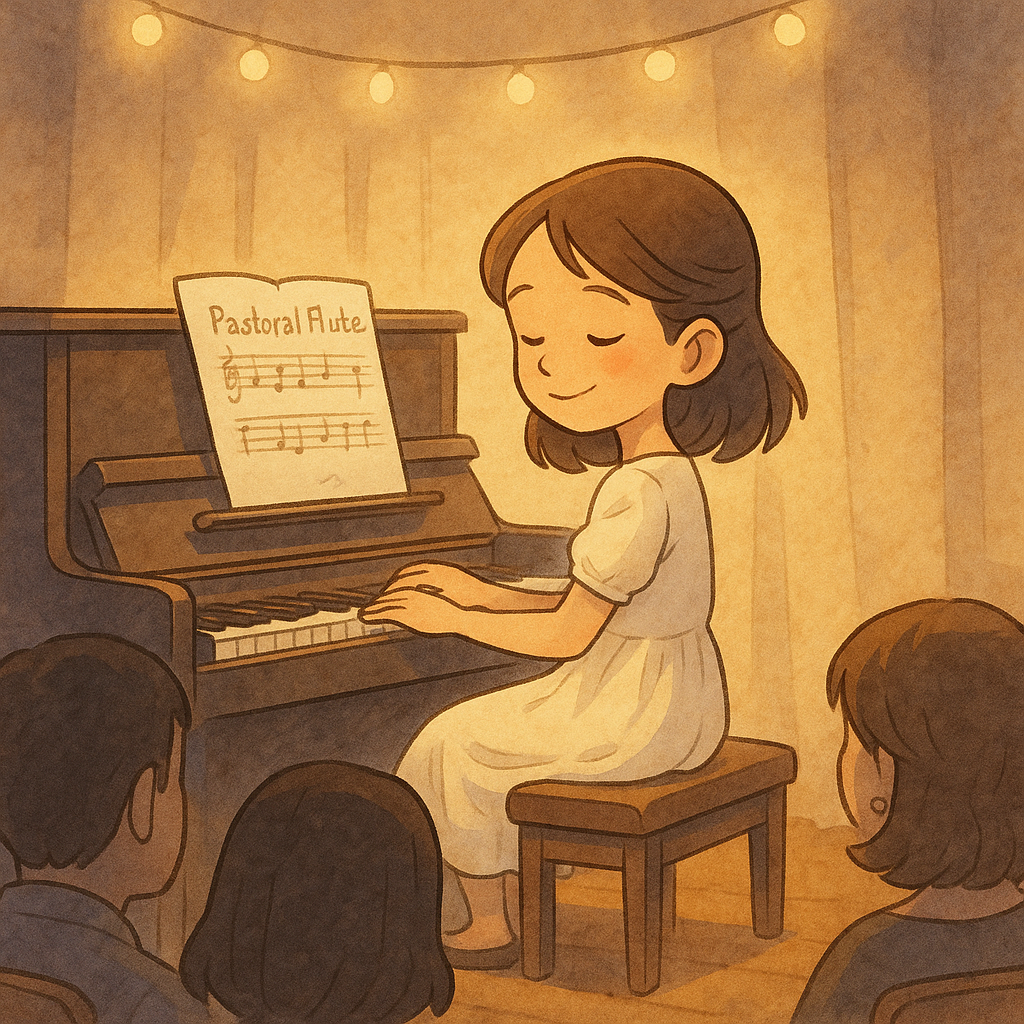
Once I took my child to a community piano recital. He was playing a gentle folk-style piece, and the night before he was worried: “Isn’t this piece too easy? Won’t I look bad when everyone else is playing big, impressive pieces?” I just told him: “You love this piece. Play it.”
After he finished that day, he came over with his eyes shining and said, “Mom, that last soft note — I played it so gently, it felt like there was actually a breeze.” I didn’t respond. I just held him.
Not because he played beautifully, but because I saw a child speaking through music. He was no longer just someone who “executes” practice — he was becoming someone who “expresses.”
They haven’t gone the professional route, but piano has become part of their life
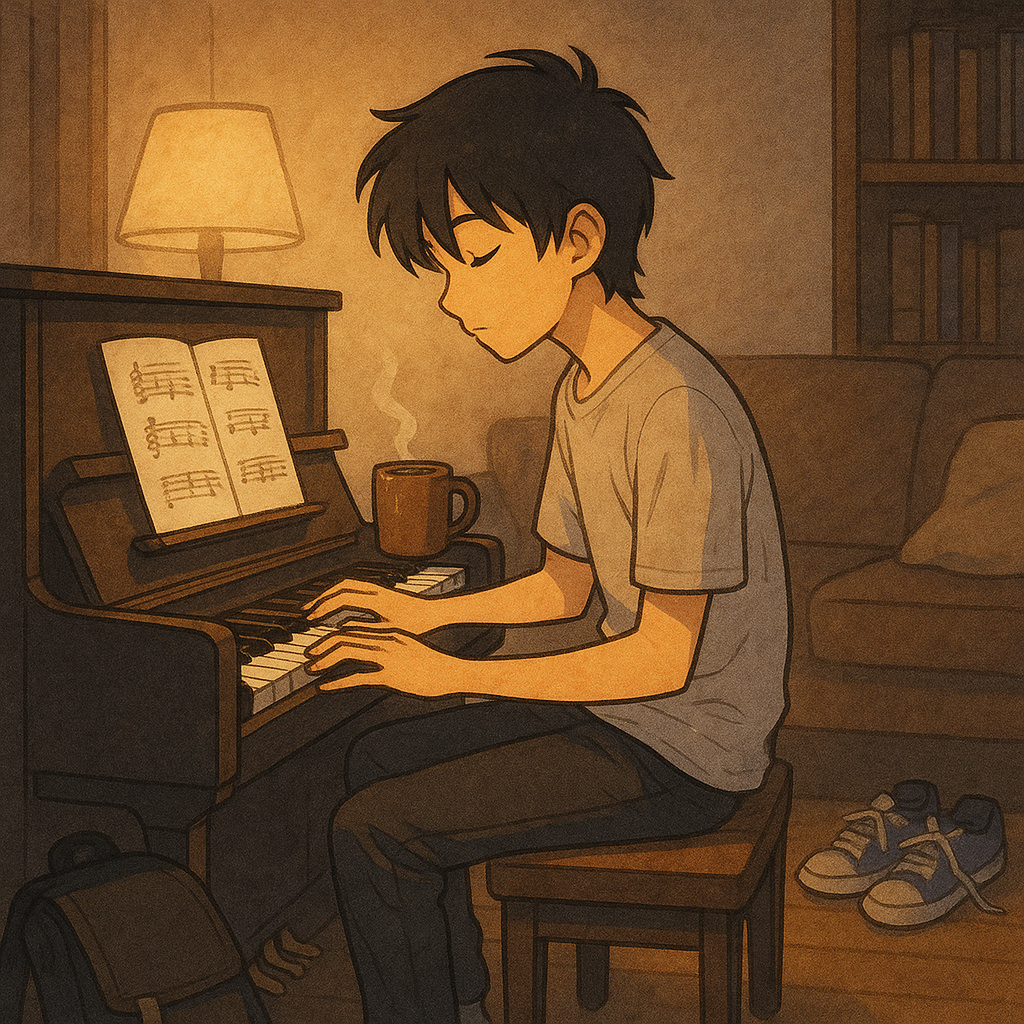
At a parent-teacher meeting the other day, I was chatting with another mom. Her child had less time for piano after starting middle school, but he’d still play a bit after evening study hall. “My son says when schoolwork gets exhausting, playing piano for a while feels like a break.” That hit me hard.
This is probably the best possible outcome of music education. It hasn’t become a heavy burden — it’s become a companion that can walk with you for a long time.
Not everyone needs to become a professional performer. But being able to sit down on a rainy day or during a rough patch and play whatever comes to mind, finding a moment of peace in the music — what a gift that would be.
So ultimately, “success” is an inner state, not a piece of paper. It’s not a result at some fixed point in time, but an ongoing process:
They want to keep playing.
They know how to practice.
When they’re feeling emotional, they go to the piano.
They know that playing makes them feel a little better.
As long as music keeps walking alongside them, that in itself is the greatest “success.” It sounds wonderful, but we all know the road to this ideal is often paved with thorns.
The daily grind of practice is tedious. The frustration of hitting wrong notes again and again is real. Many children’s interest gets worn away on exactly this path. As parents, we can’t always be there as a professional practice coach, and we certainly can’t feel the joy of music on their behalf.
What we can do is help them find a good “companion” — one that turns tedious practice into something engaging, gently points out mistakes, and keeps offering positive encouragement.
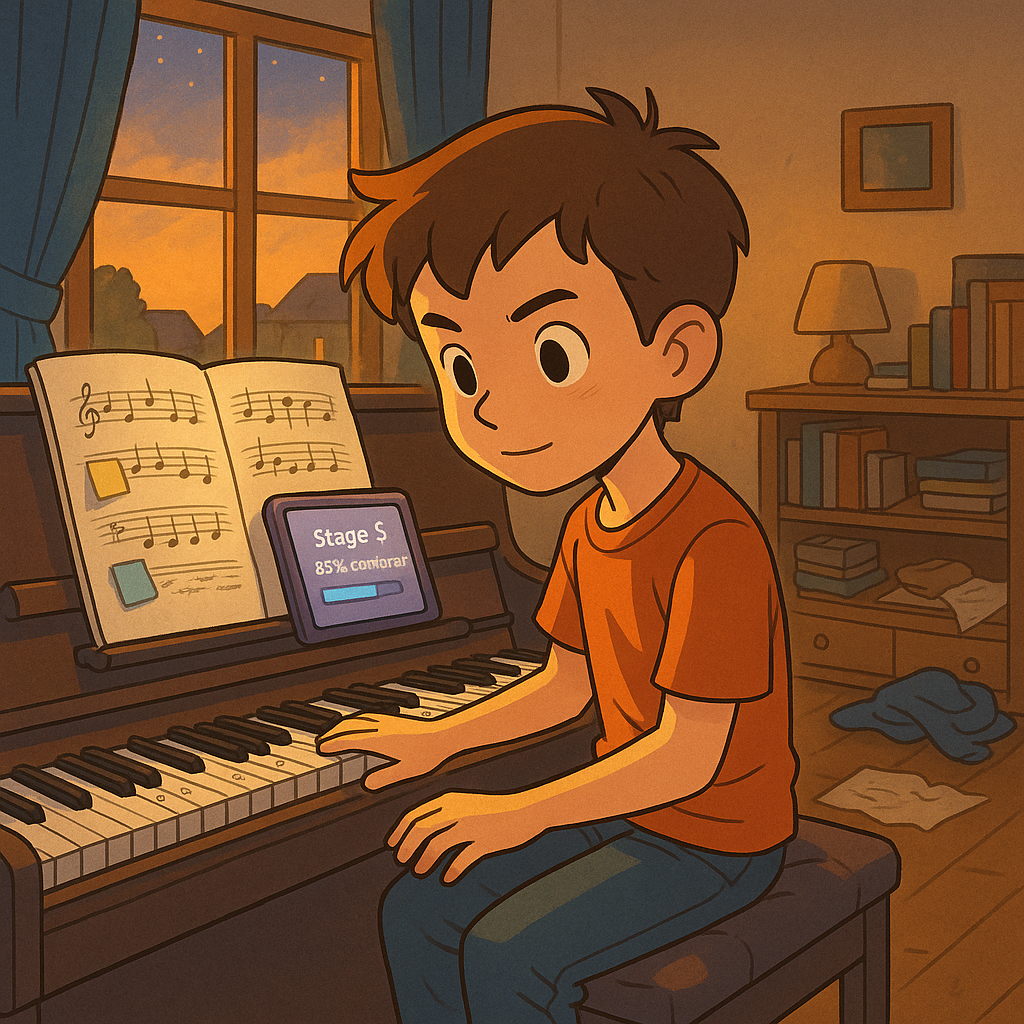
Wonder Piano is exactly that kind of companion. It turns practice into something like a game adventure — after playing through a piece, children unlock story chapters and collect magic stones. Practice stops feeling like a chore and starts feeling like “game progress” they want to push forward every day.
It accurately detects wrong notes and rhythm issues, and the feedback is gentle — it won’t interrupt their playing or crush them with low scores. After each session, they can see their “magic power” level go up, and even a tiny improvement becomes a visible sense of achievement.
Gradually, I stopped having to remind him. He started saying on his own: “Mom, I want to beat this level today.” I think not every child needs a teacher watching over them every second, but every child deserves a companion that can spark their interest and walk further with them.
If you’re also struggling with your child’s reluctance to practice, give Wonder Piano a try. It might just be the pleasant surprise that lights up your child’s musical journey.