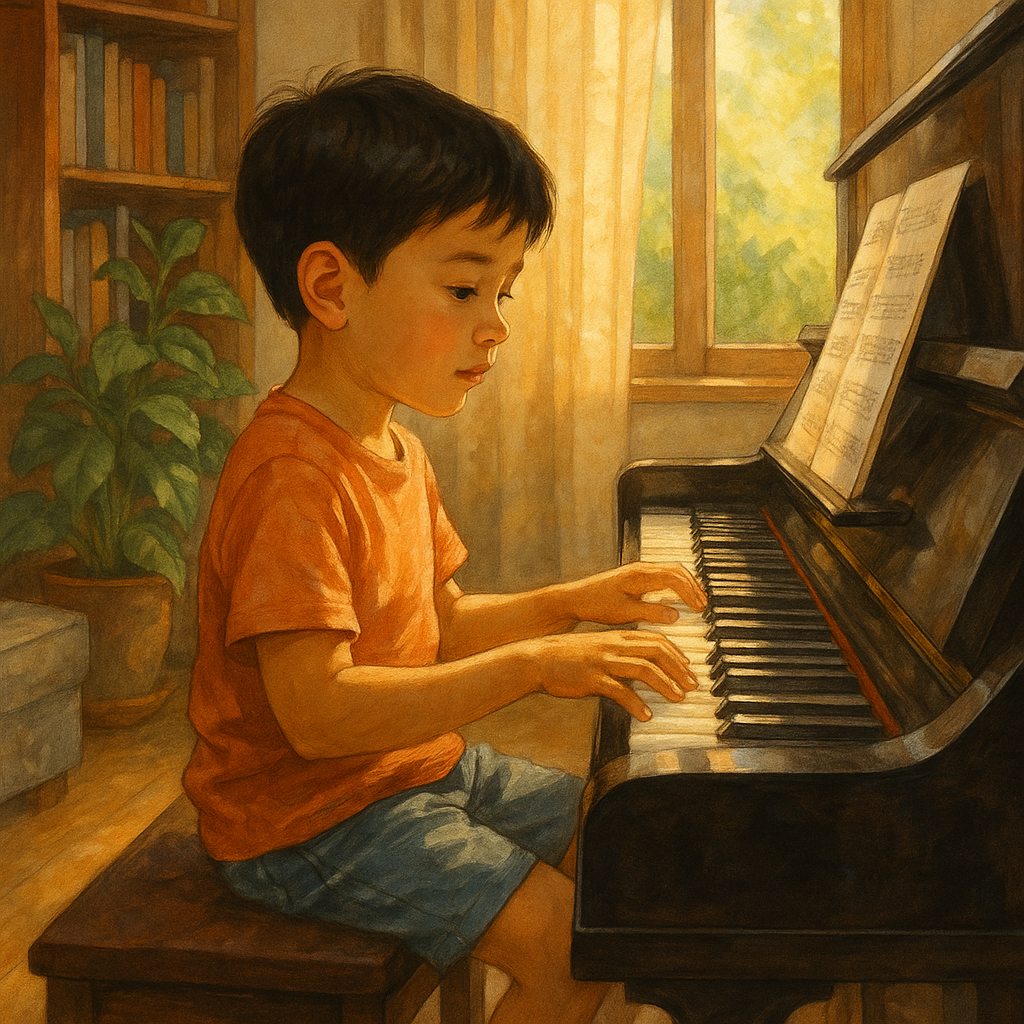
Why Children Who Learn Piano “Never Go Astray”
When you see friends sharing their children’s grading certificates or hear beautiful piano music drifting through a mall, it’s hard not to wonder: “Should my child learn piano too?”
But that thought is quickly drowned out by worries: “Can my child sit still long enough?” “Will they give up halfway?” “Is it really worth the investment?”
Every parent who has had the same thought understands these struggles.
But today, I want to talk about something a little different. I’m not here to discuss “being able to play the piano” itself, but rather what learning piano can give your child beyond music — the more precious gifts it brings to their life.
01 Music: A Child’s “Language of the Heart”
Psychologists have said that art is humanity’s most primal form of emotional expression. For children, the piano is a golden key that opens their inner world.
When their little hands press the keys, they’re not just making sounds — they’re creating and expressing.
Developing refined taste: Through sustained exposure to classical music and melody, children’s ears become more “discerning.” They learn to appreciate and feel beauty at a deeper level. This heightened sense of aesthetics stays with them for life, helping them notice the beauty in details — whether in their studies, their daily lives, or eventually their careers.
Becoming their own “emotional healer”: Children experience negative emotions too — disappointment, frustration, anger. When they struggle to express these feelings in words, music becomes the perfect outlet.
A gentle piece can soothe their anxieties; a rousing one can release pent-up energy. By replacing words with notes, children learn to regulate their emotions and become more centered.
02 A “Dual Workout” for Hands and Brain
Learning piano is far more than simple finger exercises. It’s often called a “brain workout” because it demands an unprecedented level of multitasking from a child’s brain.
Intense left-right brain interaction: The left hand plays bass while the right hand plays treble; one hand handles chords while the other carries the melody. This kind of training — where both hands work independently yet in sync — effectively promotes coordinated development of both brain hemispheres.
Neuroscience research has shown that children who study a musical instrument long-term develop thicker, more densely connected brain cortices, which greatly benefits their cognitive abilities.
A major boost to focus and memory: Playing a single piece requires a child to simultaneously remember notes, rhythm, fingering, dynamics, and even emotional expression.
This demands intense concentration. Through repeated practice and memorization, a child’s ability to focus is strengthened like a muscle, refined through hundreds of repetitions. You may even notice that after starting piano lessons, your child pays better attention in class and memorizes schoolwork faster.
A “secret weapon” for logical thinking: Reading sheet music is essentially like solving an elegant math problem. A child must instantly identify notes, locate positions on the keyboard, and calculate rhythms. This rapid analysis and response capability becomes the foundational logic they’ll use to tackle all kinds of challenges in the future.
03 “Invisible Assets” for Life
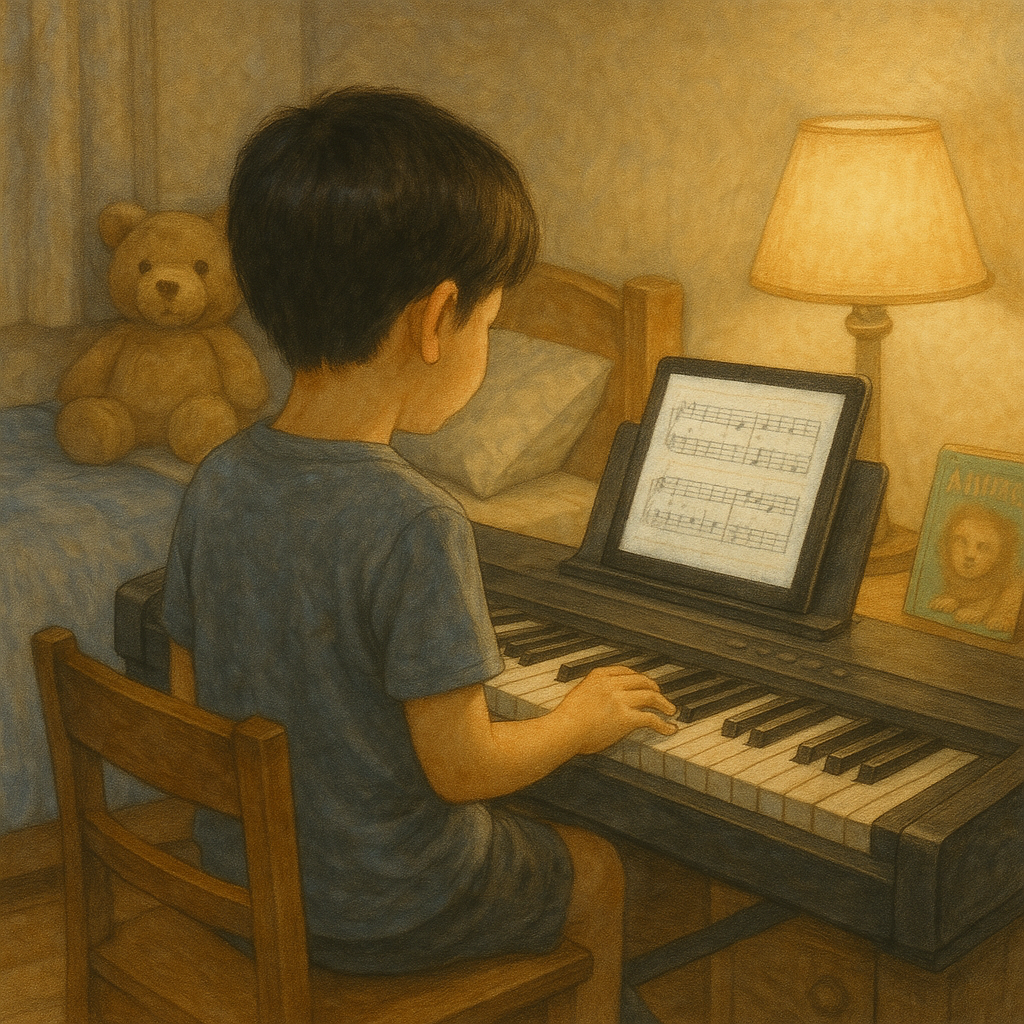
There are no shortcuts on the road to learning piano. Going from stumbling through pieces to playing them smoothly requires hundreds, even thousands, of repetitions.
Building “delayed gratification”: The satisfaction of practicing piano doesn’t come overnight. Ten extra minutes of practice today might mean playing a passage more smoothly tomorrow. Through this long-term accumulation, children gradually come to understand the relationship between effort and reward, learning to work toward long-term goals rather than chasing fleeting pleasures.
Developing resilience: Wrong notes, stumbles, rhythm problems — these are all part of the daily routine. But every time a child starts over from the beginning, it’s a test of their willpower. They learn that making mistakes isn’t something to fear — what matters is adjusting and starting again.
This powerful ability to handle setbacks will make them more resilient in their future studies and careers.
Building self-discipline: Practicing for 30 minutes every day sounds simple, but sticking with it requires serious discipline. Once this habit takes hold, it naturally extends to schoolwork, sports, and eventually their professional lives — becoming a priceless asset that benefits them for life.
04 A Confidence “Accelerator” for Your Child
Every small performance, school recital, or impromptu piece played for friends and family is the best kind of “confidence training” for a child.
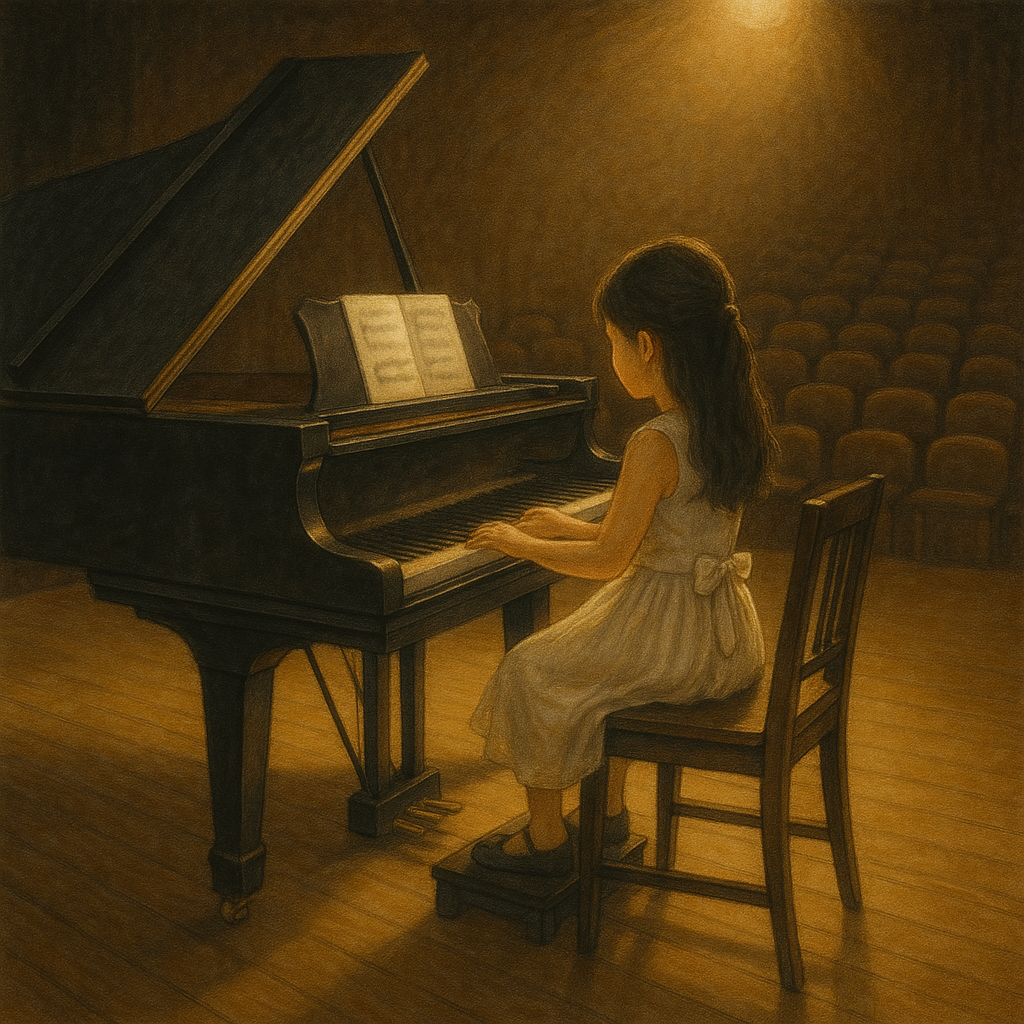
Learning to express with composure: Standing center stage — even just to play a simple children’s song — takes courage. Through countless opportunities to “take the stage,” children gradually overcome stage fright and learn to face an audience with poise.
The joy of being recognized: A successful performance, a word of praise from a parent, a round of applause from the audience — any of these can spark a flame of confidence in a child’s heart. This joy of being appreciated becomes a powerful driving force for them to keep moving forward.
Opening new doors to social connection: Music is one of the best social languages. By joining music groups or ensembles, children integrate into groups more quickly, make like-minded friends, and learn the value of collaboration and sharing.
You may not have realized it, but learning piano also strengthens family bonds. When a child practices, a parent’s presence shifts from mere “supervision” to working through challenges together and sharing in the joy of progress. When a child hits a plateau, the encouragement and recognition from their parents becomes one of their most cherished memories.
05 How to Help Your Child Fall in Love with Practicing
After discussing all these benefits, we have to face the most practical question: What do you do when your child can’t sit still and daily practice becomes a tug-of-war?
Simply forcing a child to practice will only breed resistance and kill their interest.
Without positive feedback, the monotony of practice will make a child want to give up quickly.
The hardest part of learning piano isn’t the “learning” — it’s the “practicing.” The key to solving this problem is protecting your child’s interest and making them want to practice.
As Wonder Piano’s official platform, we understand the challenges that parents and children face on their practice journey. We believe the best education isn’t something you force — it’s a path your child chooses to walk on their own.
This philosophy is exactly why we developed Wonder Piano — an AI-powered practice app designed specifically for children ages 3 to 12. It’s not meant to replace a teacher, but to be your child’s most supportive smart practice companion, helping them stay interested and motivated during daily practice sessions.
Our original “AI Gamified Learning” system: We’ve woven the routine of sheet music practice into engaging storybooks and magical adventures. Instead of mechanically repeating passages, children unlock storylines and earn rewards by playing. This “learn while you play” approach transforms practice from a chore into a “quest game” that children look forward to every day.
Precise AI recognition and real-time correction: Wonder Piano features advanced AI technology that accurately recognizes every note your child plays. The moment a wrong note or rhythm issue appears, the system provides prompts and corrections, helping your child identify and fix problems right away. This dramatically improves practice efficiency while taking significant pressure off parents who would otherwise need to guide each session.
Scientific data analysis for smarter learning: The app keeps detailed records of every practice session — including duration, piece progress, and accuracy. Parents can use this data to clearly understand their child’s learning progress and plan a more effective study path, making every practice session count.
For families who have already decided to start their child on piano, Wonder Piano is a thoughtful companion tool. It uses technology to protect your child’s interest, making consistency easier and helping the seeds of music take root in their heart.
Wonder Piano’s vision is for every child to fall in love with music through joy, and to grow through self-driven exploration.