1 Year, 3 Years, 5 Years of Piano: What’s Really Different?
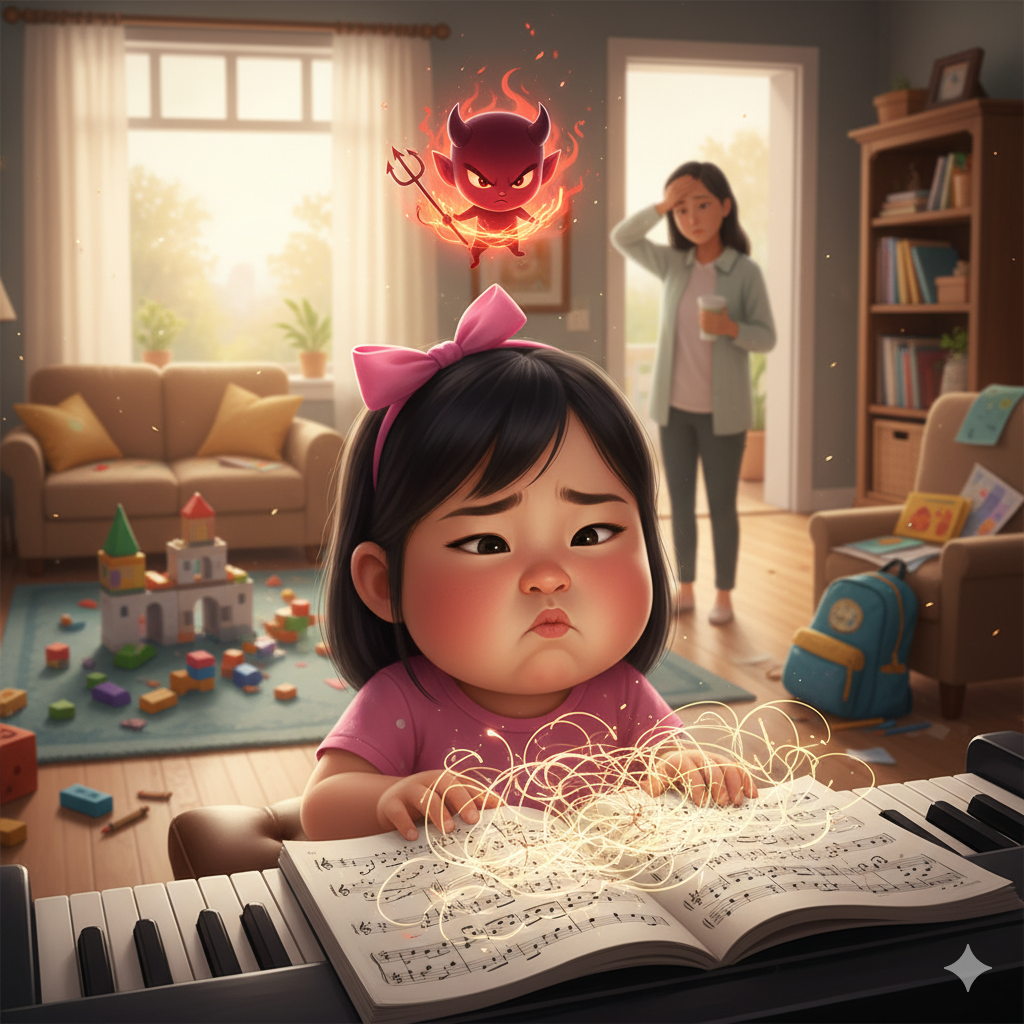
We’re so used to telling children that “perseverance is victory,” yet we overlook an important truth: for a seven-year-old, pitting “willpower” against “human nature” (the desire for fun and aversion to boredom) is a bet they’re almost guaranteed to lose.
We tend to assume the difference between 1, 3, and 5 years of piano is about how difficult the pieces are or what grade level a child has reached.
Today, let’s look past those surface-level comparisons and talk about what really matters — the profound changes happening inside your child’s brain and character during those years.
And why 90% of families give up right before the leap from “struggle” to “breakthrough.”
This article will completely change the way you think about piano lessons.
Year 1: The Toughest Phase — “Brain Rewiring”
Nearly 90% of children who quit do so in the first year. Parents feel defeated; children feel frustrated. And that’s completely normal — because in the first year, a child is fighting against the very human instinct to avoid hard work.
Playing the piano is essentially an incredibly complex multitasking exercise: the eyes read the score, the brain translates it, the ears listen for pitch, and the fingers move independently. During this stage, your child isn’t just “learning music” — they’re doing intense “brain gymnastics.”
Many parents assume their child “doesn’t have talent,” when in reality they’re underestimating how demanding this “gymnastics” truly is. Here’s a “patience permission slip” from science: Long-term tracking studies from the U.S. National Institutes of Health (NIH) and other research institutions found that after just 15 months of instrumental training (such as piano), significant structural changes in the brain can be observed on MRI scans.
Specifically, the corpus callosum — the bridge connecting the left and right hemispheres — and the areas responsible for auditory processing and motor planning become measurably stronger. In plain terms: During the first year of piano, it doesn’t matter how good your child sounds. What matters is that every reluctant practice session is “building a road” — constructing a brand-new, high-efficiency “neural highway” in their brain.
The real gap after the first year isn’t about how many pieces they’ve learned, but whether that “road” has been built.
Year 3: The Visible “Cognitive Leap”
If the first year is “planting seeds,” the third year is when you start to harvest “bonus dividends.” Parents of children who persist to year three often share the same observation: “My child seems to have gotten smarter.”
This “smartness” isn’t magic — it’s a data-backed “cognitive leap.”
The Brain’s CEO: Executive Function
A study published in the prestigious journal PLOS One found that children with at least two years of systematic music training showed significantly stronger “executive function” than their peers. “Executive function” is a technical term, but it’s essentially the brain’s “CEO” — responsible for three core abilities:
Planning and problem-solving: Playing piano requires children to think for themselves — “This section is hard. Should I practice slowly or hands separately?”
Attention control: Playing piano demands sustained, deep focus.
Emotional and impulse regulation: When they hit a wrong note, they can’t throw a tantrum — they have to control their emotions, go back, and fix it.
This is why children who play piano tend to sit still better and approach tasks more methodically.
The Hidden Superpower: Memory
Another remarkable benefit is memory. Research has found that children with several years of systematic piano training can remember 20% more vocabulary in word recall tests than peers without musical training.
That’s because practicing piano is an extreme workout for “working memory” — you have to simultaneously hold the score, rhythm, and fingering in your mind. This memory capacity transfers directly to memorizing vocabulary, poems, and math formulas.
In plain terms: The biggest difference in a child who has studied piano for three years is that “their brain works better.” They haven’t just gained a musical skill — they’ve unknowingly strengthened their brain’s “CEO” and acquired “soft skills” that transfer to any subject: focus, self-control, and exceptional memory.
Year 5: The Most Precious Phase — “Character Formation”
By year five, music’s influence on a child transcends “skill” and “intelligence” and enters the realm of “character.” We’ve observed many children who stuck with piano for five years or more. Their biggest shared trait isn’t “fast fingers” — it’s a quality.
University of Pennsylvania psychology professor Angela Duckworth calls it “Grit.”
In her research, “Grit” is passion and perseverance for long-term goals — a quality that predicts future achievement better than IQ or emotional intelligence.
And learning piano is virtually the perfect training ground for Grit
No shortcuts: No piece of music can be “rushed.” The only path is day-after-day “deliberate practice.”
Facing failure: Practicing piano is a continuous cycle of “make a mistake — correct it — make another mistake — correct it again.”
Delayed gratification: Today’s tedious practice might not pay off as a smooth, flowing piece for another month.
In plain terms: The biggest difference in a child who has studied piano for five years is that they’ve developed “grit” as a core character trait.
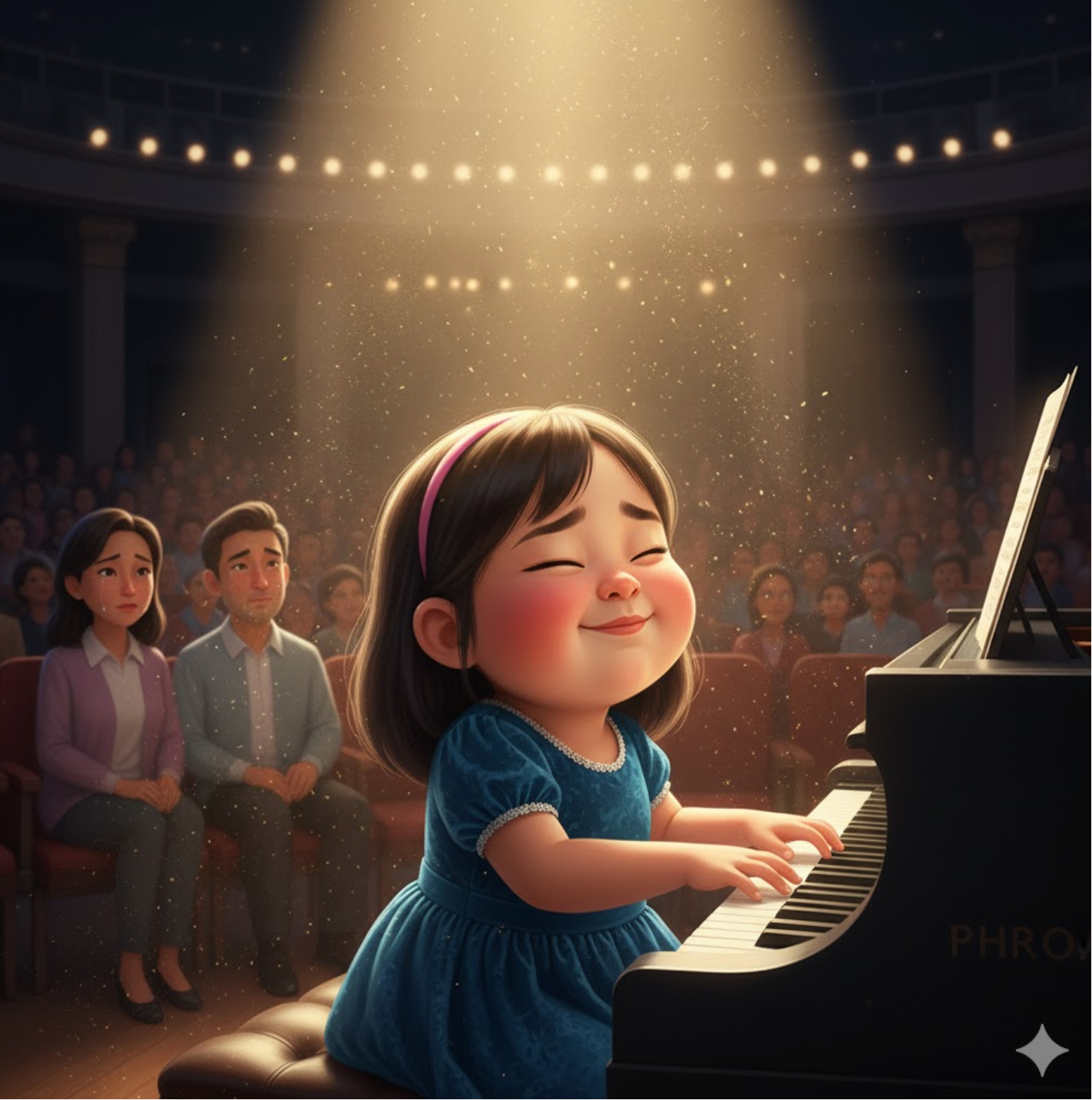
They no longer need their parents nagging them. They start to “self-manage.” They truly understand that “small efforts lead to big breakthroughs.” They’re accustomed to “delayed gratification.” They dare to “face difficulties head-on.” This quality will benefit them for life.
From “Make Me Practice” to “I Want to Practice”
By now, the data and research all point to one conclusion: stick with it, and the rewards are enormous.
But here comes the biggest paradox: We all know the year-three “cognitive leap” and the year-five “grit” are incredibly appealing, yet the vast majority of children give up during the first year’s “brain rewiring” phase.
Because during the startup phase — when “perseverance” matters most — all we’ve given children are “tasks” and “pressure.”
When the Wonder Piano team began development, they interviewed hundreds of families who had quit. We discovered that the core reason families “can’t stick with it” isn’t a lack of willpower in the child or irresponsibility in the parents — it’s that the “practice experience” itself is broken.
It’s too boring, too frustrating, too much against human nature
Parents are forced into the role of “enforcer,” draining the parent-child relationship day after day until everyone is exhausted and simply gives up.
We believe there has to be a better solution between “perseverance” and “enjoyment.”
This is exactly the mission behind Wonder Piano: let children “want to practice” on their own, and let parents “enjoy the journey” with them.
Our vision is clear: replace the traditional task-driven approach with gamification to reduce resistance to practice. We want to solve that grueling “Year 1 gap.”
How Do We Turn “Boring” into “Fun”?
1. Replace “tasks” with “adventure”: We designed a complete immersive “story-based quest system.” Children aren’t “drilling exercises” — they’re on a “magical adventure,” unlocking new storylines, collecting magic stones, and earning magic points with every practice session. This system reinforces the psychological connection between practicing and positive feedback. As one child put it: “It’s like playing a game while playing the piano.”
2. Replace “harsh correction” with “gentle feedback”: Traditional practice apps interrupt with a harsh buzzer at every wrong note, creating intense frustration. Our AI recognition system uses “gentle feedback” — it identifies pitch and rhythm in real time but encourages children to self-correct rather than abruptly stopping them. This dramatically reduces frustration during the early stages.
3. Ease the parent-child relationship: When children are driven by storylines and game mechanics and start “choosing to practice on their own,” parents can finally step out of the “supervisor” role. You don’t need to understand music to read the practice reports. All you need to do is give your child a hug when they complete a quest — and go back to being their “cheerleader” and “biggest fan.”
We can’t fast-forward through the 1, 3, or 5 years for your child, but with Wonder Piano, we hope to make that hardest stretch of road a little more fun and a little easier.