Stop Obsessing Over “Talent”! These 3 Slow Signals Show How Far Your Child Can Go in Music
On the journey of a child’s music education, the word “talent” weighs heavily on countless parents’ minds.
It fuels the most common anxiety: Is it really worth pursuing? After investing enormous time and money, could it all end up wasted on a dead-end path?
Yet through years of teaching experience, we’ve seen one truth confirmed again and again: Fixating on “talent” too early is one of the biggest mistakes that can stifle a child’s musical potential.
True potential often doesn’t reveal itself at the starting line — it’s hidden in the details of the learning process. Today, we won’t talk about vague notions. Instead, we’ll break down three signals that matter far more than “talent,” helping you assess whether your child has the deeper qualities needed to thrive in music — and helping you see the real value of learning music.
Don’t Be Discouraged by “Off-Pitch Singing” or “Shaky Rhythm” — Perception Is a Trainable Skill
Many parents equate musical talent with good pitch and rhythm.
These two abilities are certainly foundational to musical perception, but they are absolutely not the same as “talent” — and they are certainly not “unteachable.”
🎧 Pitch accuracy: Before ages 4 to 6, most children’s auditory systems and vocal mechanisms are still developing. Some kids start out completely off-key, but after a few months of structured singing and sight-reading exercises, their pitch improves dramatically.
🥁 Rhythm: This is even less of an innate ability. It’s built gradually through movement games, metronome practice, and repetition — an “internal metronome” that develops in both the brain and the body over time.
So if your child’s rhythm is unsteady or their singing is off-key at first, it absolutely does not mean they “lack talent.” Quite the opposite — what we should pay attention to is their interest in and response to sound. For example:
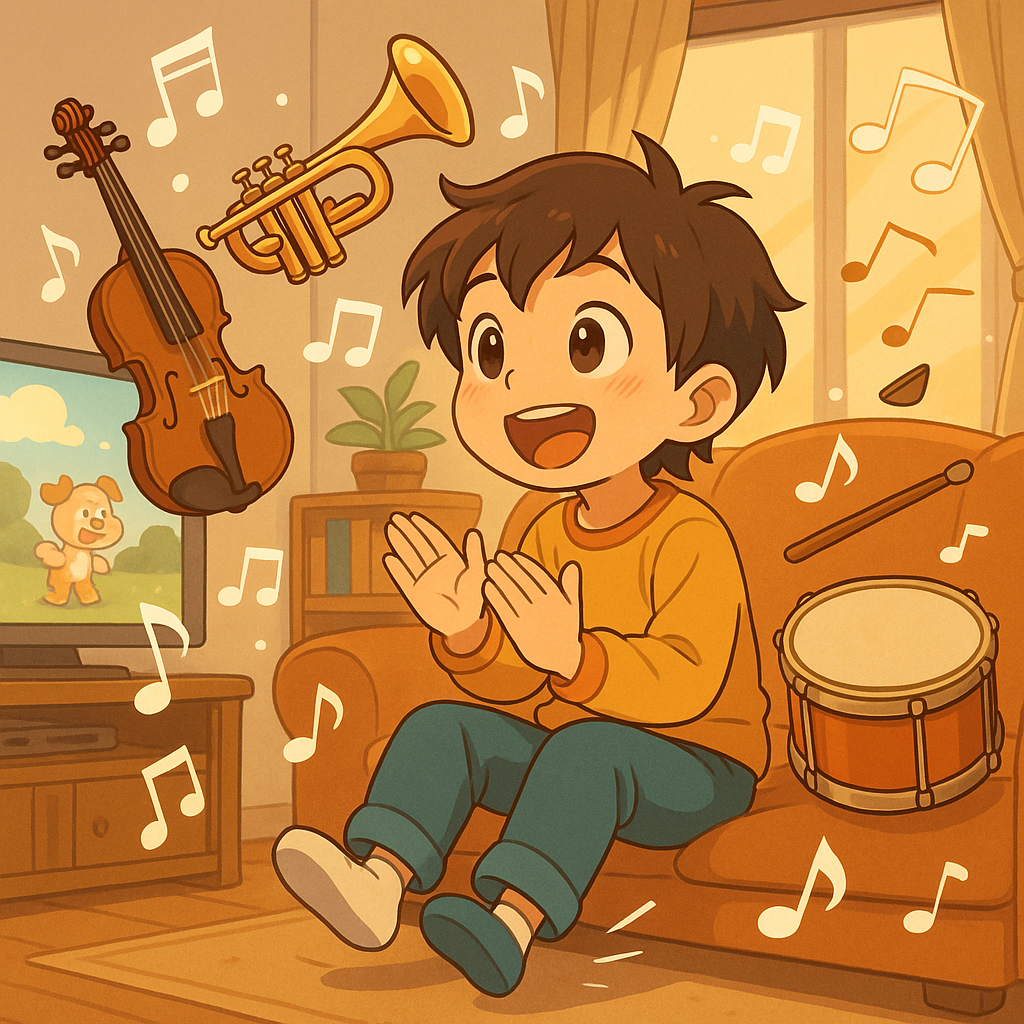
They instinctively bob their head, clap along, or dance when they hear a beat.
They show intense curiosity about the sounds of different instruments.
They love imitating and humming melodies from commercials or cartoons.
These “seeds of musicality” are far more valuable than perfect pitch from day one. They tell us that a child already has a natural connection to music.
The Real Talent Is “Willingness to Grind” — Does Your Child Stick With What They Love?
Talent isn’t always hidden in a dazzling debut — it’s often found in the everyday willingness to keep going.
We’ve seen so many children:
Some start brilliantly, picking things up fast, but they won’t sit down and practice patiently — they’re on again, off again.
Others are slow to start, but they practice diligently and stay focused. Three years later, they’ve far surpassed the first group.
That’s because learning music is fundamentally a process of repetition and refinement — not a game of sudden flashes of inspiration.
So instead of asking, “Does my child have musical talent?” a better question is:
Are they willing to spend time working on the things they’re not yet good at?
If a child can sit down every day — even for just five minutes — and willingly polish a single note or correct one measure, it shows they possess the foundational ability to master any skill: patience and the ability to enjoy the process. That is the most powerful talent of all.
The Spark in Their Eyes: Intrinsic Motivation Is the Only Fuel for Going the Distance
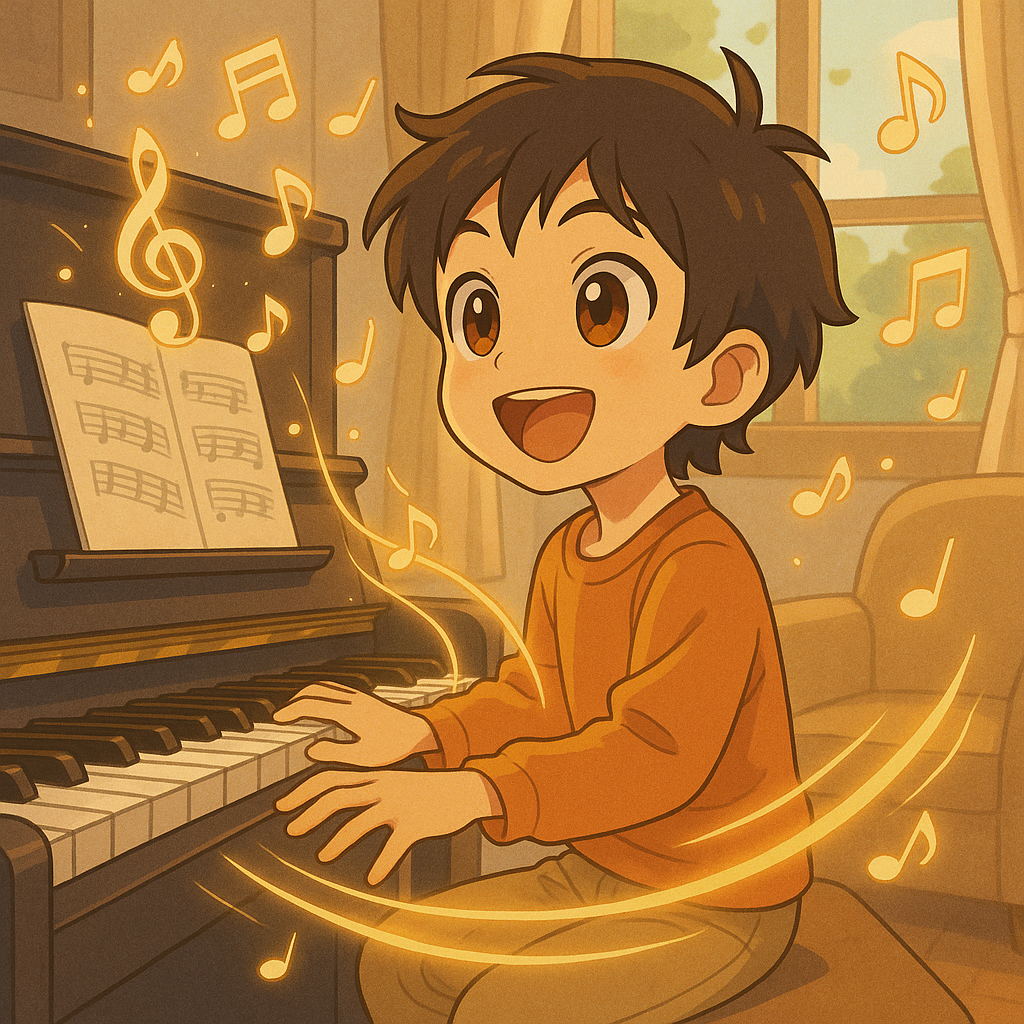
Some children’s eyes light up when they’re making music.
That spark doesn’t come from exam results or parental praise — it comes from genuinely enjoying the sense of expression and mastery that music brings.
You can spot a child’s intrinsic motivation for music in small details like these:
🎵 After a lesson, they keep playing their favorite passages on their own.
🎵 They try to figure out pop songs or cartoon themes by ear.
🎵 Even when practice isn’t going smoothly, they keep trying — pushing themselves to find the right feel.
🎵 Outside of practice time, they bring up music on their own and talk about instruments.
This isn’t something you can force — it’s a connection that comes from within. This kind of inner passion is the “rocket fuel” that helps a child push through boredom and overcome challenges on their musical journey. It determines just how far they’ll ultimately go.
Talent Isn’t the Admission Ticket — It’s the Accelerator
Is talent important? Of course. But it’s not the deciding factor.
Here’s a helpful way to think about “musical talent”:
In the short term, it affects the starting point: Some children pick things up quickly; others take longer.
In the medium term, it affects the pace of progress: Naturally gifted children may find certain stages easier.
In the long term, its influence pales in comparison to “passion + perseverance + wise guidance.”
The people who truly make it in music aren’t necessarily born prodigies. They’re the ones who are willing to practice scales over and over, walk into the practice room day after day, and choose not to give up even when emotions run high.
For the Anxious Parent: Be Your Child’s Partner on the Musical Journey
✅ 1. Let go of “talent theory” and embrace “growth theory”
Music isn’t only worth pursuing if it leads to a professional career. The value of learning music goes far beyond exams or becoming a performer. It’s a medium for cultivating focus, self-discipline, aesthetic appreciation, and the courage to face setbacks.
✅ 2. Be an observer, not a judge
Don’t rush to label your child — “He has no sense of rhythm” or “She can’t sing in tune.” Replace conclusions with observations: “You seemed really happy listening to that music. That beat is a little tricky — want to try again?” This makes children more willing to explore instead of afraid to make mistakes.
✅ 3. Don’t just be a supervisor — be a cheerleader
A child’s interest is like a small flame, and your praise, companionship, and willingness to explore together are the best oxygen for that flame. Don’t just focus on whether the technique is right or wrong — also notice “Did they make a small improvement today?” and “Did they light up after playing a beautiful chord?”
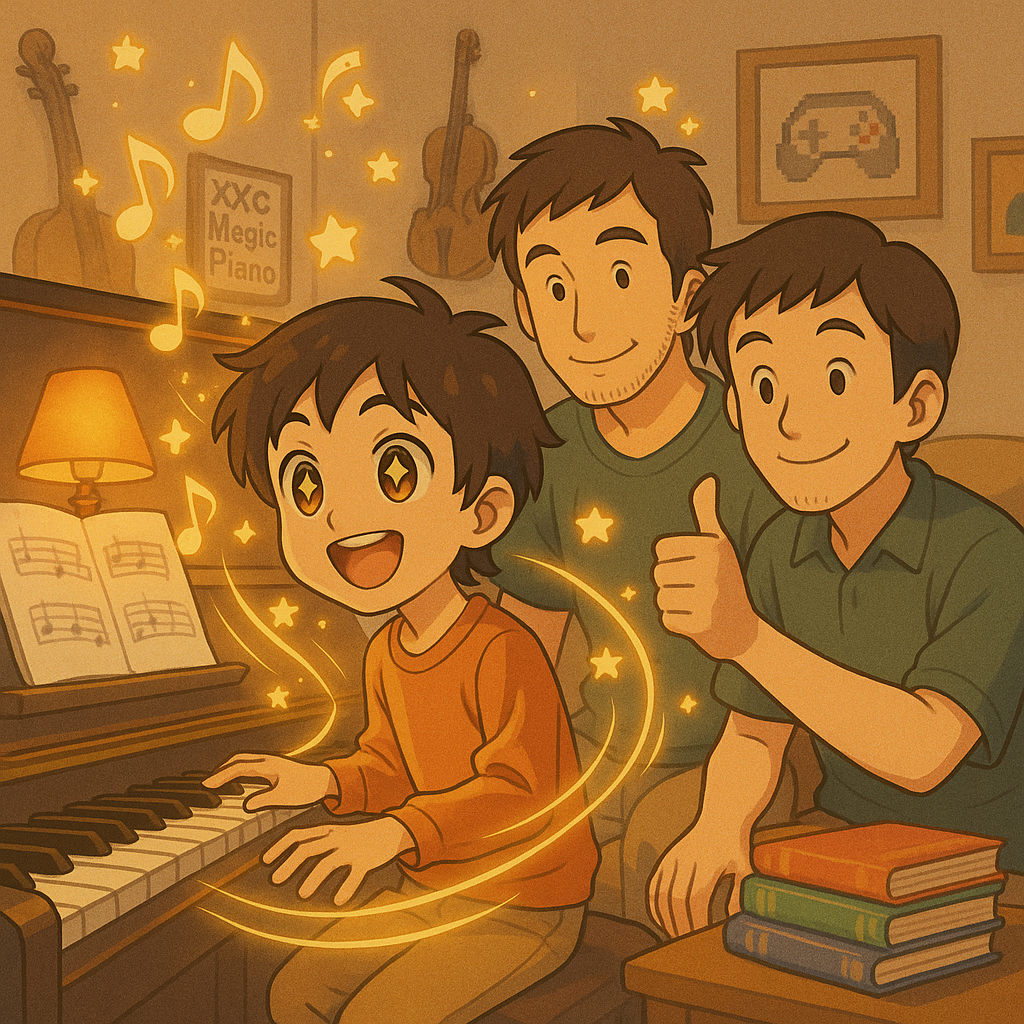
Wait for the Bloom, and Listen for the Echo
May every child find their own rhythm in music.
And may every parent have the patience to wait for the moment when the flower blooms.
On this challenging journey of musical companionship, you don’t need to be a professional practice coach every moment. Sometimes, the right tool can become the gentlest bridge between you and your child.
Take Wonder Piano, for example. Its AI recognition and real-time error correction help children catch mistakes during practice without fear of getting things wrong. Its story-based adventure mode with magic star rewards turns tedious practice into a goal-driven quest. And it saves parents countless hours of hovering over the piano, transforming you from a “supervisor” into a true “supporter.”
The seeds of music will sprout in time. And the warmth of technology can be the quiet, helping hand that lifts your child along the way.
Wonder Piano — helping children practice their way to a love of music.