Your Child Loves Piano but Hates Practicing: 3 Truths Most Parents Miss
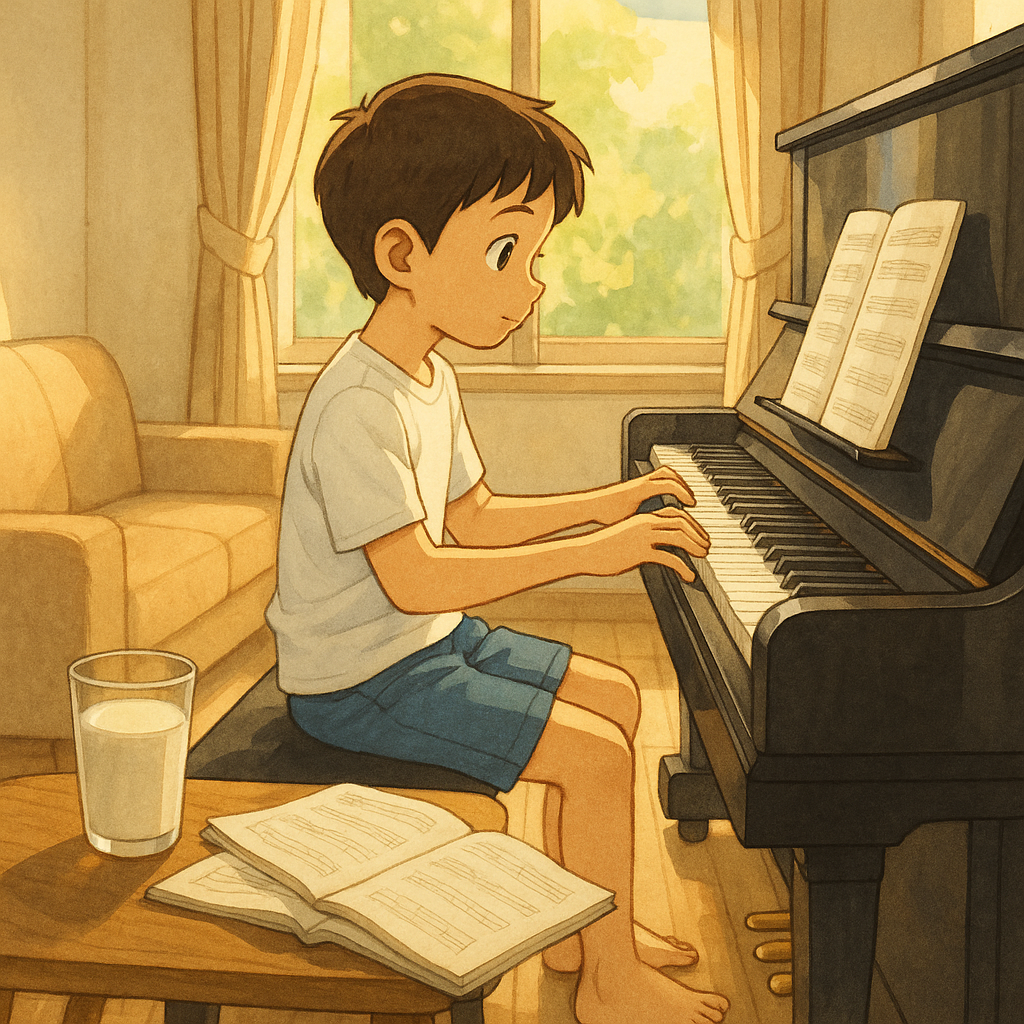
In many families with young piano students, the same puzzling scene plays out over and over: one moment your child’s eyes light up as they tell you “I love piano,” and the next they’re doing everything possible to avoid sitting down at the bench.
We tend to assume they’re being lazy or making excuses. But over time, you may realize your child isn’t lying at all. Behind this seemingly contradictory behavior lie three very real truths that most parents overlook.
Once you understand these three points, you can truly see things from your child’s perspective and find the key to unlocking the “practice problem.”
They Love Eating the Cake, Not Mixing the Batter
This truth is simple once you see it.
Imagine your child hearing a brilliant, flowing piano piece at a concert or on TV. They’re captivated. In that moment, what they’ve fallen in love with is the beautiful feeling music gives them. That feeling is ready-made and effortless — like biting into a delicious slice of cake where all you have to do is enjoy it.
But the process of practicing is the complete opposite. It’s not enjoyment — it’s production. It’s not eating the cake; it’s measuring the flour, cracking the eggs, and scrubbing the baking pan yourself.
For a child, this “mixing the batter” process can feel like torture:
The feedback is too slow — it’s boring. Unlike a video game where you press a button and coins instantly pop out, piano practice can take days or even weeks before any progress shows. That kind of delayed reward has almost no appeal for a child.
The process is too fragmented — it’s no fun. To improve, the teacher asks them to practice hands separately, phrase by phrase, clicking along with a metronome. These methods are sound, but they essentially take a beautiful piece of music and chop it into mechanical, joyless repetition. The child thinks: “This is nothing like the music I fell in love with.”
There’s too much failure — confidence crumbles. Wrong notes, unsteady rhythm, left and right hands fighting each other… during practice, children are constantly making mistakes and constantly being corrected. It’s like playing a game you can never beat — the frustration is overwhelming.
When your child says “I love playing piano,” they mean they love the beautiful end result. When they say “I hate practicing,” they mean the road to that result is simply too hard. They’re just honestly expressing two different feelings.
Interruptions and Frustration: The Two Biggest Enemies of Focus
You’ve surely seen what it looks like when your child is completely absorbed in something.
Building with LEGO for hours without looking up, digging a hole at the beach until the sun goes down. Psychologists call this state “flow” — being so fully immersed that you lose track of time. Once someone enters this state, they feel a deep sense of satisfaction and control.
But piano practice almost perfectly avoids every condition that makes flow possible.
The biggest culprits are interruptions and frustration.
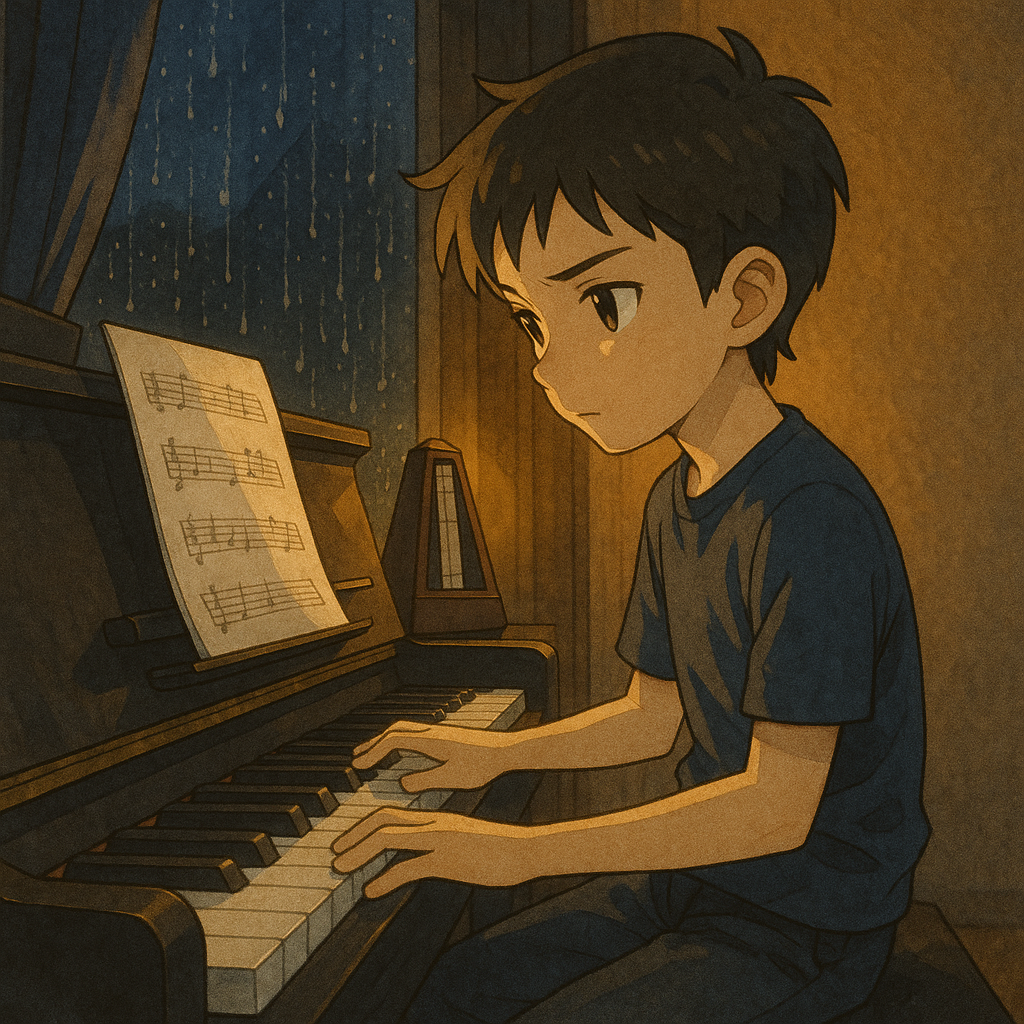
Think about how we supervise practice. The child has barely played two measures before we swoop in like radar: “Your hand shape! It’s collapsing!” “Look at the sheet music! You played it wrong again!” “That note is F-sharp!”
Every well-meaning “reminder” is a blunt interruption of your child’s focus. Just as their brain begins to settle into the music, our voice yanks them right back out. Under this constant barrage of “alerts,” they can never sustain the smooth, continuous engagement needed to experience flow.
Practice without immersion leaves only pain and a feeling of being controlled. When children can’t feel the joy of mastering music, they naturally want to escape.

The Heaviest Weight on the Piano Bench Is a Parent’s Mood
This may be the most uncomfortable — and most important — truth of all.
In many families, practice has long stopped being purely about learning music. It’s become a high-risk event for the parent-child relationship. When your child sits down at the bench, they’re carrying more than just the task of playing the right notes — they’re also carrying something far heavier: your emotions.
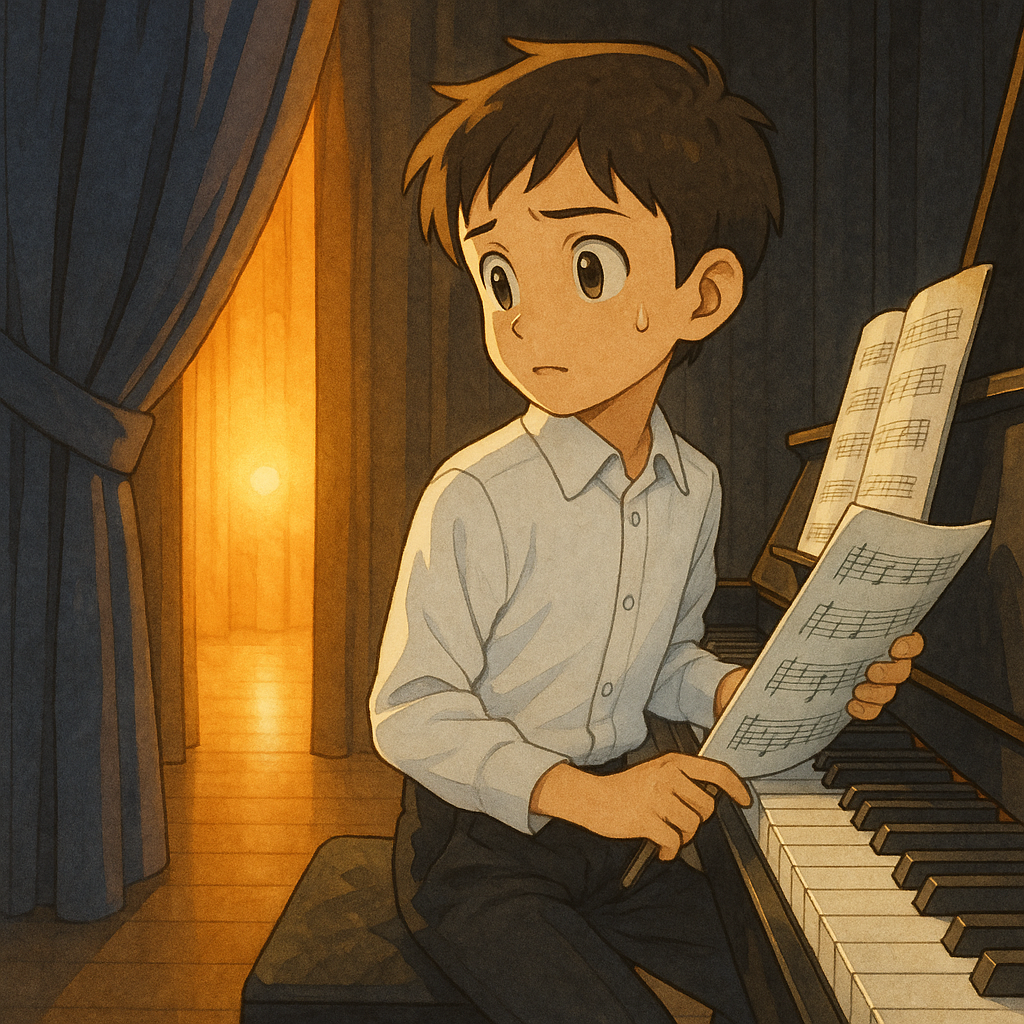
We sit beside them and sigh, furrow our brows, or impatiently bounce a leg. Children pick up on every one of these tiny signals with pinpoint accuracy. Every note they play feels like it’s testing whether they’ll set off an emotional landmine.
The quality of practice becomes directly tied to a parent’s facial expression. To avoid making us angry, children become overly cautious. Playing is no longer for themselves — it’s about “passing inspection” and “making Mom happy.” When an activity gets tangled up with reading someone’s mood and avoiding conflict, any enjoyment it once held evaporates completely.
We think we’re “helping with practice,” but we may have unknowingly turned our child into our emotional caretaker. That kind of pressure is enough to crush any budding interest.
How to Turn a Painful “Task” Back into a Fun “Game”
Once I understood these three truths, I stopped butting heads with my child. The solution became clear: the key isn’t pushing your child to try harder — it’s completely transforming what “practicing” feels like.
I needed a helper that could make the “batter-mixing” process as enjoyable as eating candy, create a space where my child could get absorbed without being interrupted, and free me from my role as “supervisor” and “emotion police.”
With that idea in mind, I found the Wonder Piano app, enthusiastically recommended by a friend. It works like a magician who deeply understands child psychology, using a clever set of designs to tackle all three challenges one by one.
Its most fundamental change is wrapping tedious practice in an adventure game. Children are no longer “practicing” — they’re on a quest through a magical world. Play a melody correctly and you unlock a new storyline or collect magic stones. It takes that distant “big achievement” and breaks it into a stream of small rewards children can earn right away, igniting their motivation from the inside out with instant satisfaction.
At the same time, its AI practice companion is a genuine lifesaver for the parent-child relationship. It acts like a tireless, endlessly patient little teacher that precisely identifies wrong notes and gently guides children to correct them on their own. I no longer have to strain my ears playing “mistake police.” The task most likely to trigger family conflict — error correction — is seamlessly handled by the AI.
My role finally shifted from anxious supervisor to relaxed audience. All I need to do is genuinely cheer and clap when my child finishes a level and excitedly shows me their rewards. Practice is no longer a fuse for family arguments — it’s become a fun, encouraging project we share together.
“I love playing piano, but I hate practicing” — this honest admission is actually a cry for help. Your child is telling you: “Mom, Dad, I know the view from the mountaintop is beautiful, but the climb is too hard and too steep. I need help.”
Our job isn’t to stand at the base of the mountain criticizing them for not trying hard enough. It’s to hand them an engaging “hiking stick” that makes the journey a little easier and a lot more fun. With smart tools like Wonder Piano, the practice process itself can become something to look forward to.
In the end, what we hope our children gain isn’t just another skill. It’s the invaluable ability to enjoy the process, face challenges without fear, and build a deeper emotional bond with us. That is the true lifelong gift of music education.