Lang Lang’s 4-Year-Old Son Doesn’t Play Piano: A Wake-Up Call for Anxious Parents
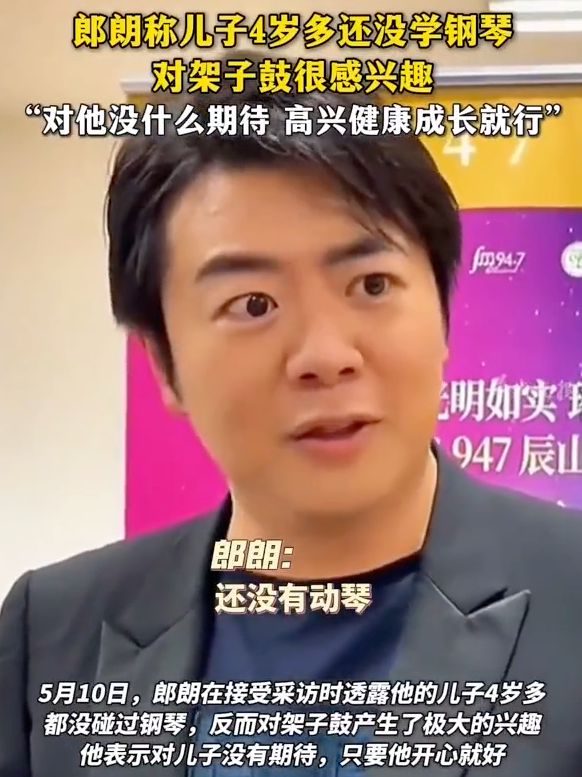
“My son is over four years old, and he hasn’t touched a piano yet.”
When those words came from Lang Lang — one of the greatest pianists in the world — countless parents who’ve been pushing their children to practice must have been stunned. Here’s a family with the finest musical genes and resources on the planet, yet their child shows little interest in the piano. Instead, he’s fallen head over heels for drums and pop music.
What’s even more surprising is the attitude of Lang Lang and his wife, Gina Alice: full support, zero anxiety. “We have no expectations for him — as long as he’s healthy and happy, that’s all that matters.”
Is this just humble bragging, or does it reveal an educational wisdom most of us have been overlooking? Lang Lang has been candid: “If he were to become a pianist, he’d inevitably be labeled ‘Lang Lang’s son’ and face enormous pressure. I don’t want to put that kind of burden on him.”
This points to a fundamental truth: The most important step in education isn’t planning the perfect path — it’s protecting a child’s inner love for what they do.
A Mirror and a Reality Check
Lang Lang’s choice acts like a mirror, clearly reflecting the struggles countless families face at the piano bench. Music should be a bridge, but it often becomes a battlefield. Does this sound familiar?
Battle One: The War to Save Interest
It always starts like poetry. A child touches the keys for the first time and is fascinated by the sounds they make. They play a simple melody and beam with pure joy. But before long, that innocent wonder gets taken over by “assignments.”
“You have to practice for at least an hour every day.”
“You need to master this piece by the end of the month.”
“The neighbor’s kid already passed Grade 5 — you haven’t even passed Grade 3?”
When joy is measured in minutes, and exploration is reduced to grading exams, the original magic of music fades away. All that’s left in the practice room is the cold tick of a metronome and a parent’s sigh of “You played it wrong again.” The child isn’t expressing themselves — they’re completing a never-ending homework assignment.
Battle Two: The Emotional Tug-of-War
“It’s all for your own good!” Behind that phrase often lies a parent’s unmanageable anxiety. We’re afraid our children will “fall behind,” afraid our investment won’t pay off. That anxiety spreads to our children like a virus.
And so practice sessions turn into this: the child hits one wrong note, and the parent’s brow furrows; the child’s attention drifts for a moment, and harsh scolding follows. The piano is no longer an instrument — it’s become the family’s emotional pressure valve.
A child’s tears, a parent’s anger, arguments between parent and child — these make up the painful memories filed under “learning music.” We forget that without a loving atmosphere, how can anything beautiful grow?
Battle Three: The War of Attrition on Willpower
“If you start something, you finish it — that’s the rule!” It’s a principle many of us live by. But we often confuse “perseverance” with “gritting your teeth through misery.”
True perseverance comes from love — it’s the voluntary “I want to play it one more time.”
Forced endurance comes from pressure — it’s the agonizing “When will this finally be over?”
When the spark of interest was never lit in the first place, so-called “perseverance” becomes a long, draining ordeal. It doesn’t build real grit — instead, it prematurely exhausts a child’s enthusiasm for all learning, teaching them that “learning = suffering.” That may be the biggest loss of all.
Good Education Guides — It Doesn’t Push
How do we end these three battles? The answer lies in Lang Lang’s approach: Respect and guide a child’s interests, and let them take ownership of their learning. This isn’t an empty slogan — it requires parents to shift their mindset and take action.
From “supervisor” to “appreciator”: Instead of sitting beside them like an inspector, become your child’s first audience. More “That sounds wonderful” and less “You played it wrong.” Build confidence with encouragement first, then work on refining technique.
Let music flow through life, not fill up the schedule: Play different styles of music at home, take your child to a concert, share the stories behind the music… Creating an environment rich in music is far more effective than enforcing a rigid, pressured “practice time.”
Turn “boring” into “fun”: Every kind of learning involves repetition, but we can change how that repetition feels. Use games, stories, and rewards to turn mechanical drills into exciting challenges, so children learn through play.
The real key is this: Transform the motivation for learning from an external push into an internal pull.
Our Thinking: How Can “Wanting to Practice” Become Reality?
It’s precisely because we’ve witnessed so many families caught in this tug-of-war — and because we firmly believe that “interest is the best teacher” — that Wonder Piano was designed with a crystal-clear mission: We don’t train performance machines. We protect the spark of interest in every child’s heart.
We’ve woven this educational philosophy into every detail of the product:
AI-Powered Instant Feedback When a child plays a wrong note, the app offers encouraging, gently gamified reminders — not cold right-or-wrong judgments. It’s always patient, always warm, helping children build an “I can do this” confidence in a safe environment. No more yelling from parents, no more tears from kids.
Win the Interest Battle with a “Magic Adventure” We’ve turned dry music theory and exercises into a grand magical adventure. Every correct note earns “magic points” and unlocks a new chapter of the story. Children aren’t practicing to “complete a task” — they’re practicing to “advance the story,” and motivation flows naturally.
Turn the Willpower War Around with “Data Companionship” Parents can see clear practice records in the app — no need to hover and monitor every minute. All you need to do is give a timely hug and a word of praise when your child makes progress. This makes “perseverance” visible, measurable, and encouraging. What used to feel like grinding through turns into a rewarding journey of achievement.
Lang Lang’s choice reminds us: the value of music has never been just about skill. It can be a lifelong source of comfort — a private corner where a child freely expresses themselves and draws strength.
If your child truly wants to learn piano, help them hold on to that most precious sense of joy and initiative. That is the true essence of education, and it’s the wish that Wonder Piano hopes to fulfill together with millions of families.