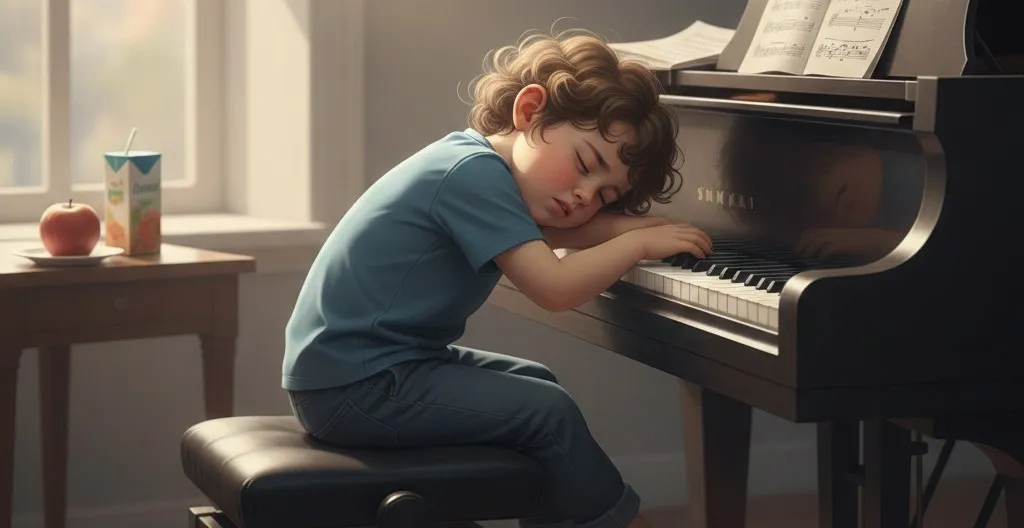
Your Child Is Exhausted from Piano Practice — And You Might Be the Reason
Summary: Think sitting next to your child counts as helping them practice? You might actually be making things worse. This article reveals the truth behind why kids feel drained at the piano, what parents are doing wrong, and how to go from being a drill sergeant to a real practice partner.
“Watch your hand position! It’s collapsing again!” “You played the wrong note — start over!” “Pay attention! Stop looking around!”
Sound familiar? Do you find yourself saying things like this every day during practice?
You think you’re being a responsible “practice partner” — that you’re doing it for your child’s own good. But have you noticed that the more you hover and correct, the worse your child plays, and the more often they complain about being “tired”?
You might feel frustrated: “I’m giving up my time and energy to sit here with them — how can that be wrong?”
Hold that thought. Today, let’s look at this from a brain science perspective: why your child gets more and more exhausted from practice — and why you might be the root cause.
Here’s the thing: your child isn’t being lazy. They really are “tired.” But it’s not muscle fatigue — it’s cognitive exhaustion and emotional drain. And more often than not, the parent is the one causing it.
The Dopamine Gap
What you see: Your child has boundless energy for video games but can barely keep their eyes open at the piano.
What’s really happening: The brain craves instant feedback.
- Playing video games: Every action gets a reaction — defeat a monster, earn a star. The brain keeps releasing dopamine, the “feel-good chemical,” and the child never gets tired.
- Practicing piano: Repetitive finger exercises, constant error correction. After thirty minutes, they might not even be able to play a single melody that sounds good.
The brain’s verdict: “The return on investment here is terrible — abort!” So the child feels bored and exhausted. It’s actually the brain cutting off its own energy supply.
Cognitive Overload
What you see: The more your child practices, the more frustrated they get — even simple pieces come out wrong.
What’s really happening: According to cognitive load theory, our working memory is limited. For a beginning piano student, the brain is essentially doing an extreme sport:
- Visual processing: Reading pitch, rhythm, and fingering from sheet music.
- Motor control: Directing ten fingers to press keys with varying force, while coordinating foot pedals.
- Auditory monitoring: Listening to check if they’re playing correctly.
Imagine forcing an old computer to run three massive 3D games at once — the CPU immediately spikes to 100%, the fan starts screaming (complaining about being tired), and then the whole thing crashes (practice meltdown).
The Amygdala Hijack
What you see: With a parent watching over their shoulder, the child actually plays worse.
What’s really happening: Many parents unknowingly become the “error police” during practice: “Your hand position collapsed!” “Wrong again!” This high-pressure environment activates the child’s amygdala — the brain region responsible for fear and anxiety.
When the amygdala takes over, the prefrontal cortex — the part of the brain responsible for rational thinking and learning — gets suppressed. The child enters a “fight or flight” stress response. Not only can they not learn anything, but they feel emotionally drained. When they say they’re “tired,” they really mean they’re mentally exhausted.
Breaking the Cycle: How to Make Practice as Engaging as a Game
Now that we’ve identified the problems, we can address them directly. Wonder Piano was designed from the ground up to solve these three pain points, turning practice from a chore into an adventure.
1. Restoring the Dopamine Flow: Turning Practice into a Quest
To address delayed feedback, we built in gamification.
- Immersive storylines: In Wonder Piano, practice isn’t mindless repetition — children play notes to unlock storybook adventures and save a magical world.
- Achievement system: Every correct note earns star achievements, and consecutive correct playing triggers combo effects. This constant stream of positive feedback keeps dopamine flowing, so children naturally stay motivated.
2. Reducing Cognitive Load: AI-Powered Guidance and Demonstrations
To address cognitive overload, we provide smart tools that act as an “external brain” for your child.
- Follow Mode: A game-changer for beginners. The app waits for the child to play each note correctly before moving on. There’s no frantic scramble to keep up with the beat — children can work through difficult passages at their own pace, dramatically reducing stress.
- Multi-format demonstrations: Stuck on a piece? The app offers real teacher demonstration videos and machine playback, with adjustable speed control. One look and the child knows exactly what to do — no more guesswork.
3. Calming the Amygdala: Objective AI Feedback Instead of Parental Policing
To address parent-child tension, we let AI replace the nagging.
- AI-powered assessment: Using advanced audio recognition technology, the app accurately evaluates pitch and rhythm.
- Objective feedback: When something’s wrong, the system offers a gentle prompt; when it’s right, there are exciting visual effects to celebrate.
- Practice tracking: The system automatically records practice time and results, generating a practice journal. Parents don’t need to hover — just check the report to see how their child progressed today.
Final Thoughts
When your child says they’re tired of practicing, their brain is sending out an SOS.
Stop trying to fight human nature with willpower. Try putting down the clipboard and giving your child a little magic with Wonder Piano.
When practice becomes a quest, and boring exercises turn into an exciting soundtrack, you’ll find that the child who used to complain about being tired can actually sit at the piano — and enjoy every minute of it.
Download Wonder Piano today and start a joyful practice journey!
- Apple devices: Search “Wonder Piano” on the App Store
- Android devices: Search “Wonder Piano” on Google Play