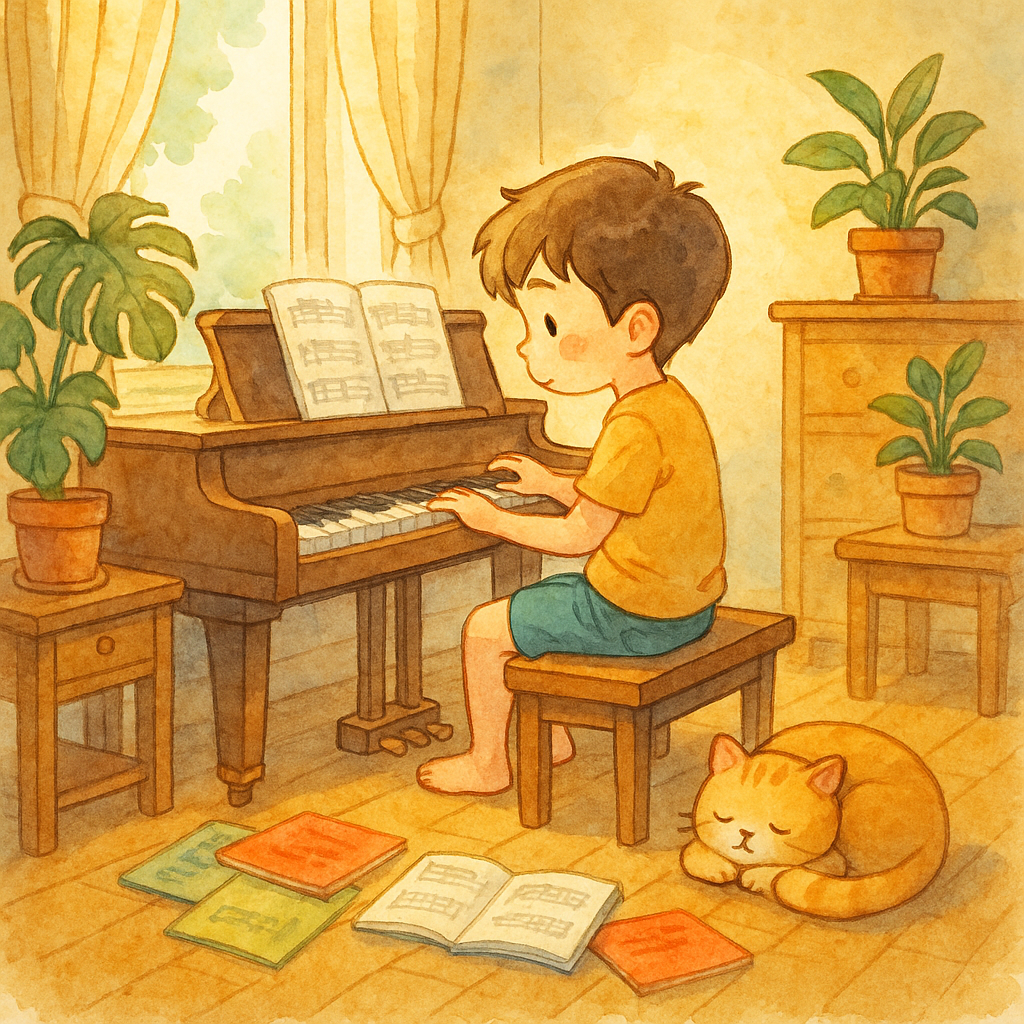
What to Do When Your Child Only Likes Pop Music and Won’t Touch Classical
“Her teacher asked her to play a sonatina, but she flat-out refused, saying it wasn’t ‘her style.’” “She’ll happily practice a pop song for three hours straight, but the moment I mention her method book, she pretends to be sleepy.”
If this sounds familiar, you’re not alone. Many parents watch their child get excited about pop music while keeping classical pieces at arm’s length. The worry sets in: “Does loving pop mean they’ll never stick with classical?” “If they won’t play classical, are they really ‘learning piano’?”
Take a breath — this is actually a perfectly normal stage in a child’s musical journey.
Why Do Kids Prefer Pop Music?
It’s simple: pop music sounds good and feels familiar. Pop melodies are short, rhythmically steady, and highly repetitive — all of which match the way children’s brains favor predictability.
Research in child psychology shows that between ages 6 and 12, the brain’s reward system develops faster than the prefrontal cortex. This means children are naturally drawn to instant gratification.
In other words: classical pieces feel too long, too hard to memorize, and too structurally complex. Pop songs have a beat, have lyrics, and are easy to hum along to — they just feel good.
Kids aren’t “musically clueless” — they’re simply not ready yet to process complex musical structures.
So when they resist classical music, it doesn’t mean they’re rejecting learning. They’re looking for their own way to connect with music.
Three Common Mistakes Parents Make
Mistake 1: Enforcing a “Classical First, Pop Later” Rule
Many parents worry that learning pop songs will derail their child’s progress and weaken their foundation. But research shows that interest-driven learners stick with their practice nearly 2.3 times longer than those driven purely by obligation.
When children are sparked by genuine interest early on, they’re far more likely to push through technical challenges. Forcing a “classical first” approach can actually cause them to lose motivation right at the start.
A better approach: treat pop songs as the sugar coating on practice. Keep their interest alive while gradually introducing more technically demanding pieces.
Mistake 2: Thinking “Pop Songs Are Too Easy to Bother With”
Some parents say: “It’s just a few chords — what’s the point of playing that?” But the real value of pop music isn’t in its difficulty — it’s in sparking the desire to express. When children play songs they love, they naturally start caring about whether it “sounds good,” not just whether it’s “correct.”
This is a crucial shift from mechanical execution to genuine musical expression. For example, one eight-year-old kept losing the rhythm playing Pachelbel’s Canon, but when she switched to a pop song she loved, she could play it through three times without tiring.
The reason is simple: she loved it. When emotion gets involved, the brain’s focus and feedback systems both level up.
Mistake 3: Equating “Classical” with “Serious Music Education”
Many parents hold a deep-seated belief: “To go the professional route, you have to play Bach and Beethoven.” But music education has moved well beyond that thinking.
When the U.S. National Music Education Standards were revised in 2020, they stated: “The goal of learning music is not to master a genre, but to develop understanding, creativity, and the ability to keep learning.”
In other words, no genre is inherently superior — what matters is whether musical thinking and expressive ability are being developed.
It’s perfectly fine for a child to start with pop and expand into classical later.
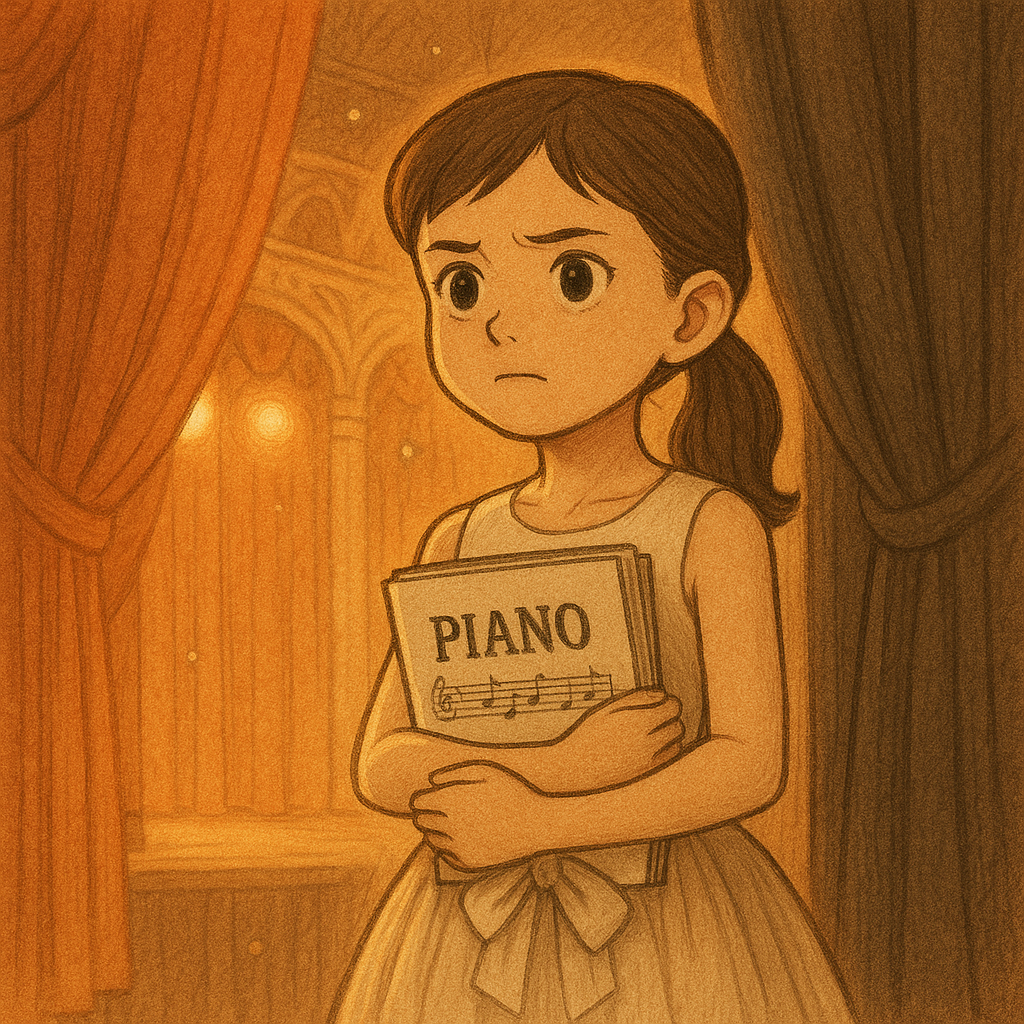
How to Help Your Child Fall in Love with Classical Music
The key isn’t forcing it — it’s about gradual transformation.
- Start with pieces they already know. Don’t jump straight to Beethoven sonatas. Begin with classical works that have been adapted into familiar melodies, such as:
“Fur Elise” (featured in countless commercials)
“Minuet in G” (clear rhythm, easy for kids to enjoy)
“Turkish March” (fun and lively)
Let children build familiarity first, then gently guide them into the classical world.
- Mix pop and classical in practice sessions. For example, after playing a favorite pop song, follow up with Pachelbel’s Canon. Use chord progressions to help them discover similarities between the two styles.
Try asking your child: “Did you notice that the left hand in both songs repeats a similar pattern?” “Doesn’t this part sound a little like what you just played?”
Help them see that classical music isn’t some foreign language — it’s just another corner of the same musical world.
- Use AI practice tools to build a sense of achievement. Classical pieces demand more precise control, and children can easily lose confidence when they keep getting corrected. A practice tool that offers gentle correction and instant feedback can be a parent’s best ally.
For example, Wonder Piano features an AI real-time recognition system that uses your phone or tablet’s microphone to detect pitch, rhythm, and dynamics — no extra equipment needed.
When a child plays a wrong note, it doesn’t immediately interrupt them. Instead, it uses encouraging prompts to guide self-correction. More importantly, its sheet music library includes both classical beginner pieces and pop arrangements, so kids can choose what they want to practice.
Play a favorite pop song, then take on a classical challenge — alternating between the two keeps interest high and progress steady. After practicing, children can unlock “magic storylines” and earn “magic points” or “magic stones,”
turning practice into an adventure game. Many parents report that their children open the app on their own every day, saying: “I’m going to beat a new magic level today!” That’s the power of self-motivated practice.
A child who loves pop music isn’t a problem. It means they’re connecting with music in their own way. Instead of worrying, join them — start with the songs they love, and gently open the door to the classical world.
Music isn’t a multiple-choice test — it’s a journey. The best starting point is the one that keeps your child walking forward.
If you want your child to start from genuine interest while still making steady progress, give Wonder Piano a try. It helps children practice on their own and makes it easier for parents to be supportive — through stories, games, and music, kids naturally find their way into a richer musical world.