
Your Child Can’t Sit Still at the Piano and Loses Focus in 3 Minutes?
“Sweetie, just 10 more minutes of practice, just 10 minutes!”
“Mom, my bottom hurts, my legs are numb, I need a drink of water…”
A child at the piano can look like a little monkey glued to the bench — squirming, uncomfortable, eyes darting everywhere. Many parents find this incredibly frustrating and start wondering: Does my child simply lack patience?
Science and research tell us: No — and a child’s inability to sit still during practice really isn’t their fault.
Why Is a Child’s Attention Span So “Fragile”?
When we ask a five-year-old to sit quietly and practice piano for half an hour, it’s like asking a low-powered computer to smoothly run several demanding programs at once — it’s bound to freeze up and crash.
It’s not that children won’t listen — their brains simply haven’t finished installing the “focus software” yet. A child’s attention span has real “hardware limitations.”
Children’s attention is primarily managed by the brain’s “CEO” — the prefrontal cortex. During childhood, this “CEO” is still an intern — not yet fully developed. Research shows that the average attention span for a four-year-old is about 12 minutes, and for a five-year-old, about 14 minutes.
When your five-year-old starts losing focus and getting restless after 15 minutes of practice, it doesn’t mean they’re being difficult. Their brain’s “focus battery” has simply run out and needs to recharge. Forcing them to continue will only backfire.
It’s also not that children love being distracted — sometimes the environment is just too “noisy.” The sound of the TV in the living room, phone notification pings, birds outside the window, even a colorful poster on the wall — all of these can steal a child’s attention.
In psychology, this is called “cognitive overload.” When a child’s visual and auditory systems are bombarded with too much information, the brain becomes overwhelmed. To protect itself, it triggers an “attention circuit breaker” — what we commonly call zoning out.
Piano: A “Super Tool” for Building Focus
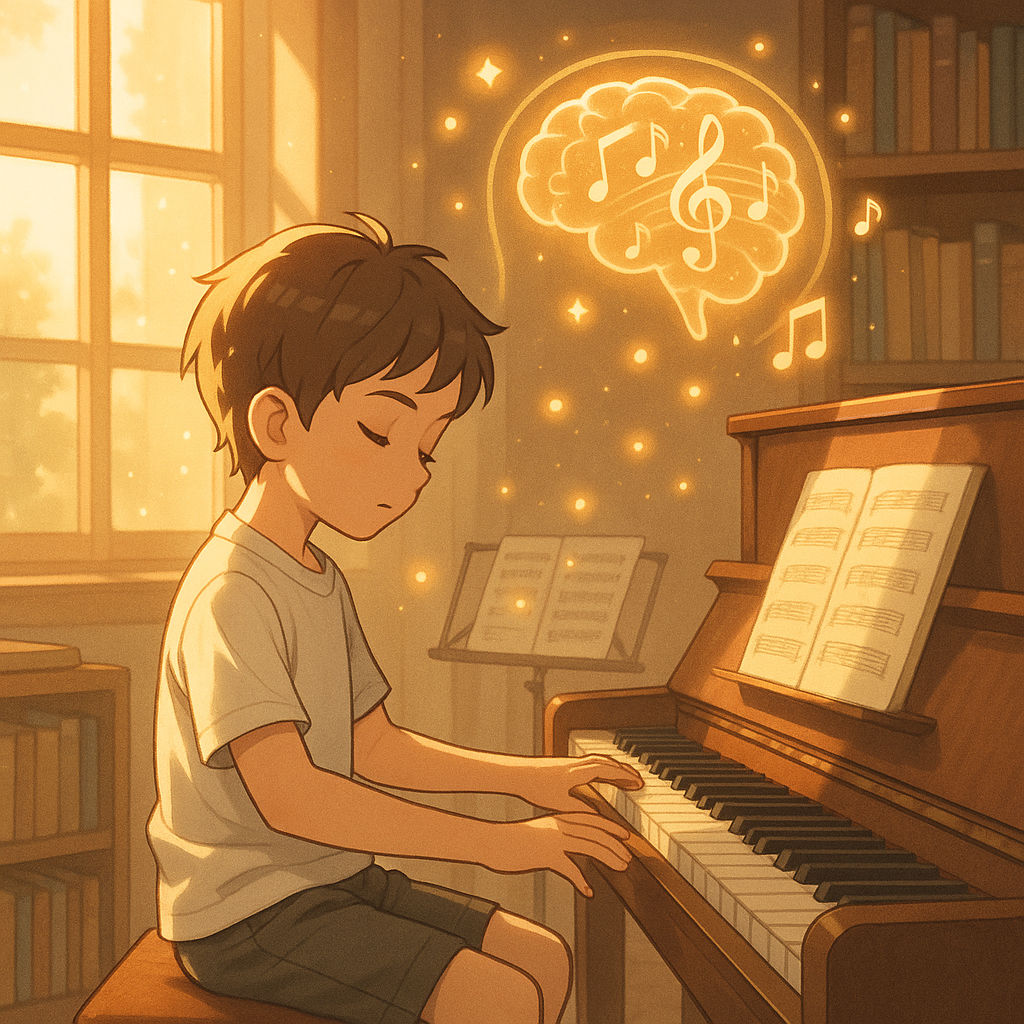
Scientific research has repeatedly shown that music education — especially piano practice — is an excellent way to improve attention! A study published in the authoritative medical database PubMed Central found that music training is more effective than playing video games at improving children’s attention control and task-switching abilities.
Another study using the Stroop Color-Word Test (a classic attention assessment) with children ages 7 to 12 showed that those who had systematically studied piano scored significantly higher on multiple attention measures compared to peers without musical training.
Even more interesting, a brain-scan study compiled by cooperpiano.com found that playing a musical instrument positively affects the brain regions responsible for behavioral control, helping children improve focus and emotional regulation — with effects considered comparable to certain attention intervention programs.
When we have children practice piano, we’re not just teaching them an art — we’re giving their brains a valuable “focus workout.” The only question is: How do we use the right approach to make this workout both enjoyable and effective?
4 Strategies to Take Your Child from “Can’t Sit Still” to “Doesn’t Want to Stop”
Based on the science above, here are four practical strategies that deliver real results:
1. Use the “Pomodoro Technique” — Break It into Small Chunks
Stop aiming for “one hour of practice in a single sitting.” Based on your child’s age, break practice into smaller goals. For example, a five-year-old might follow a pattern of “15 minutes of focused practice, then a 5-minute break.” During those 15 minutes, keep the goal clear and achievable. When a child can successfully complete a small goal, their sense of accomplishment and confidence grows significantly.
2. Create a “Focus Zone” — Eliminate Distractions
Before practice, create a ritual with your child: turn off the TV, set phones to silent, and tidy up the area around the piano and music sheets. Create a “focus zone” where only the piano, the music, and the sound exist.
3. Turn “Tasks” into “Treasure Hunts” — Spark Their Interest
Who says practice has to be rigid from start to finish? Turn it into a game:
Rhythm Copycat: Clap a rhythm and have your child reproduce it on the piano.
Story Performance: Use the high notes to represent a bird and the low notes to represent a bear — create a “story” together using sounds.
When practice is full of fun, children naturally want to engage.
4. Build a “Support Team”
As the research mentioned above shows, family and teacher support are crucial. Don’t just be a “supervisor” — be your child’s “biggest fan” and “teammate.” When they play a note correctly, give them a thumbs up. When they finish a short passage, give them a hug. Let your child feel that on this piano journey, Mom and Dad are always right there with them.
We understand that while these ideas sound great in theory, putting them all into practice during a busy daily routine takes real effort and energy.
That’s exactly why we designed Wonder Piano. We believe the best education weaves scientific principles seamlessly into every experience a child has. Here’s how we address the challenge of children who “can’t sit still and get easily distracted.”
Light Gamification of Practice: Practice becomes a magical adventure. Children choose songs, listen to enchanted stories, and complete hands-separate exercises, unlocking plot points and collecting magic stones step by step. They’re not passively completing a task — they’re the hero saving a magical world, with intrinsic motivation naturally building through the rhythm of play.
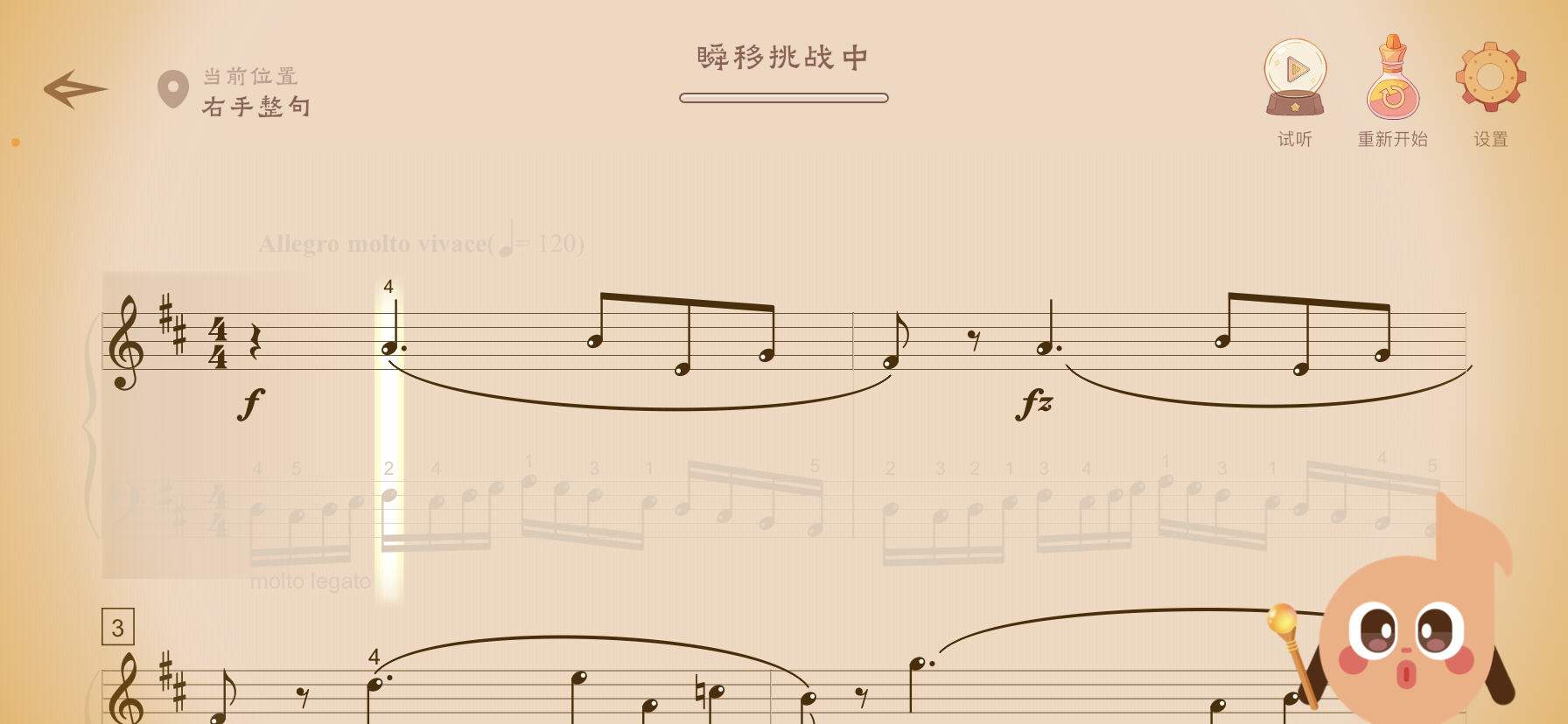
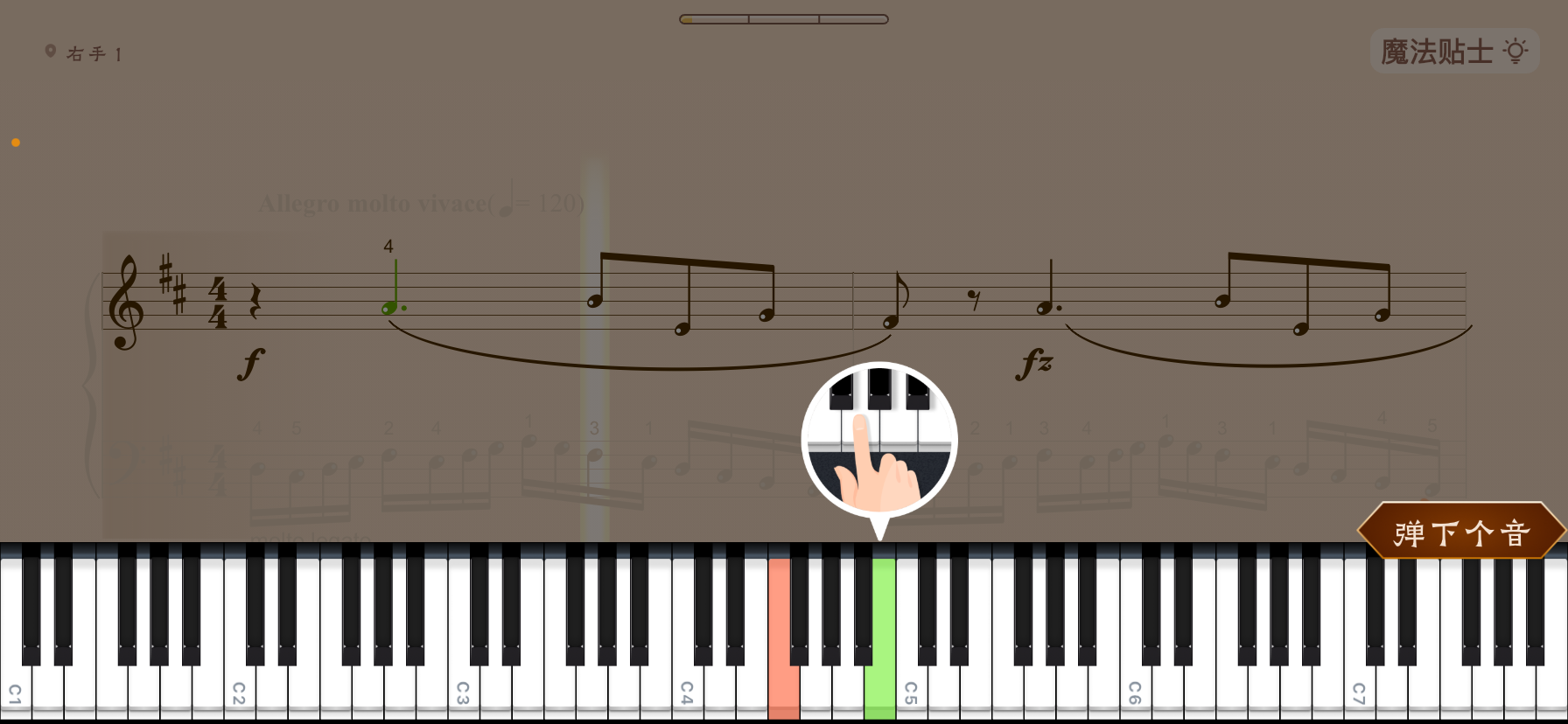
AI Real-Time Error Correction: Every time your child plays, the system accurately identifies pitch and rhythm errors and provides timely wrong-note alerts. Children get a moment to think, and if they keep making the same mistake, the screen displays a visual guide showing the correct note. This feedback not only improves focus but also prevents children from reinforcing incorrect muscle memory.
Visual Practice Tracking for Parents: Parents don’t need to know how to play piano — they can use practice records to clearly see the trajectory of every practice session. It offers a new possibility between “letting go” and “being present.”
What we strive to do is package all the science-backed teaching methods into a tool that’s fun, effective, and that children love using. We help children build their own “focus zone,” prepare their “treasure hunt,” and become their most reliable “practice ally.”