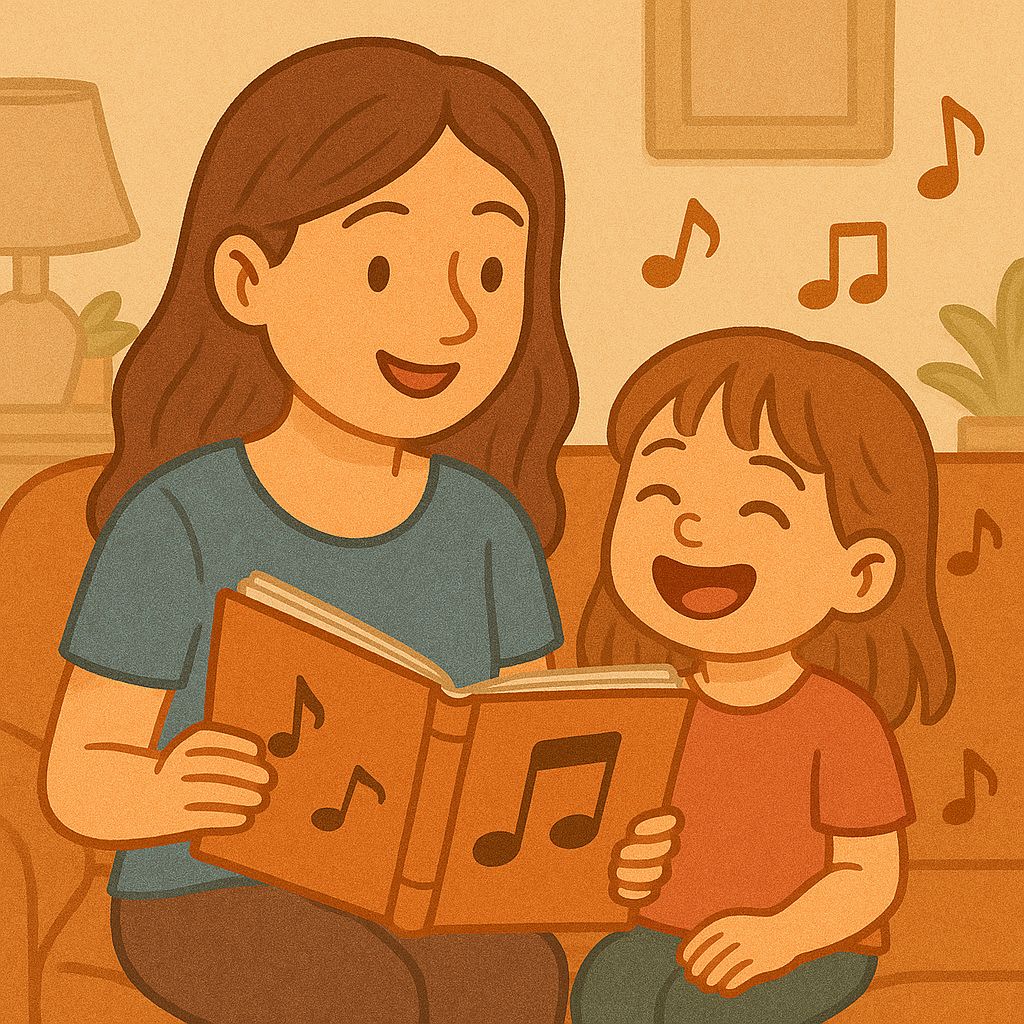
The More You Push Your Child to “Fit In,” the More They Lose Themselves
In psychology, there’s a concept called the “group assimilation effect.”
Put simply, when children try too hard to fit in, they automatically suppress their own preferences. Over time, they lose touch with what they truly enjoy.
This sounds a bit alarming. We often think that if a child can fit in and blend with others, it means they have “high emotional intelligence” and “don’t cause trouble.” But if we overemphasize “you should listen to what everyone else thinks,” what we often get instead is a child who gradually loses their own judgment, becomes afraid of being different, and can’t even express their own thoughts.
Is Fitting In Always Better for Children?
They nod at everything the teacher says, too afraid to raise their hand and ask a question. When friends egg them on, they go along even though they don’t want to. In a group, they seem incredibly “well-behaved,” but privately, they’re often confused, unsure of what they really want.
These are classic signs of group assimilation. On the surface, they’re a “good kid” — easy to get along with, decent grades. But inside? They may have already become accustomed to people-pleasing, afraid of being different, afraid of being excluded.
The ultimate goal of education isn’t to raise a “copy-and-paste” obedient child, but to help them become someone who clearly knows who they are and what they want.
Why Is a Sense of Self So Important?
Psychologist Carl Jung once said: “The ultimate purpose of education is to help a child find their true self.” A sense of self is the foundation for making choices and navigating life.
A child without a sense of self is easily swayed by the world around them: someone says learn painting, so they do; someone says coding has a bright future, so they switch to that; someone says humanities degrees are useless, so they immediately pivot to science. In the end, they may have tried everything, but nothing was ever truly their passion.
But a child with a strong sense of self, even if they choose an unconventional path, can stay the course — because they know it’s what they want.
So how do we help children develop a sense of self?
The answer is: let them repeatedly experience “this is my own choice” and “I accomplished this on my own” through long-term learning and practice.
And on this point, learning piano is a perfect example.
How Piano Lessons Help Children Develop a Sense of Self
Many parents think learning piano is just about picking up a skill — passing a grading exam and being able to play a few songs. But if you look closely, the process of learning piano is actually shaping a child’s character and qualities bit by bit, teaching them to “be themselves.”
Specifically, piano lessons cultivate at least five key qualities:
1. Focus: The Ability to Resist Outside Distractions
Children who are overly focused on fitting in are often easily led by what others think. When practicing piano, they must sit alone at the bench, eyes on the sheet music, ears tuned to pitch, fingers keeping rhythm. No matter how noisy the outside world gets, they have to pull their attention back.
This is how focus is built — a foundational ability to resist “going with the flow.”
2. Self-Discipline: Doing the Work Without Being Told
Children who are always trying to fit in tend to wait for someone else to take the lead. But piano doesn’t work that way. Daily practice can only be done by the child themselves. They decide whether to play it ten times today or slack off and play it just once. After sticking with it for a while, they come to understand: I can manage myself — I don’t need to rely on others. This self-discipline becomes the most solid part of their character.
3. Resilience: It’s Okay to Make Mistakes — You Can Fix Them
What children caught up in group assimilation fear most is “being different” — especially making mistakes. But in piano practice, wrong notes are completely normal. The teacher says: “That was wrong, try again.” Gradually, the child learns to accept that making a mistake doesn’t mean they’re a failure — it’s just part of the process.
This resilience gives them the courage to say in life: “Being different is okay. I have the ability to course-correct.”
4. Self-Expression: Saying “This Is Who I Am” Through Music
When a child can play a complete piece, that is their “voice.”
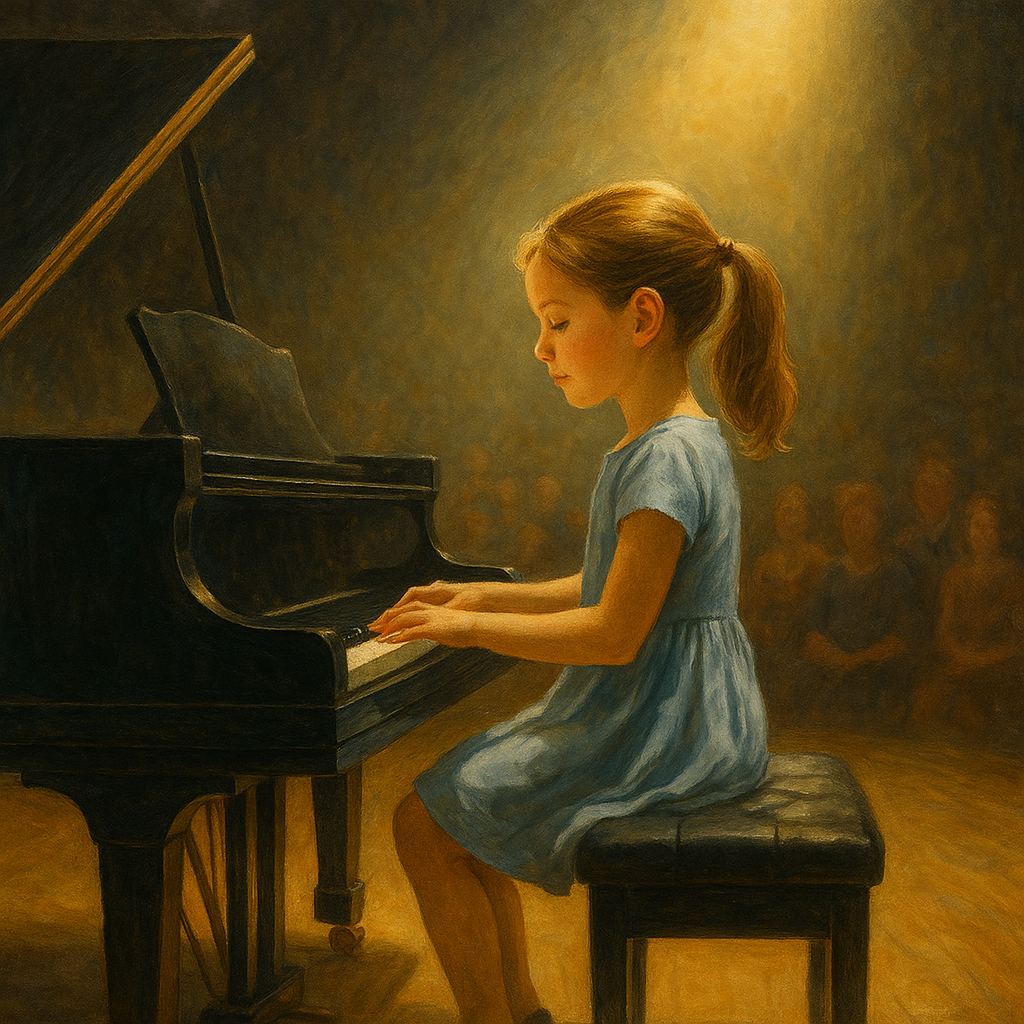
They might express playfulness through a Sonatina, or romance through “Mariage d’Amour.” The moment they play on stage, they’re saying: “This is who I want to show the world.” Piano gives children a uniquely powerful channel for self-expression.
5. Aesthetic Appreciation: When Beauty Lives Within, Confidence Follows
Learning piano isn’t just about finger exercises — it nourishes the soul.
When children encounter the melodies of Mozart, Chopin, and Debussy, a seed of beauty is planted in their hearts. That seed will help them, in the future, know how to soothe themselves with music when pressure mounts. And because of that inner richness, they’ll face the world with greater confidence.
Now, back to the question parents care about most:
Many parents worry: “Will learning piano be too hard for my child? Will it make them even less social?”
Actually, it’s the opposite. Piano isn’t about comparing your child with others — it’s about helping them understand themselves more clearly. When a child finds their sense of self through music, they’re actually better able to maintain their independence in a group, because they have their own anchor and won’t easily lose their way.
Education isn’t about making a child “perfectly fit in” — it’s about helping them stay true to themselves while fitting in. Learning piano is exactly this kind of process — one that helps a child gradually “grow into themselves.” It teaches focus, self-discipline, resilience, self-expression, and aesthetic appreciation — qualities far more valuable than any exam certificate.
Of course, parents shouldn’t be too hard on themselves either. The journey of accompanying your child through piano practice should be a gentle one. If you’re not sure how to teach, can’t always supervise, or find yourself losing patience, it’s perfectly fine to get a little help.
Take the Wonder Piano App, for example. It corrects wrong notes and rhythm in real time, like having a little teacher by your child’s side at all times. With magical adventure levels and story-based rewards, it turns tedious practice into exciting quests, motivating children to sit down at the piano on their own. Parents don’t have to nag every day — and they can still easily see their child’s progress.
Because what truly matters isn’t how well your child “fits in” with their practice — it’s that they find their own strength through music.