“Not Again!” — 5 Ways 90% of Parents Unknowingly Kill Their Child’s Love of Music
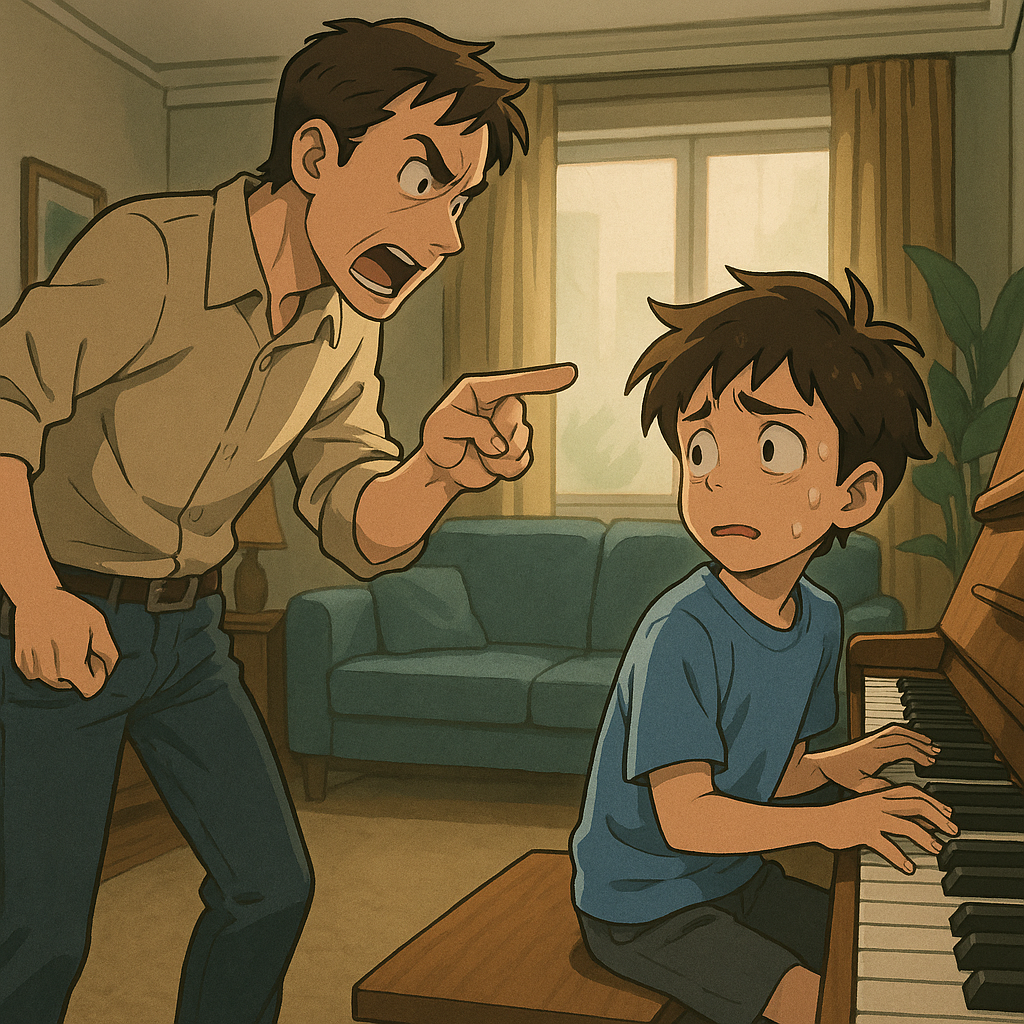
“You got it wrong again!”
“Hurry up, stop dawdling — you’ve spent ten minutes on this one measure!”
“Your posture! How many times do I have to tell you!”
Sound familiar? It’s almost like someone planted a camera in your living room.
The moment practice time arrives, even the most gentle moms and level-headed dads can snap into “drill sergeant mode.” We think we’re being responsible practice partners, but in reality, we may be slamming shut the very door that leads our children into the world of music.
Why does your involvement make your child more resistant and your relationship more strained?
The problem isn’t that your child is “slow,” and it’s not that you don’t love them. It’s that our understanding of what it means to “help with practice” is fundamentally off. We keep trying to be the “coach” when what our child really needs is a “teammate.”
Today, let’s break down the five biggest traps parents fall into during practice time. Pay special attention to number five — it works like a slow poison, quietly eroding your child’s confidence.
Trap 1: Acting Like the Teacher Instead of a Practice Partner
Typical scene: “Here — it’s this note!” “Wrong, start over!” “Keep up with the metronome!”
What the parent is thinking: “I have to watch every second, or they’ll make mistakes and waste time.”
The damage: Your child’s brain goes on autopilot. They stop thinking for themselves. They’re not learning music — they’re learning to follow commands. It becomes pure muscle memory triggered by your instructions.
The essence of good practice support is guidance, not control. The more you say, the less your child listens to themselves. Over time, they lose confidence in their own judgment and can’t practice without you hovering over them.
A better approach: Ask guiding questions
After they finish playing a passage, resist the urge to correct and try these two questions instead:
Start with affirmation, then explore: “That was great, sweetie — which part of that passage are you most proud of?” (This sets up a positive tone for the conversation.)
Guide self-discovery: “If you were to rate that performance, where do you think there’s room to make it sound even better?”
Remember: An answer that comes from your child’s own mouth is worth more than ten corrections shouted from yours
Trap 2: Measuring Effort by Time Spent
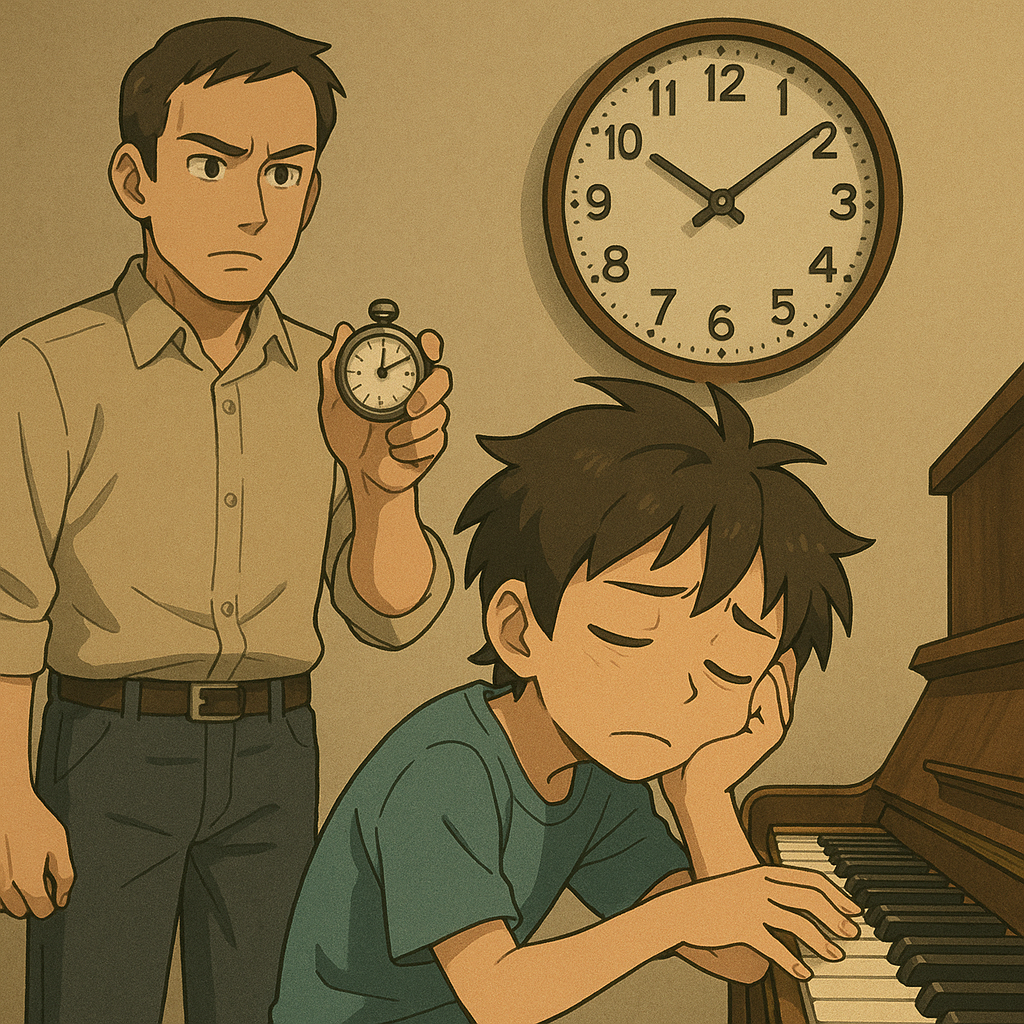
Typical scene: “You have to practice for a full hour today — not one minute less!”
What the parent is thinking: “As long as they put in the time, they’ll improve.”
The damage: Your child’s goal shifts from “getting better” to “running out the clock.” What you end up with is a glazed-over, soul-departed “practice robot” who’s just going through the motions.
Twenty minutes of focused practice beats two hours of mindless repetition. Using time as a leash only makes your child dread the piano.
A better approach: Use a goal checklist
Work with your child to turn practice from “clock-based” to “task-based.” For example, today’s goals might be:
- Fix every wrong note in measures three and four.
- Slow down the hardest phrase and play it five times through without stopping.
- Play the whole piece once, record it, and send it to Grandma.
Let your child clearly understand that “done” means “tasks completed,” not “time’s up.” The sense of accomplishment they get from checking off each task is genuinely addictive — in the best way.
Trap 3: Lecturing Too Much
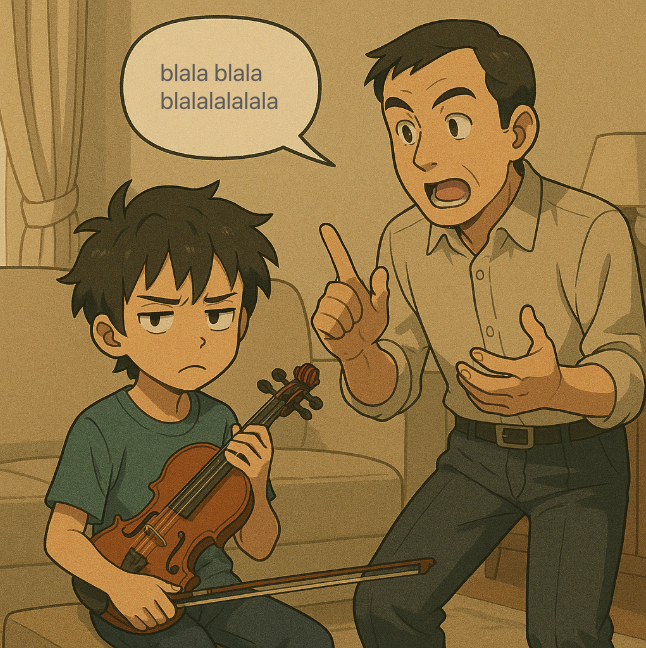
Typical scene: Your child plays one wrong note, and you launch into a ten-minute monologue covering music theory, finger technique, study habits, and life philosophy.
What the parent is thinking: “I need to explain the reasoning thoroughly so they really get it.”
The damage: The “lecture center” in their brain lights up while the “practice center” goes dark. Your child develops learned helplessness — the moment you open your mouth, they want to run.
Music is a physical art, not a verbal one. Explaining something a thousand times is less effective than having them play it once.
A better approach: Demonstrate and let them imitate
Keep words brief. Move to action quickly.
Instead of saying “play with more feeling,” ask: “Do you think this part sounds like a bunny hopping or an elephant walking? Let’s try to ‘act it out’ on the piano!”
Instead of saying “your rhythm is off,” do this: “Come on, let’s clap this rhythm together — ta-ta-ta-ta…”
Use vivid imagery and physical movement instead of dry explanations
Trap 4: Correcting Mistakes the Instant They Happen
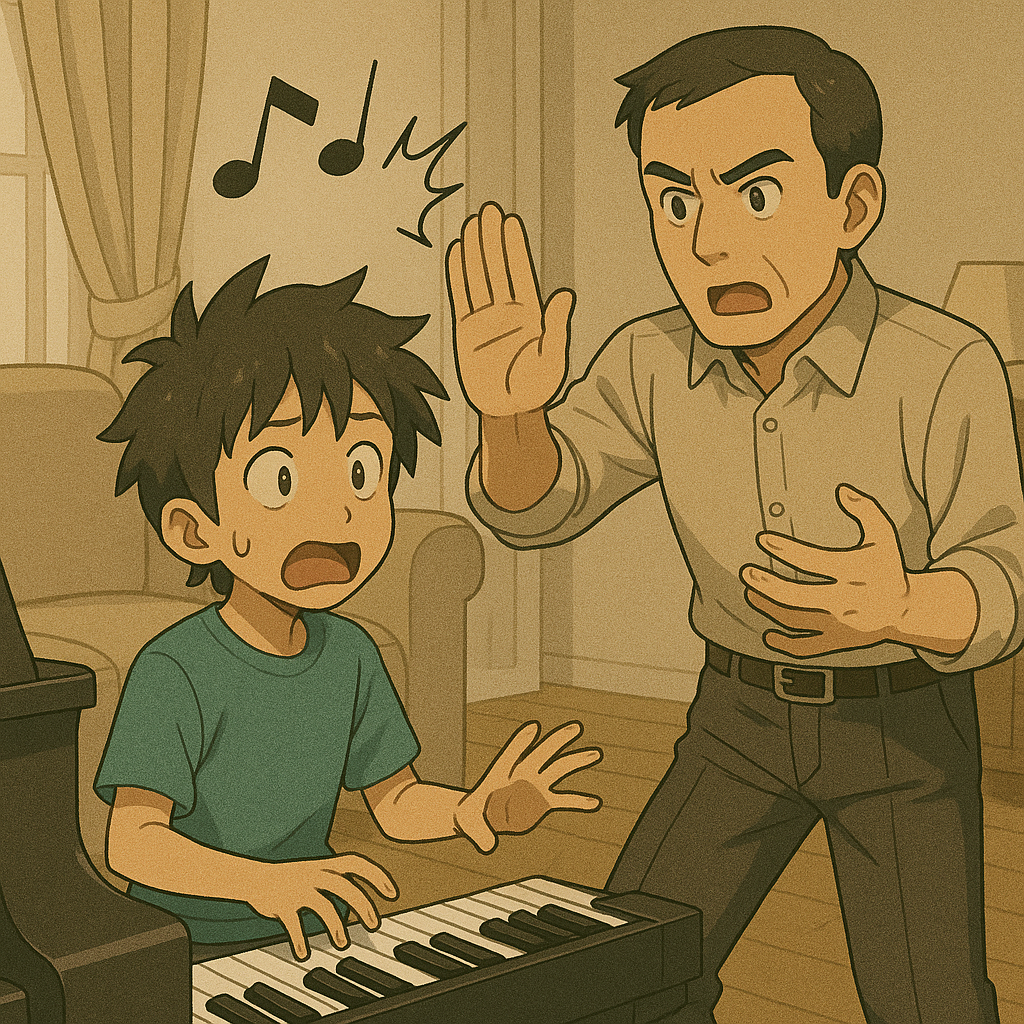
Typical scene: Your child hits one wrong note, and “Wrong!” has already left your mouth.
What the parent is thinking: “Nip mistakes in the bud! I can’t let bad habits form!”
The damage: Your child’s playing gets chopped into fragments. They never experience the flow and satisfaction of performing a complete piece from start to finish. This devastates their desire to express themselves through music.
Playing music is like speaking. Imagine being corrected on your grammar after every single word — who could bear that? Allowing your child to make mistakes is the first step in building their confidence.
A better approach: Review after they finish
First, stay quiet and let them play the whole thing through. Give them a complete chance to express themselves.
Play back the recording and explore together. “Let’s play music detective — can we spot any notes that sneaked into the wrong place in that recording?”
Pinpoint the trouble spots and practice them in isolation. Find the tricky measure, circle it, and work on it like solving a puzzle — get this one small piece right first.
Protecting the completeness of their expression matters more than correcting every wrong note
Trap 5: Destroying Intrinsic Motivation with Scores
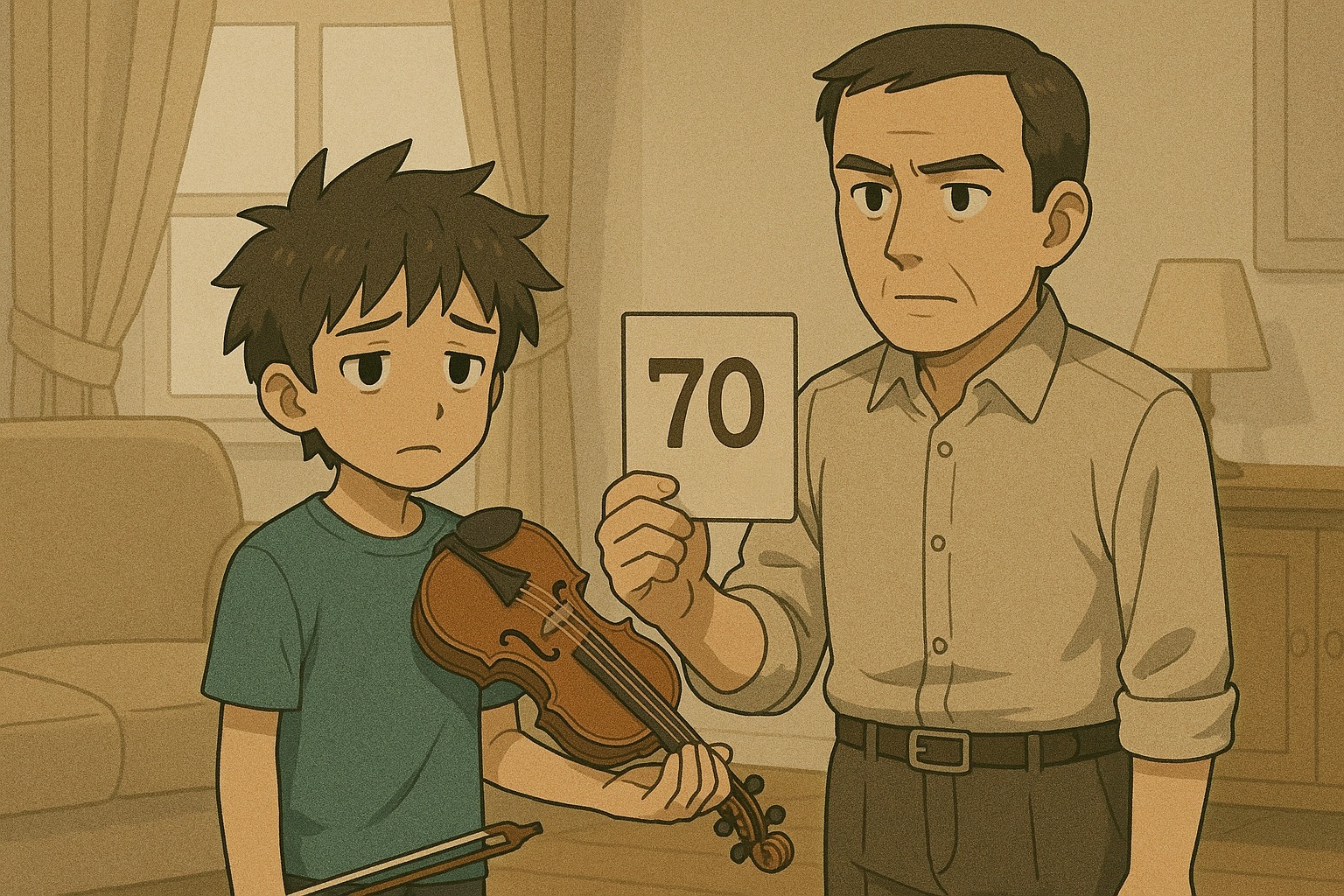
Typical scene: “Your performance today was so-so — I’d give it a 70.” “The way you played that piece, you barely pass.”
What the parent is thinking: “Giving a numerical score is objective and will motivate them to aim higher.”
The damage: This is the most hidden and most devastating mistake of all. It turns your child’s pure love of music into a cold “performance review.” The score becomes the only thing that matters. When they try hard and still don’t get a high mark, they reach a conclusion: “I’m just not good enough. I don’t have talent.”
Love can’t be scored. A cold number will never match the power of one warm word of encouragement.
A better approach: Use descriptive praise
Drop the scoring. Learn to describe specific progress instead.
Instead of “not bad, 80 points,” say: “I noticed your hand position was steadier today than yesterday — that’s real progress!”
Instead of “okay, but there’s room for improvement,” say: “The way you handled that crescendo just now — it felt like watching the sun slowly rise. So vivid!”
See and name their effort, rather than judging their result. This kind of specific affirmation is the best nourishment for a child’s confidence.
Good Practice Support Means Being Your Child’s Ally
Practice support isn’t about drilling technique — it’s about supporting emotions. It’s not about perfecting a piece — it’s about nurturing a mindset.
It shouldn’t be a source of family conflict. It should be a connector for your relationship. When your child conquers a difficult passage under your gentle gaze, when you share a smile over a beautiful melody — that shared moment of beauty is far more precious than any flawlessly played piece.
So set aside the “drill instructor” role and become the warmest, most steadfast ally on your child’s musical journey.
Even if they never pursue music professionally, this practice time filled with love and encouragement will become a light deep within them, illuminating their path through life
Easier said than done, right? Many parents say, “I know all this, but I just can’t help losing my temper.” That’s where the right tools can become your secret weapon. Smart practice apps on the market today, like Wonder Piano, are designed to solve exactly these pain points.
It turns tedious practice into fun, game-like challenges. The AI listens in real time, catches wrong notes, and offers instant, positive encouragement — perfectly sidestepping the traps of “constant interruption” and “cold scoring.” Children gain a sense of achievement while genuinely enjoying themselves.
For parents who want to practice smarter but sometimes feel overwhelmed, Wonder Piano can help you become the ultimate teammate on your child’s musical journey. Search for “Wonder Piano” in the App Store or Google Play to give it a try.