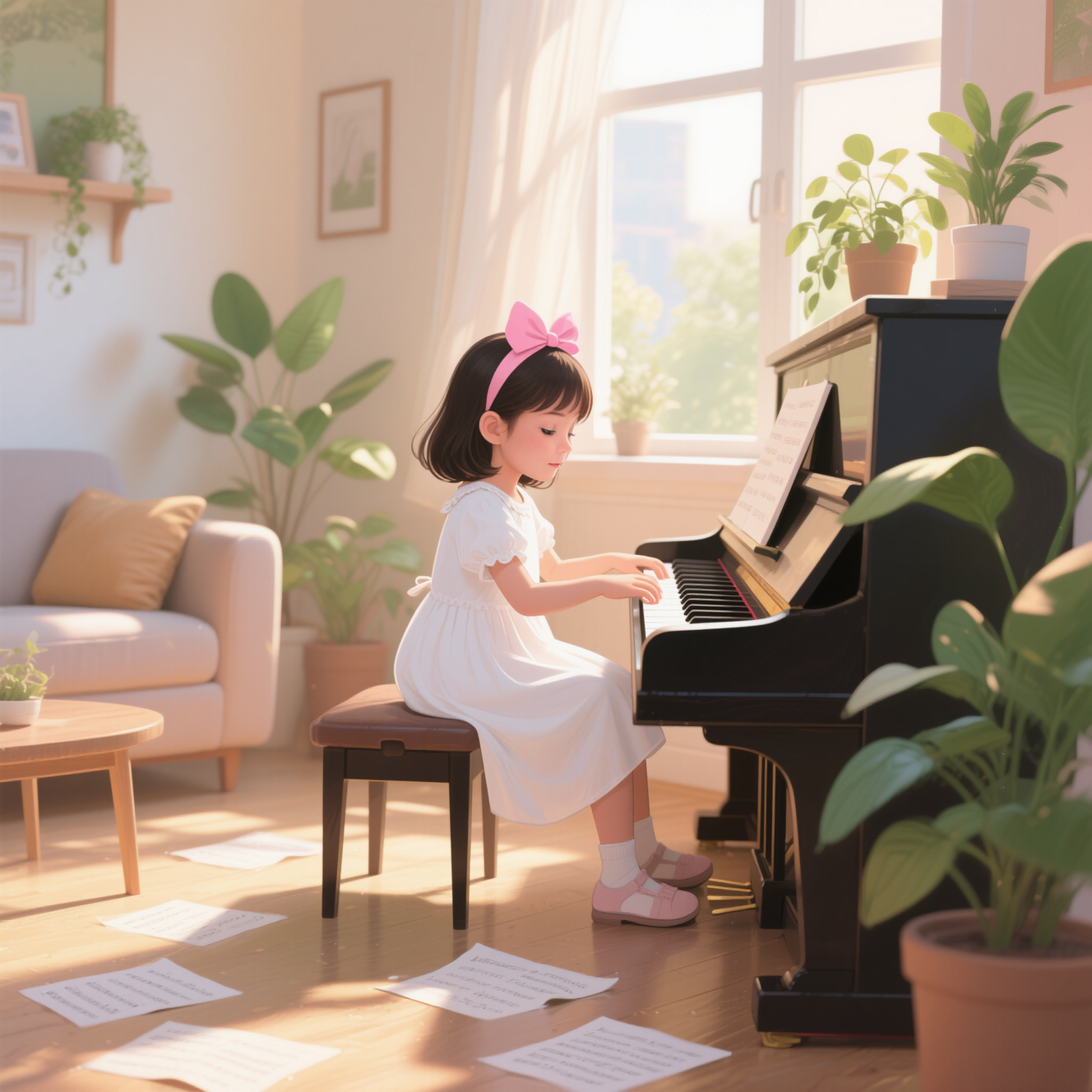
Don’t Let Piano Practice Ruin Your Relationship with Your Child: 5 Tips from an Experienced Piano Teacher That Work 100 Times Better Than Yelling
“Mom, I don’t want to practice anymore!”
The shout from the living room cut through the sizzle of stir-frying in the kitchen like a perfectly aimed grenade.
Li Ran stared at the flame on the stove, but her heart burned hotter. Here we go again — the daily “piano practice tug-of-war,” right on schedule.
A Story That Begins with a Breakdown
Youyou was seven years old and had been learning piano for just one year.
At first, she was enchanted by the grand instrument that could pour out music. But before long — less than six months in — “I don’t want to practice,” “This is so annoying,” and “I can’t do it” became her daily mantras.
To get Youyou to practice, Li Ran tried everything she could think of:
Rewards: She created a “practice coin” system — save enough coins and trade them for stationery or toys.
Entertainment bribes: She promised cartoon time before and after practice.
Outside pressure: She even hired a tutor to supervise practice at home.
But these methods either stopped working quickly or only treated the symptoms. Piano practice became the family’s unspoken minefield — touch it and it explodes. Late at night, Li Ran began asking herself: where did I go wrong?
Finally, while picking Youyou up from a lesson, she couldn’t help pouring out her frustrations to the piano teacher. The teacher, with twenty years of experience, hit the nail on the head: “Many children don’t hate the piano — they hate the version of themselves that can never play well enough and keeps disappointing Mom.”
That sentence was like a beam of light cutting through Li Ran’s tangled thoughts.
Tip 1: Ditch the Marathon and Embrace Short Practice Blocks
What children dread most isn’t practicing itself — it’s the seemingly endless marathon session that feels like a prison sentence.
Instead of forcing your child to sit at the piano for a full hour, try a lighter approach — break practice into three short blocks of 15 to 20 minutes each:
After school, while their energy is still up, do the first round.
Before dinner, grab a short window for a second round.
Before bed, when memory retention peaks, review everything they practiced that day.
Each task is short and clear, making goals easy to reach. This dramatically reduces frustration, and children stop dreading the piano — they may even slip into “practice mode” on their own.
Tip 2: Aim for Accuracy, Not Completion
Parents often worry: “Why hasn’t my child finished the whole piece yet?” But playing through mistakes without fixing them is like copying a misspelled word over and over — it looks like hard work, but you’re actually reinforcing a bad habit.
The teacher’s advice: even if your child only practices the first eight measures today, make sure every note, rhythm, and fingering is spot-on. When something goes wrong, stop right away and help your child clearly understand what was off and how to fix it.
The catch is that many parents aren’t trained musicians — they simply can’t hear subtle mistakes. That’s when a tool or method that provides instant feedback becomes essential.

Tip 3: Feed Your Child’s Confidence with Instant Wins
Children don’t mind working hard — what they fear is working hard with nothing to show for it. A sense of accomplishment is the best fuel to keep them going.
Try breaking a piece into small “levels.” Every time your child clears one, give immediate feedback:
A sincere compliment: “Wow, that passage was so smooth!”
A simple ritual: stick a gold star on their progress chart.
These tiny affirmations add up to a powerful inner voice: “I can do this!”
Also, record your child’s weekly “highlight moments” on your phone. When they scroll through those clips later, the pride of realizing “I’ve come this far” is more motivating than any lecture.
Tip 4: Be the Audience, Not the Supervisor
Li Ran once tried the “supervisor” approach to practice: sitting beside Youyou in silence, saying nothing — but her furrowed brow and anxious eyes gave her away. The result? Youyou played even more tensely, sneaking glances at Mom’s face every time she hit a wrong note.
Many children’s first reaction to a mistake isn’t to find the problem — it’s to check their parent’s expression.
Truly effective companionship means creating a completely safe practice environment. Let your child know: “Mom isn’t here to catch mistakes — she’s here to appreciate your effort. You can make mistakes freely, because every wrong note is a signpost pointing toward the right one.”
Even if all you do is sit nearby sipping tea or reading a book, and occasionally say “that part sounded beautiful” when you hear a smooth passage, your child’s confidence will light up in an instant.
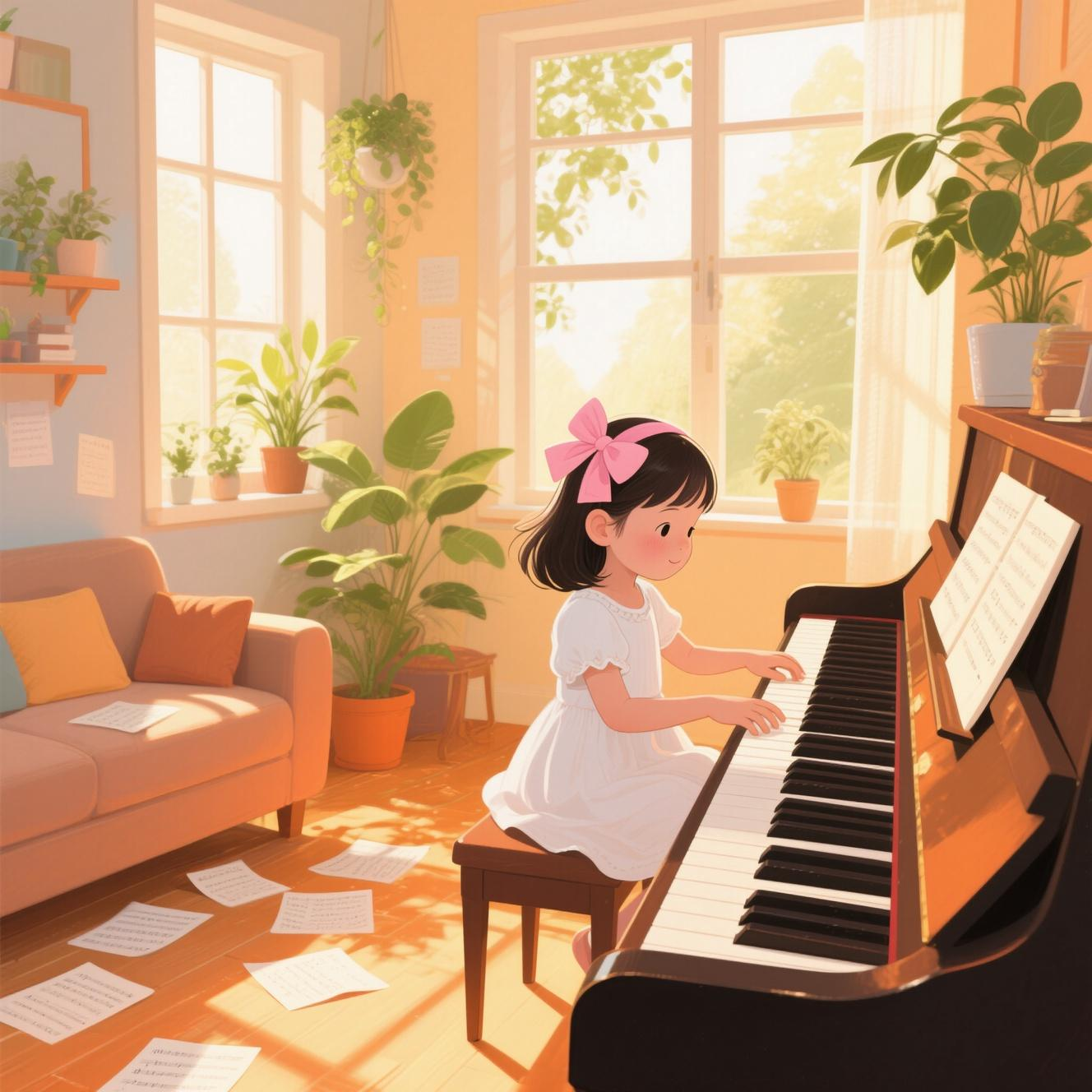
Tip 5: Swap Mindless Repetition for Game Mode
Repetition isn’t the enemy — mindless, mechanical playing is. Three focused run-throughs beat ten absent-minded ones every time.
To keep things interesting, try these creative practice games that turn drills into adventures:
“One-Hand Hero” Challenge: Practice hands separately to sharpen focus.
“Rhythm Obstacle Course”: Deliberately change the tempo — play a fast passage slowly — and challenge your child’s control.
“Wrong-Note Blitz”: Circle the trouble spots and concentrate all firepower on them.
“Super Brain” Silent Practice: Close your eyes and “play” the piece mentally, strengthening score memory and inner hearing.
These methods don’t just banish boredom — they spark your child’s competitive spirit and curiosity.
Three months after changing her approach, something wonderful happened. Youyou started walking to the piano on her own, sometimes excitedly calling out:
“Mom, come listen! I learned this part all by myself today!”
Li Ran was amazed to discover that what used to be a daily battleground had become a special bonding time for mother and daughter. She said with heartfelt emotion: “It turns out the problem wasn’t that our child couldn’t learn — it was that we parents were doing it wrong.”

Good Practice Habits Are the Secret to a Happier Parent-Child Relationship
Li Ran’s story reflects the reality of countless families. We often find that inefficient home practice isn’t because the child doesn’t try hard enough or the parent doesn’t care enough — it’s because both sides are fighting with brute force, draining their energy and wearing down their love for each other.
Less emotional exhaustion and more practical support — that’s how piano practice can return to what it’s meant to be: a wonderful journey where a child explores music and builds confidence.
The tips about precision (Tip 2) and game mode (Tip 5) are exactly where many non-musician parents struggle most. We can’t hear subtle pitch or rhythm errors, and we can’t come up with creative practice ideas on the fly.
And That’s Where Technology Can Gently Step In
Today there are excellent smart practice apps — like Wonder Piano — that use AI-powered real-time error detection, gamified challenges, and hands-separate sectional practice to solve the two biggest problems parents face: “I can’t hear the mistakes” and “I don’t know how to teach.” It works like a patient, professional, and tireless AI teaching assistant, helping your child pinpoint problems and turn tedious repetition into a game — ultimately giving your child back the feeling of “I can do this.”
If you’re stuck in your own daily practice battle, consider giving these smart tools a try. Let practice become easier, and let music be joyful again.