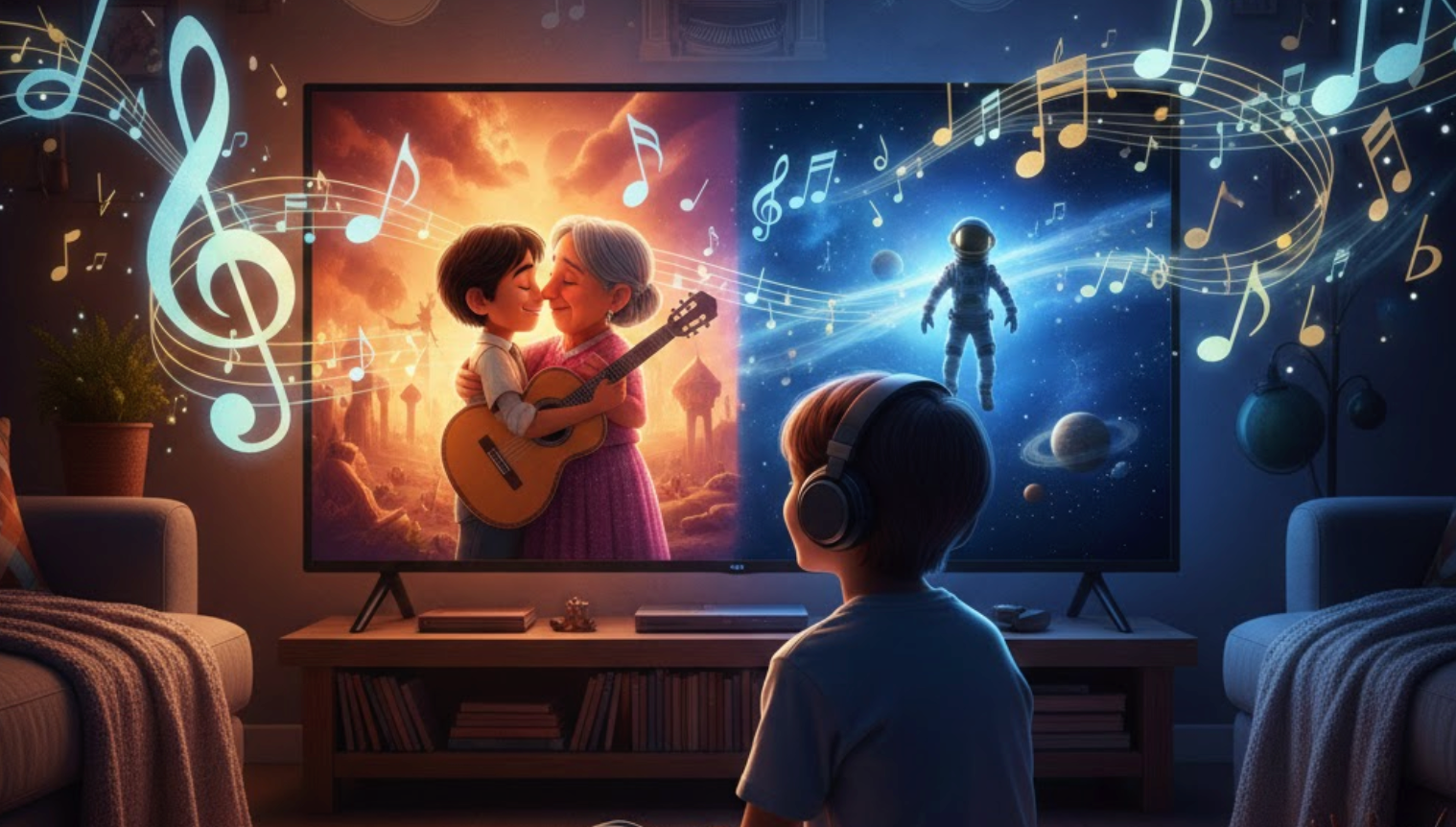
Nolan’s New Film ‘The Odyssey’ Is Breaking the Internet — How Film Scores Shape Your Child’s Imagination
The trailer for Christopher Nolan’s new film The Odyssey racked up massive view counts within just 48 hours of its release. Audiences weren’t only talking about the epic visuals — they were captivated by the goosebump-inducing background music, sweeping, mysterious, and full of power.
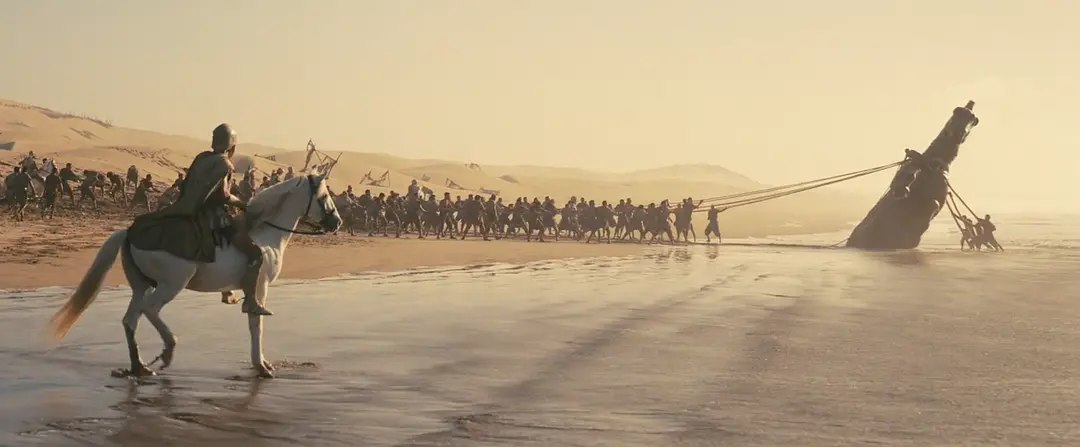
This has made countless parents realize something important: film scores may be the most natural way for children to discover classical music. When your child hums along to Frozen or sits breathless during the music of Interstellar, their musical awakening has already begun.
Film Scores: Your Child’s “Emotional Translator” for Understanding the World
Why are children so moved by film scores? Because music is a direct expression of emotion. A rousing orchestral passage can make a child feel courage; a gentle piano melody can make them feel warmth. A longitudinal study from the Harvard Graduate School of Education found that children exposed to quality music from an early age scored 23% higher in emotional comprehension than their peers.
Film scores offer exactly this kind of opportunity: the visuals provide context, the music conveys emotion, and children naturally learn to “understand” the meaning behind music as they watch. This dual stimulation of sight and sound leaves a much deeper imprint on a child’s brain than listening to music alone.
Why Film Scores Are the Best Material for Musical Awakening
The renowned music educator Kodaly once said: “Music education should begin with ‘listening,’ not with ‘playing.’” This principle is widely applied in music education around the world. Kodaly believed that children need to build musical perception through extensive listening before they can truly understand and express music. Film scores are the perfect vehicle for this kind of “high-quality listening” — composed by world-class composers, performed by full symphony orchestras, structurally complete and emotionally rich, and far easier for children to remember when paired with visuals.
From a child psychology perspective, Swiss psychologist Jean Piaget’s theory of cognitive development tells us that children aged 5 to 13 are in the “concrete operational stage,” meaning they understand concrete, visible things more easily.
Listening to music in isolation can be too abstract for children in this age group, but film scores provide a “visual anchor.” When the guitar plays in Coco, a child can picture Miguel hugging his great-grandmother. When the organ swells in Interstellar, a child remembers the protagonist’s loneliness and bravery in the vastness of space.
3 Must-Learn Film Score Pieces
Interstellar — Cornfield Chase
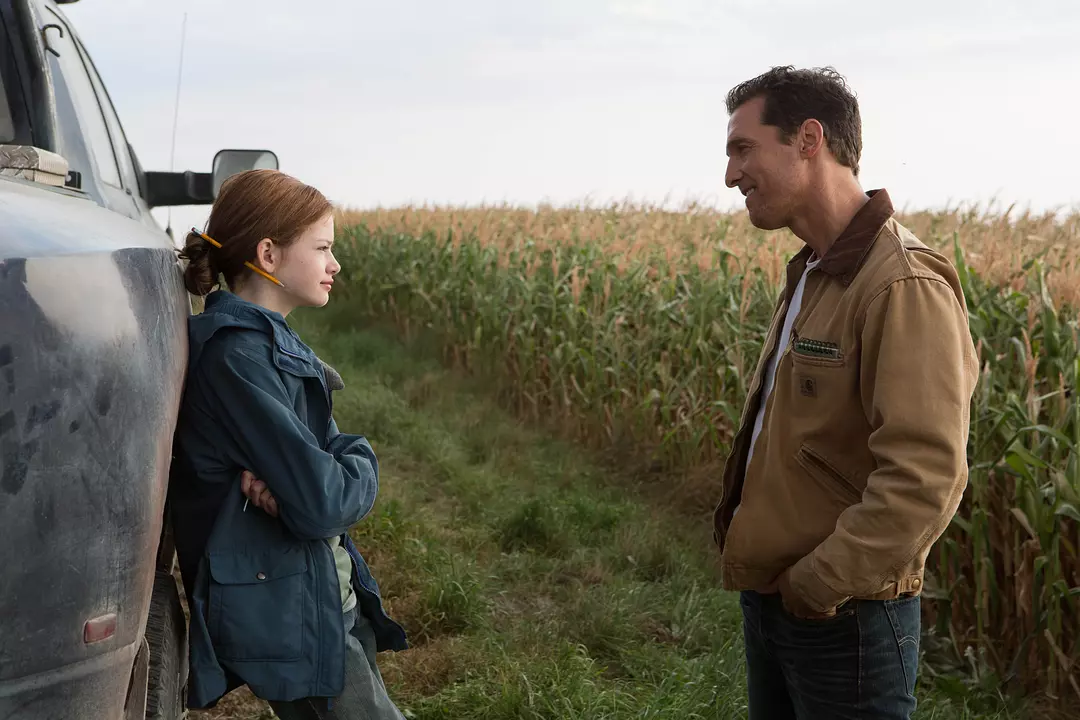
Movie scene: Cooper drives his truck chasing an Indian drone through golden cornfields — the film’s first grand glimpse of quiet life before the space expedition begins.
Difficulty: Intermediate (roughly Grade 5–6, similar to ABRSM)
Composed by the legendary Hans Zimmer, the piece features organ as the lead melody supported by strings and piano, creating a unique atmosphere that blends epic grandeur with tenderness. Built on a bright C major foundation, it weaves in minor-key color shifts, allowing the music to move freely between the grand and the intimate.
The rhythm is in 4/4 time, but the composer introduces crescendos and tempo changes during thematic repetitions, creating a sense of pursuit and urgency. The full piece runs about 4 minutes. The piano arrangement preserves the original harmonic framework — the right hand carries a clear melodic line while the left hand uses broken chords. The main technical challenges lie in pedal control and expressive dynamics.
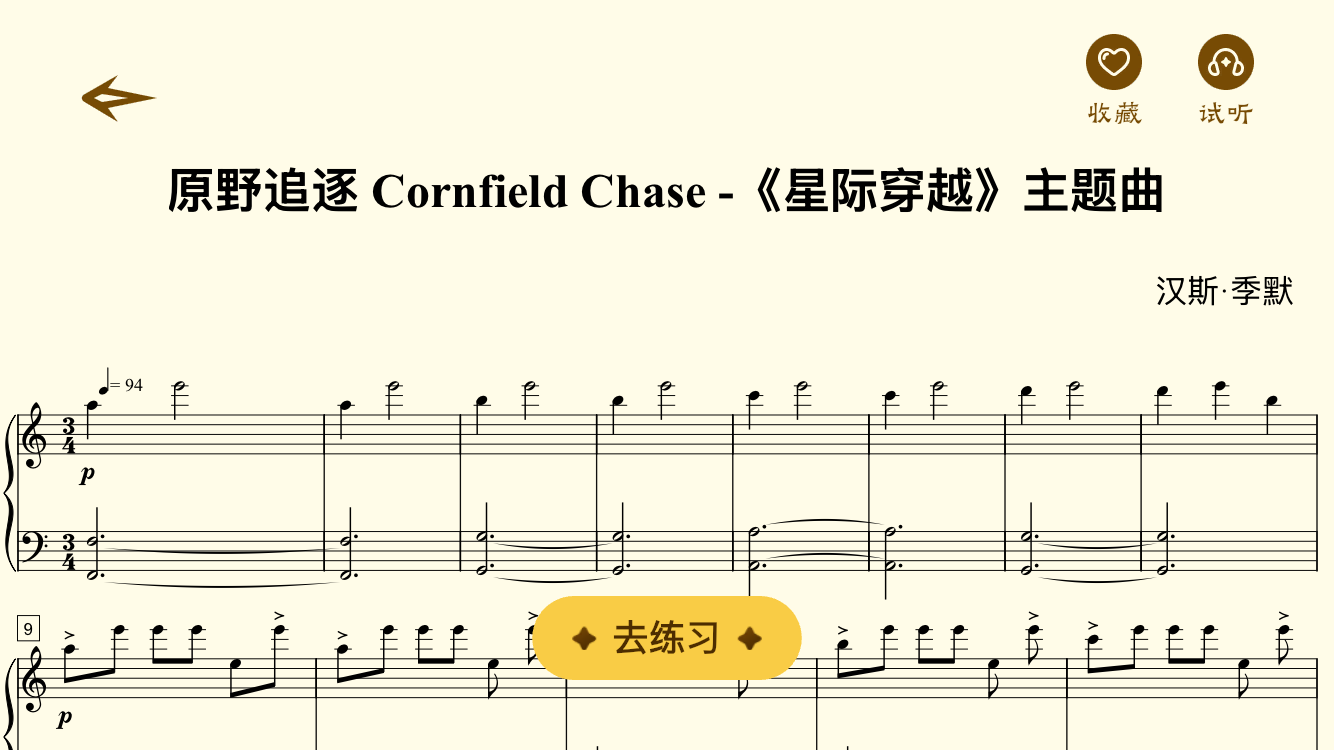
This piece is ideal for developing your child’s “musical storytelling” ability. Cornfield Chase is a complete “musical narrative” — moving from calm to excitement, from the personal to the cosmic. While playing, children learn to use tone color and dynamic variation to “tell a story,” effectively building their musical expressiveness.
The harmonic shifts also help children develop a sense of tonality. Recommended for children with a solid foundation who are ready to move beyond “mechanical playing” into the stage of “emotional expression.”

Learn it in the app: Open Wonder Piano → tap the search bar at the top → search “Cornfield Chase” → start the Magic Challenge
💡 In a nutshell: If you want your child to learn to “tell stories through the piano,” this is the perfect practice piece.
Coco — Remember Me

Movie scene: In the film’s finale, Miguel plays and sings this song at his great-grandmother’s bedside, awakening her memories of her father — leaving not a dry eye in the audience.
Difficulty: Beginner (roughly Grade 3–4, similar to ABRSM)
Co-written by Michael Giacchino and Kristen Anderson-Lopez, this song won the Academy Award for Best Original Song.
The melody is beautifully simple — in C major, 4/4 time, using only basic tonic, subdominant, and dominant chords. Yet it’s precisely this “stripped-down simplicity” that allows the emotional expression to flow without any barriers.
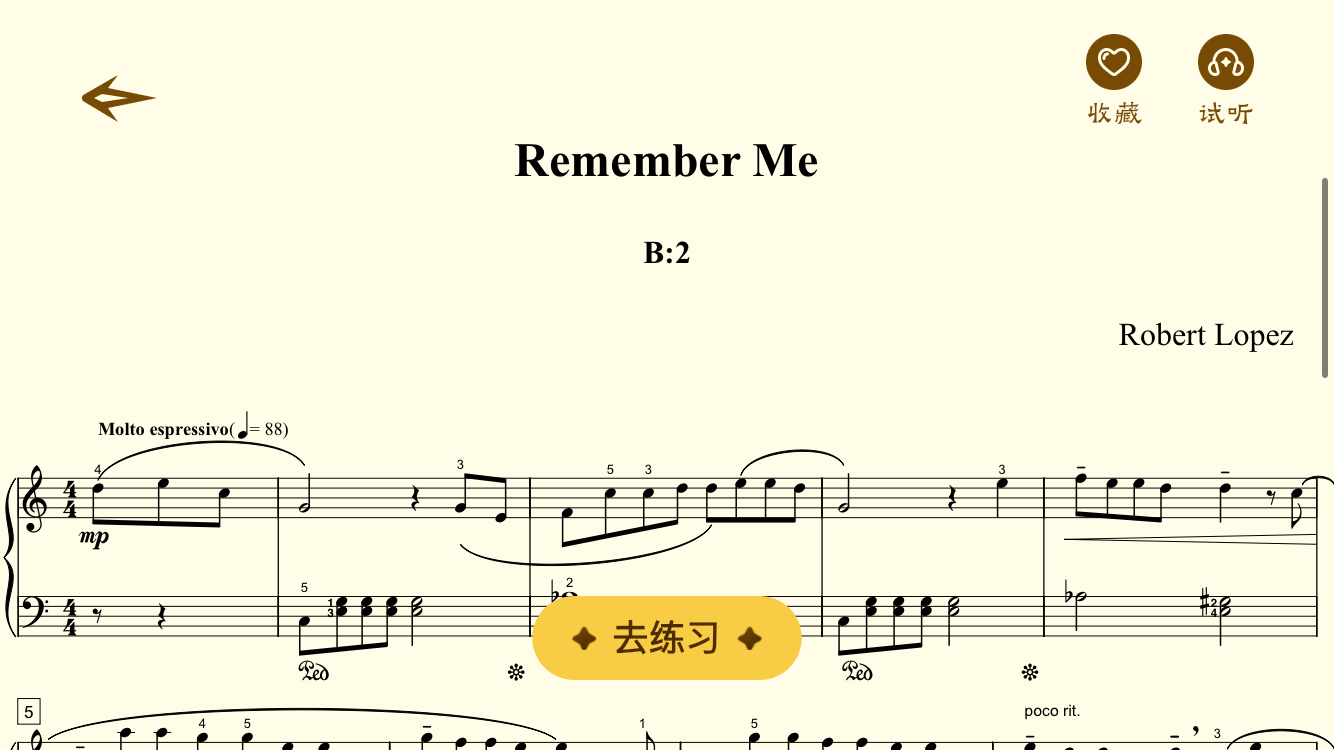
This piece conveys deep emotion through simple notes. The Suzuki Method emphasizes “developing musical sensitivity before technical ability,” and Remember Me’s beautiful, singable melody lets children pick it up quickly and feel a sense of accomplishment.
At the same time, the chord progression is very standard, helping children build foundational concepts of tonality. More importantly, the song carries themes of family love and memory — while playing, children naturally recall the movie scenes and learn to express emotion through music. Recommended for beginners who need a piece that’s “fun and rewarding.”
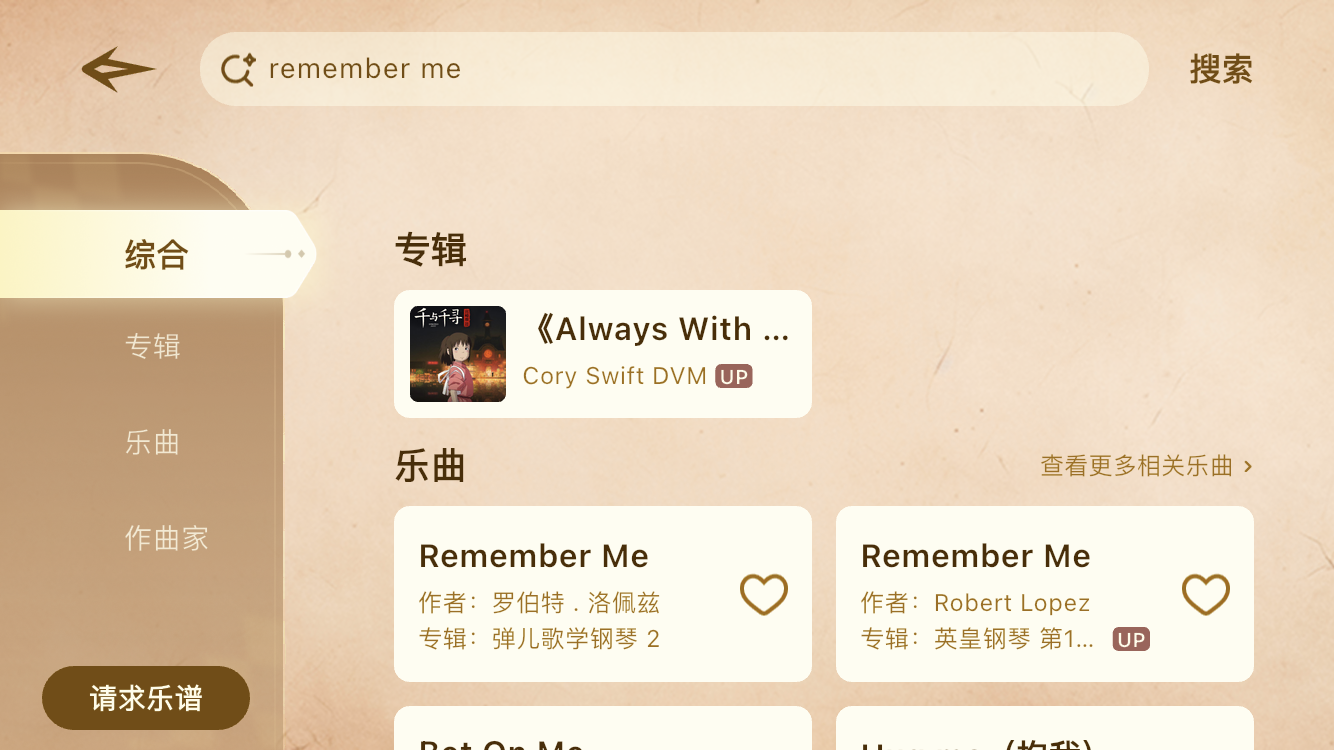
Learn it in the app: Open Wonder Piano → tap the search bar at the top → search “Remember Me” → start the Magic Challenge
💡 In a nutshell: Your child’s first “emotionally expressive” piano piece — simple, yet deeply moving.
Castle in the Sky — Theme Song

Movie scene: Sheeta and Pazu stand among the ruins of the floating Castle in the Sky as the setting sun bathes the ancient structures in light. The music rises, conveying a sense of “innocence within adventure” and “the beauty of a lost civilization.”
Difficulty: Intermediate (roughly Grade 4–5, similar to ABRSM)
Composed by Joe Hisaishi, one of Japan’s most celebrated composers, this piece is widely regarded as “the perfect classic for piano beginners.” The melody flows gracefully with Hisaishi’s signature style — clean, pure, and vividly cinematic. The overall difficulty is moderate, with a playing time of about 4 minutes.
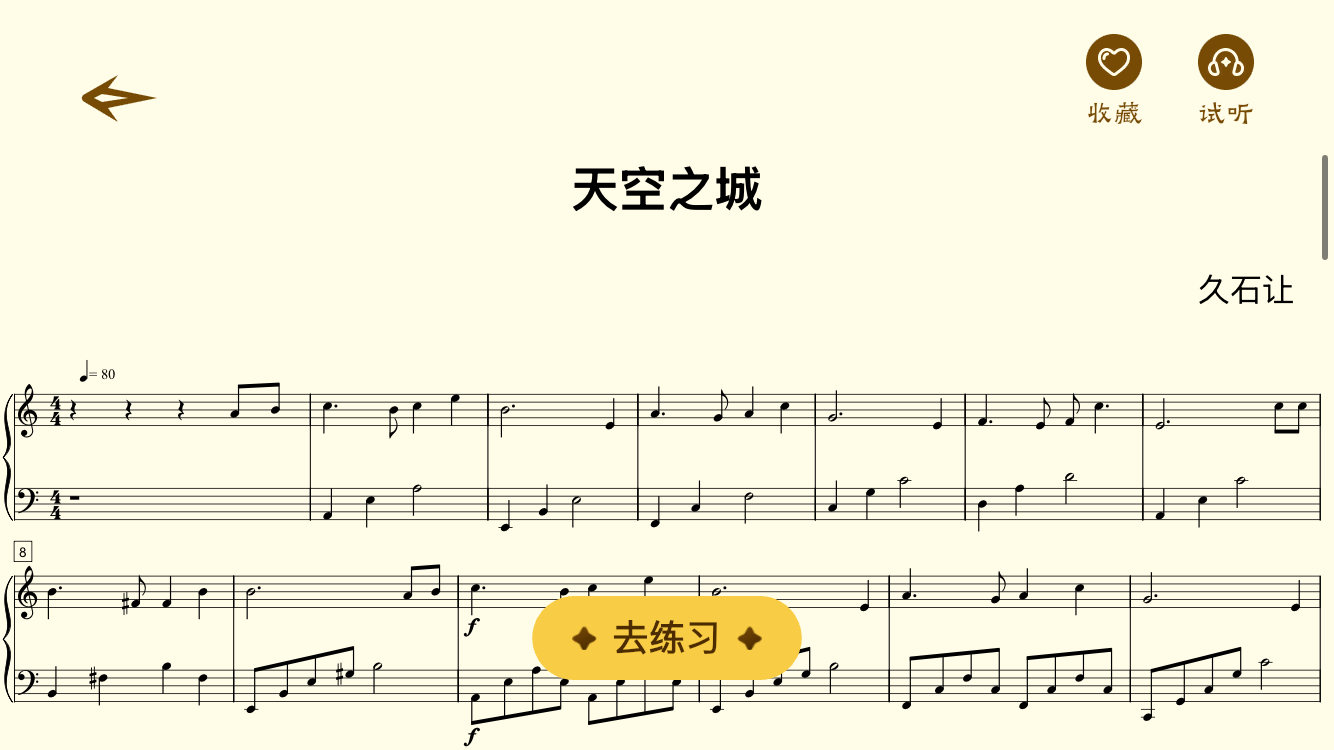
This piece is excellent material for rhythm training. The 3/4 waltz time signature helps children naturally develop a “strong-weak-weak” rhythmic sense — one of the foundational skills in classical music.
The memorable melody allows children to memorize the score quickly, freeing their attention to focus on “emotional expression” and “tone control.” Hisaishi’s works are known for “creating rich emotion with simple notes,” which helps children understand that “music isn’t about stacking notes — it’s about conveying feelings.” Recommended for children with some foundation who want to improve their musical expressiveness and rhythmic control.

Learn it in the app: Open Wonder Piano → tap the search bar at the top → search “Castle in the Sky” → start the Magic Challenge
💡 In a nutshell: A timeless classic — every child learning piano deserves to have this piece in their repertoire.
FAQ
Q: How many pieces are in Wonder Piano’s sheet music library? A: The app currently features over 3,000 pieces of sheet music, covering graded exam repertoire, pop music, classical masterworks, film scores, and more — with new additions regularly.
Q: Can I find all these film score pieces in the app? A: Yes! Simply search for the piece name (e.g., “Remember Me” or “Castle in the Sky”) in the sheet music library. All sheet music is free to view and preview. If you can’t find a particular piece, you can submit a request directly in the app.
Q: Can a complete beginner learn these pieces? A: The app’s “Magic Challenge” mode breaks each piece into small sections for note-by-note practice, so even complete beginners can learn step by step.