
Don’t Let Exam Cramming Ruin Your Child’s Musical Journey: The Truth Behind Piano Grading Exams
A Battlefield We All Know Too Well
Every year around winter and summer breaks, grading exam season arrives. In countless homes, the living room transforms into a practice battlefield. At six in the morning, the child is still half-asleep brushing their teeth while Mom is already standing by with a timer.
At ten at night, the shrill sound of a violin bleeds through the walls and the neighbor knocks in protest. The child plays until they cry, the parent shouts until they’re hoarse, and with the exam looming, nobody dares let up. For an entire month there’s barely a moment to breathe. We grit our teeth and tell ourselves, “Just push through and it’ll be over.”
But is that kind of “pushing through” really worth it?
Through round after round of last-minute cramming, we may not realize that those seemingly hardworking days are quietly eating away at our children’s love of music — and even undermining the quality of their entire musical education going forward.
The Temptation and Illusion of Cramming
Let’s be honest: many parents have tried to get their child to practice regularly. It’s just that plans always crumble under the weight of daily life. Too busy, practice is too boring, the child resists too much… So we always end up launching a forced boot camp “30 days before the exam,” pushing it off until we can’t any longer:
One hour a day becomes two hours, then three — every weekend, every holiday, every spare minute of sleep sacrificed until the pieces can be played from memory.
And cramming “works.” The child passes, maybe even with distinction. The teacher says “not bad,” relatives praise their “talent,” a social media post collects a wave of likes. But behind these brief moments of positive feedback, it’s easy to overlook a harsh truth: Is any of this really sustainable?
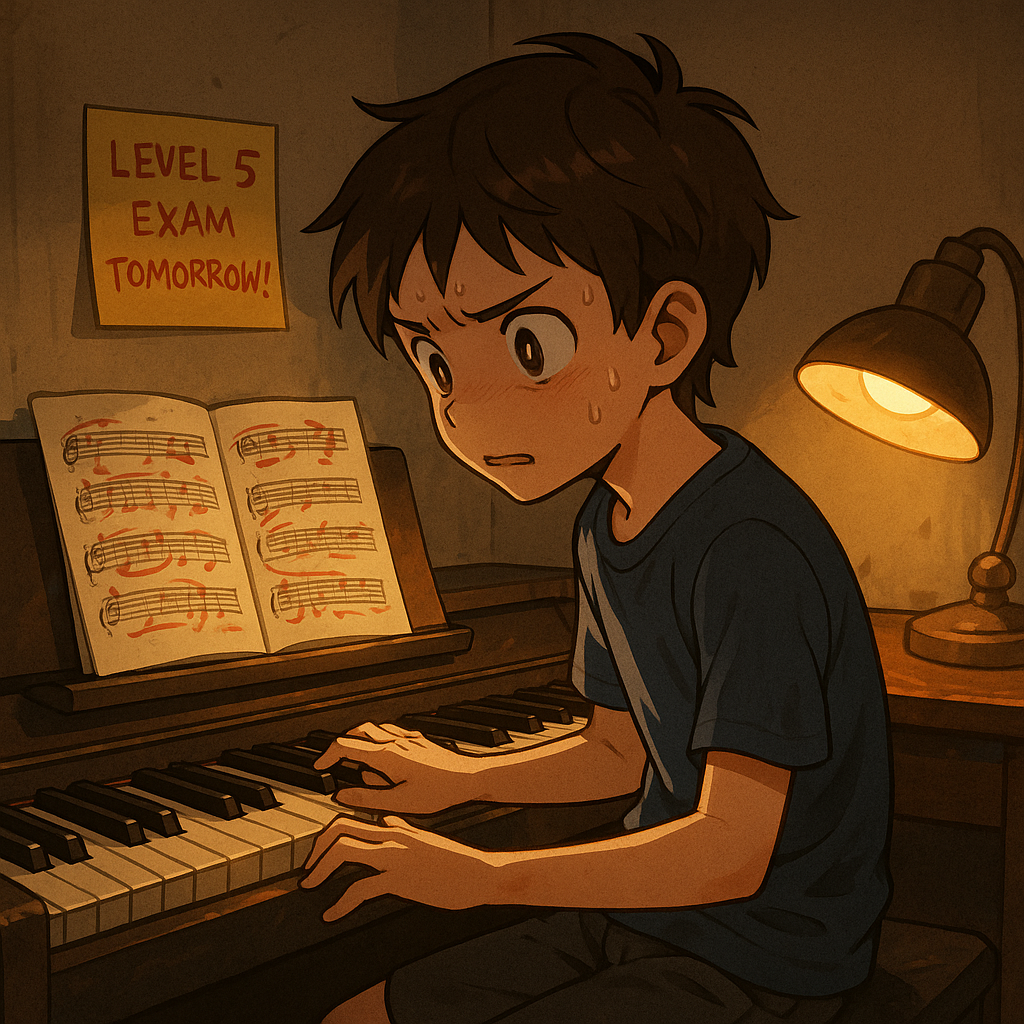
The Truth: The Cost of Cramming Is Heavier Than You Think
1. A Castle Built on Sand Exam cramming relies on rote memorization, not solid fundamentals. Crooked hand posture, shaky intonation, stumbling rhythm — all papered over by speed and repetition.
Piano-specific problems like collapsed fingers and raised shoulders, or violin issues like a crooked bow and a death grip, are all products of muscle memory. Once these habits form, it’s like laying bricks at an angle — every brick that follows has to lean the same way. Trying to fix it later? Nearly impossible.
Scales, arpeggios, etudes — all thrown overboard in the rush. Gaps in fundamentals will exact an ever-higher price at every future level.
2. Pulling Up Interest by the Roots Music was once a light in your child’s eyes. But intense cramming turns “practice” into a source of dread. The moment they sit down at the instrument, they remember that month of tears, shouting, hurt feelings, and the constant fear of making a mistake. That kind of psychological damage doesn’t heal just because the exam is over.
It can stay with a child for a long time, even becoming the root of their resistance to “learning” in general. Worse still, a child who “crammed successfully” walks onto the stage without real confidence. With no solid foundation and no internalized skill, they survive on luck alone. One bad performance can trigger lasting performance anxiety.
3. Killing Musicality Altogether
Cramming focuses on “right or wrong” and “accurate or not” — there’s never time for “beautiful or not” or “moving or not.” No breathing, no dynamics, no emotional arc. What comes out is mechanical notes, not living music.
It plants a bias in your child’s mind: “Music is boring and emotionless.” Once that belief takes hold, it becomes nearly impossible to experience the true joy of playing.
Stop relying on “crisis intervention.” Starting today, let’s find a different way to walk the musical path with our children.
Mindset first: Exams do not equal achievement. A grading exam is just feedback on one stage of learning — not the finish line, and certainly not a measure of your child’s worth. What we really need is for our child to still want to open the piano lid after the exam is over.
Method matters: Build a “daily” practice system. Thirty minutes of focused, high-quality practice every day is far more effective than cramming four hours in a single weekend session. Slow practice, phrase-by-phrase work, hands-separate drills — these are how real progress accumulates. Even if your child only masters one phrase today, that’s more solid and lasting than forcing through an entire piece.
Use the right tools: Let technology be a “daily companion.” Many parents only think of turning to tools like AI practice assistants when their child hits a wall. But that’s like calling the fire department after the house is already burning — often too late. Hand posture is already set, bad habits are deeply ingrained, and the child’s frustration has been building for months.
The smarter approach is to make technology an everyday “gatekeeper,” not an emergency “firefighter.”
A good AI practice assistant isn’t valuable because it catches a hundred mistakes before the exam — it’s valuable because during daily practice, it gently corrects the very first mistake. It should be like a patient, engaging friend:
Real-time feedback without harsh judgment: Instantly identifying wrong notes and rhythm errors, reminding your child in a way they can accept, and preventing problems from snowballing.
Making practice fun, not pressured: Weaving fundamental exercises into engaging, interactive experiences — turning “I have to practice” into “I want to practice.”
Freeing parents, not creating new anxiety: Parents don’t need to hover over every session to ensure quality practice, letting the parent-child relationship return to harmony.
When practice stops being a “battle” between parent and child and becomes a positive daily habit filled with encouraging feedback, the musical journey can go much further.
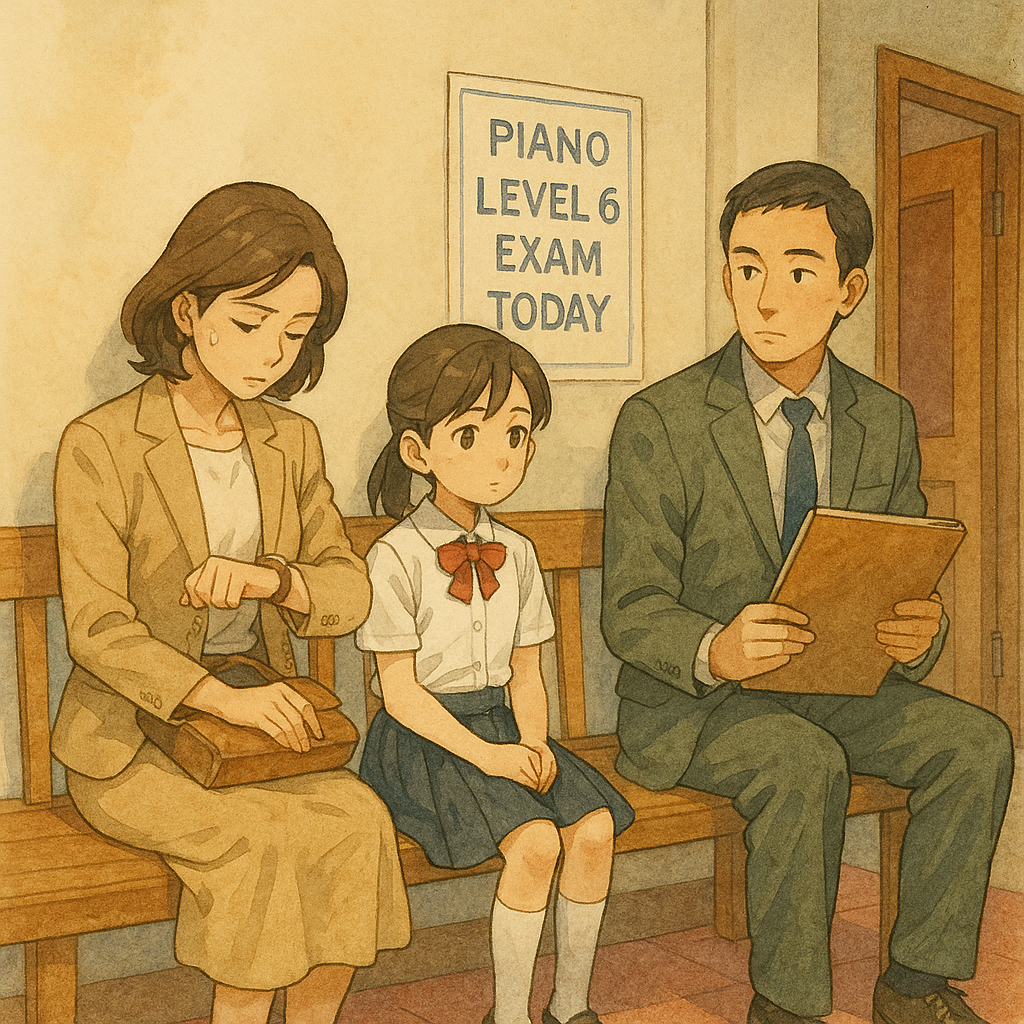
From “Completing a Task” to “Enjoying Creation”
Let’s stop sacrificing the original reason our children started learning music just for the sake of an exam. That original reason wasn’t about a certificate — it was about being able to sit at the piano on a quiet evening and play a melody that moves you; not about showing off technique, but about finding the focus, control, and satisfaction that comes from dedicating yourself to something meaningful.
Fortunately, we already have great options for turning tedious daily practice into something fun. Apps like Wonder Piano combine AI technology with child psychology, using story-driven adventures and level-based challenges to guide children from passively “completing a task” to actively “exploring a game.”
It quietly plays the role of that everyday “gatekeeper,” helping children build the right sense of rhythm and healthy practice habits day by day.
Let’s stop betting everything on last-minute cramming. It might let your child scrape through, but it slowly erodes the most precious connection between your child and music. Protecting that love requires daily nurturing. Music is a long road — may we all be the light along our children’s path, not the fire at their heels.