Don’t Stress: Exams, Competitions, and Performances Aren’t Multiple Choice — They’re a Roadmap
“Teacher, does my daughter really have to take grading exams? She has no interest in practicing for them — she just wants to perform on stage.”
“My child never wins anything at competitions. Does that mean he’s not cut out for a serious music path?”
“She loves playing piano, but we don’t want to force her into exams. Will that hold her back?”
Behind these questions are sleepless nights of worry: push too hard and your child grows to hate piano; ease up and they fall behind. After investing so much time and money, what are we really hoping to get out of it?
If you’ve been going back and forth on these choices, this article is your clear-headed guide.
Three Paths, Three Purposes — Understanding Them Ends the Confusion
On the piano learning journey, most parents encounter three big milestones: grading exams, competitions, and performances.
Many assume these are mutually exclusive — pick one and the others are off the table.
That’s not the case at all. These three aren’t opposites; they complement each other. The key is knowing what you want your child to gain at each stage.
Let’s break down the strengths and risks of each to help you decide.
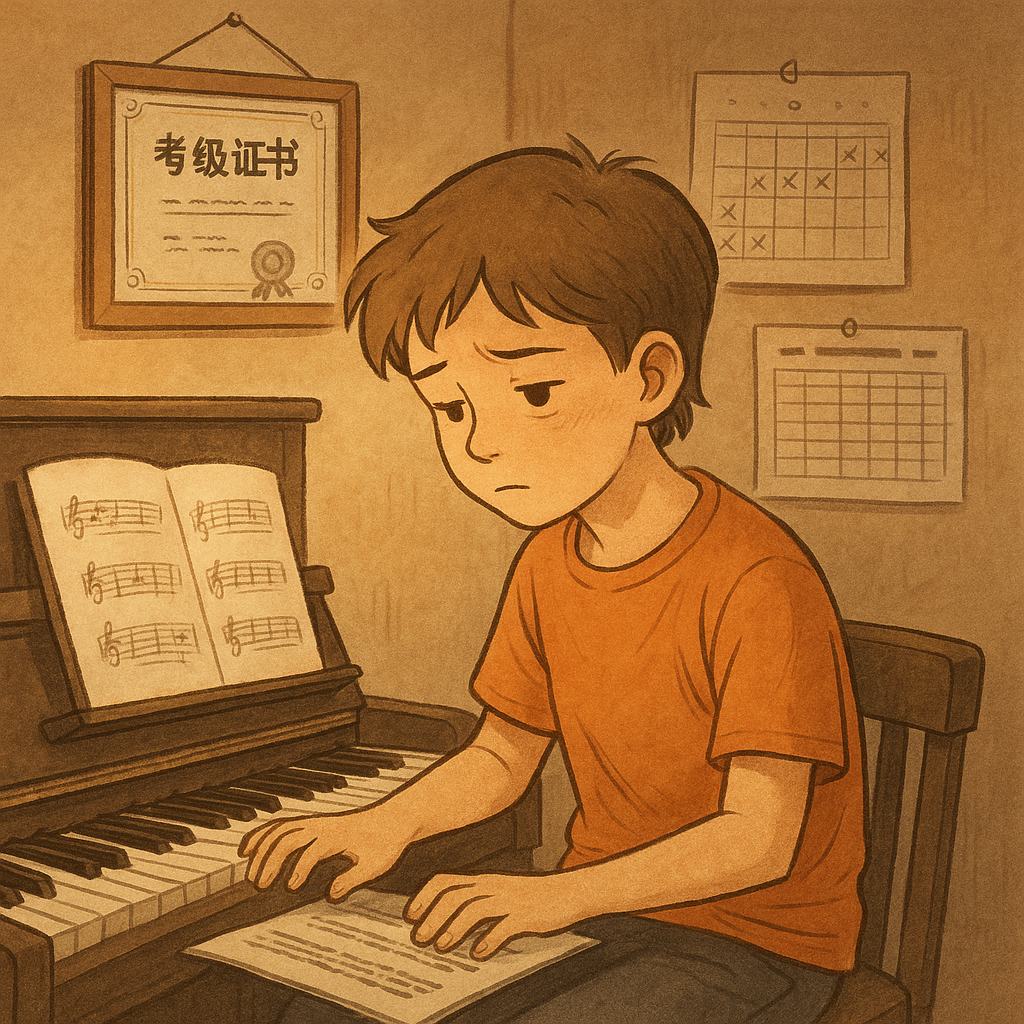
Grading Exams: Like Climbing Stairs — Clear Steps, but No Scenery
🎹 Best for: Children who thrive with clear goals and structured progress.
Grading exams — similar to systems like ABRSM — are like a well-designed staircase. Each level is a clear step up, letting your child see “I’m making progress.” This kind of milestone-based sense of achievement is incredibly important for building confidence.
But there are real downsides:
The repertoire is fixed, and practice can become monotonous
If the pace gets too intense, interest gets crushed
Many children become “exam machines,” playing music that’s technically correct but emotionally empty
🎯 Expert advice: Exams should be a way to verify ability, not a box-checking exercise. Don’t rush the pace, and definitely don’t skip levels just to show off. When your child’s playing naturally reaches the standard, that’s the perfect time to take the exam.
💡 Helpful tip: Many children who use Wonder Piano take advantage of its real-time AI feedback to instantly see specific issues with rhythm, pitch accuracy, and more during practice. It’s like a mini grading exam every day. Exam prep is no longer a last-minute cram session — it becomes a steady, low-pressure habit of daily improvement.
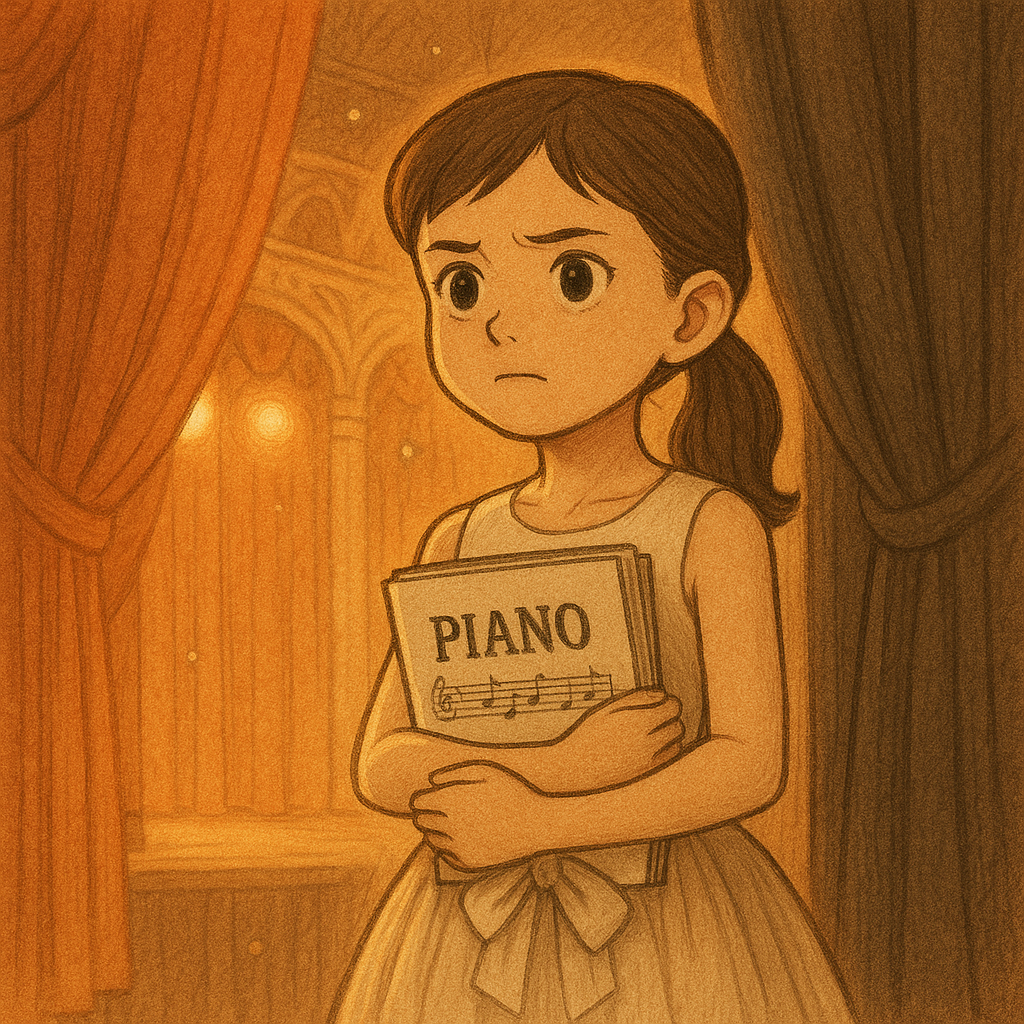
Competitions: Like Climbing a Mountain — Beautiful Views, but a Tough Trail
✨ Best for: Children with solid technique, strong nerves, and a hunger for challenge.
Competitions are a high-risk, high-reward track that develops well-rounded abilities, including:
Managing stage nerves
Refining technical details
Self-expression and stage presence
But rankings, awards, and judges’ comments can be a double-edged sword. A single remark about “an immature performance” can shatter a child’s confidence.
A common mistake parents make is entering too early, competing too often, and caring too much about rankings. When four- or five-year-olds are pushed onto the competition circuit before they’re emotionally ready, one critical comment can make them refuse to go on stage ever again.
🎯 Expert advice: Competitions work best as occasional breakthrough moments, not a year-round grind. More importantly, shift the focus from “how do I compare to others” to “how have I improved.”
📌 A real-world example: Some parents have shared that their children find a similar sense of healthy competition in Wonder Piano’s adventure-style learning mode. Completing each training section and earning “magic stars” creates a mini challenge-feedback-progress loop — giving children that competitive thrill without the pressure of an actual competition.
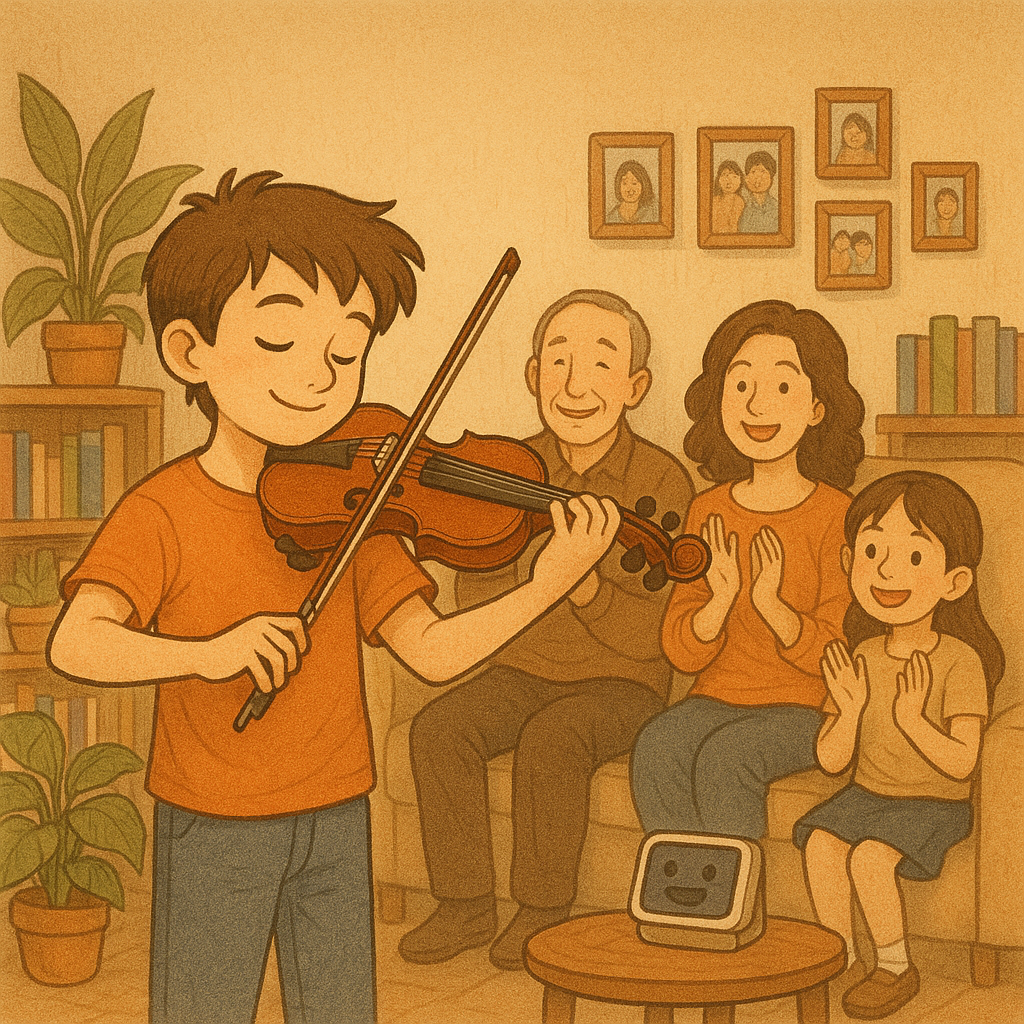
Performances: Like a Nature Walk — Fun and Relaxing, but Easy to Lose Direction
✨ Best for: All children, especially beginners who need to build confidence.
Performing is the process of sharing music with the world. Compared to exams and competitions, there’s no formal judging. It brings a powerful sense of self-worth and the thrill of applause — making it fertile ground for nurturing a love of music.
But performances often lack a feedback mechanism. A child might play for months without real improvement. “Having fun playing” doesn’t always mean “playing well.”
🎯 Expert advice: Performances don’t have to mean a formal stage recital. They can be a family music night, a school talent show, or even playing a piece for grandparents at home. Giving your child a “stage to share on” is the key to lighting a long-lasting spark of motivation.

Smart Parents Know How to Combine All Three
By now, the picture should be clear: Your child’s growth is an open-ended problem, not a multiple-choice question.
What truly makes the difference is knowing how to flexibly switch between these paths at different stages:
Use exams to build a foundation — answering the question “Can they do it?”
Use competitions to push breakthroughs — answering the question “Can they do it well?”
Use performances to find joy — answering the question “Do they love it?”
The three complement each other. You don’t need all of them at once, but leaving any one out entirely creates a gap.
Ask Yourself: What Kind of “Musician” Do You Want Your Child to Become?
Let’s go back to the heart of the matter: what role do you want music to play in your child’s life?
🎯 If you’re aiming for a professional path: Then exams and competitions are the backbone of their resume, and both skill and mental toughness need to be developed fully.
🌸 If it’s about personal enrichment: Then performances and music appreciation are the vital supplement to regular practice.
🧠 If it’s about building discipline and capability: Then maintaining a steady rhythm of progress and seeing things through to the end matters most.
There’s no right or wrong choice — only what fits your child.
🎶 At the end of the day, the goal of music isn’t a trophy or a certificate. It’s giving your child a melody of their own — one that can comfort them when life gets hard.
Don’t Let the Path Choose You — Your Child’s Passion Is What Matters Most
One last thought to leave you with:
“On the piano journey, the most precious thing to protect isn’t technique or trophies — it’s the spark of love for music shining in your child’s eyes.”
Don’t rush to keep up with someone else’s pace, and don’t let any single path dictate your choices.
Find the rhythm that’s right for your child. Take it slow, and you’ll discover a path that’s uniquely beautiful.