Kids Who Start Piano Young Don’t Have Many Strengths — Only About 200 of Them
Someone once left a comment: “Kids who start piano young don’t have many strengths — only about 200 of them.” This humble-brag, delivered with a wink, landed like a stone in still water, sending ripples through the hearts of countless parents.
Jokes aside, let’s think about it: what’s really happening inside a child who grows up with 88 black and white keys? Behind the tedious practice sessions and nerve-wracking exams, is there truly a path to excellence?
What do kids who start piano young actually gain — and what does it cost them?
The Tangible Benefits
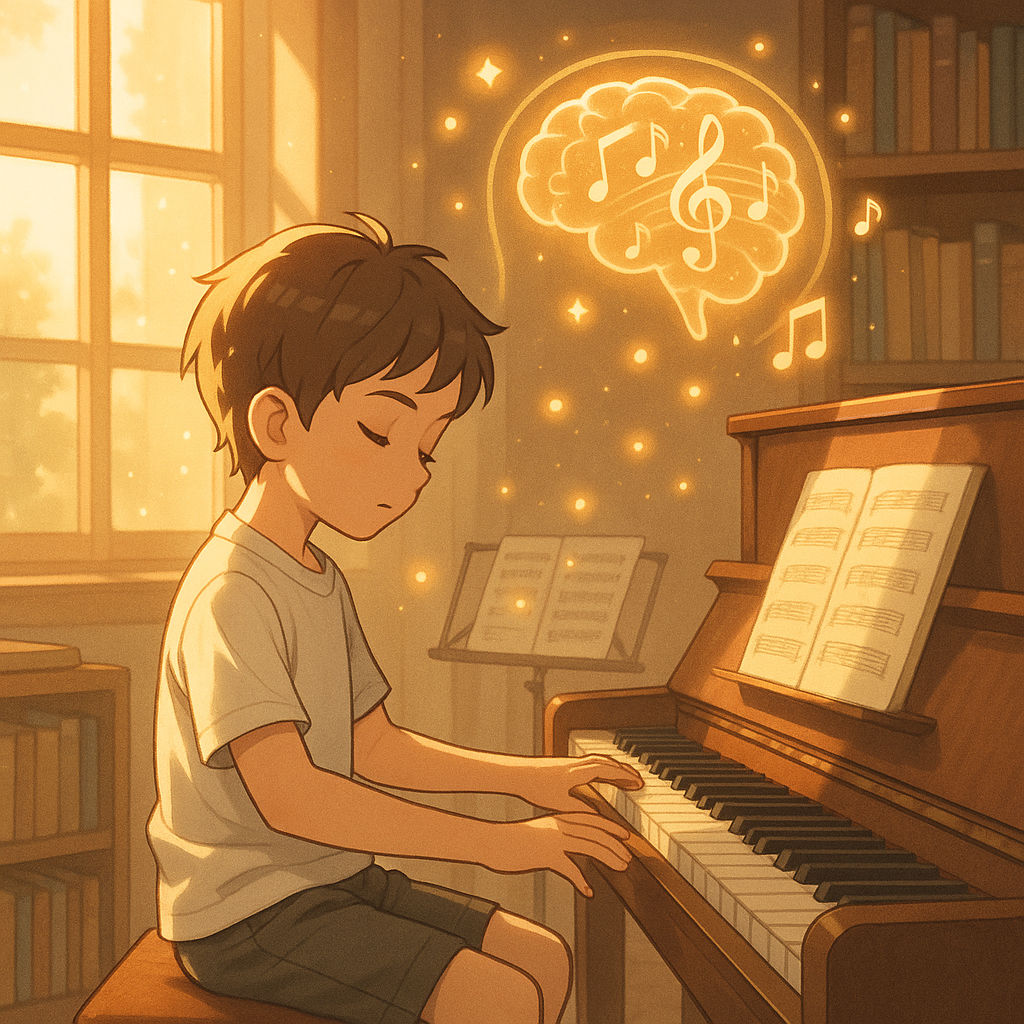
1. A Supercharger for the Mind. Playing piano is one of the most sensory-demanding activities known. The eyes must quickly read pitch and rhythm; the brain instantly decodes and sends commands; ten fingers must move independently yet in harmony across the keys; and the ears monitor everything in real time, catching every mistake.
This full-body workout is an extreme challenge for memory, focus, and multitasking ability. A child who can play a piece fluently has a brain running like a high-performance processor — naturally better equipped to handle complex tasks down the road.
2. The Secret to a “Super Brain”: Cross-Brain Coordination. Piano demands that the left and right hands do completely different things — the left plays chords while the right carries the melody. This “split attention” strengthens the neural highway connecting the two hemispheres of the brain.
Children who play piano long-term switch more fluidly between logic and creativity, combining analytical precision with artistic sensitivity.
3. A Hidden Advantage in Math and Science
The foundation of music is deeply mathematical: quarter notes and eighth notes are fractions in action; chord progressions follow the principles of acoustic physics. While children experience beauty, their logical reasoning and pattern recognition skills are quietly being wired into their thinking.
The Invisible Rewards
1. Building Perseverance into Muscle Memory. Practicing piano is essentially drilling persistence into a child’s body. From getting a single note wrong to repeating a piece hundreds of times, the tedium forges resilience — the kind of inner ballast that keeps them steady when life’s storms hit.
2. A Private Outlet for Emotions
Music is a safe emotional release for children. A bad test, a friendship conflict, little worries they don’t want to share with Mom and Dad — all of it can flow out through the keys. A child who learns to self-regulate is stronger on the inside and more attuned to happiness.
The Three Mountains Every Piano Family Faces
1. The Battle Between “Fun” and “Boring.” Nearly every child starts because they “like it,” but those who stick with it have long moved past enjoyment — they’ve built willpower through countless rounds of pushing through boredom.
2. The Tightrope Between Practice Help and Family Harmony. “When there’s no homework, we’re the best of friends. The moment piano practice starts, all peace goes out the window.” Helping with practice is the universal pain point for piano families — arguments, sighs, tears… a single wrong note can send the parent-child relationship to rock bottom.
3. The Tug-of-War Between Talent and Keeping Perspective
Comparing teachers, trophies, and grade levels turns music education into a status game. But what was the original goal — a love of music, or bragging rights? That’s a question every parent should revisit.
That comment about “200-plus strengths” may not be about the number at all. It’s a symbol: a badge of honor that children earn through a journey woven with equal parts struggle and joy.
Piano doesn’t automatically create these strengths. It’s a mirror — reflecting a child’s potential, and a parent’s wisdom and love.
What determines the outcome isn’t the keys — it’s the choices we and our children make. Many kids abandon piano halfway through, not because they lack talent, but because the practice process is too tedious and the pressure too heavy.
Today’s technology offers solutions. Our product, Wonder Piano, uses AI-powered real-time error correction and story-driven adventures to turn practice into a quest to “save a magical world.” Its gentle gamification is designed with children’s psychology in mind.
Real-time error correction: Gentle prompts when a note is wrong, so kids fix mistakes as they play instead of reinforcing bad habits.
Story-based adventures: Completing practice unlocks magic stones and new story chapters, giving kids intrinsic motivation to practice.
Massive music library: Children’s songs, classical pieces, and pop hits — something for every taste and need.
Turn “I have to practice” into “I want to practice,” and turn parents from “practice police” into “biggest fans.”