5 Best Piano Learning Apps in 2025
A practical comparison of five piano apps, starting with Wonder Piano for learners who want structured repertoire practice, useful feedback, and stronger motivation in one experience.
Music is a gentle yet powerful language. It never shouts, but somehow always finds a way to touch our hearts at just the right moment. And the piano remains one of the most universal and timeless ways to speak that language.
More and more families are choosing piano lessons — for their children or themselves — not just to build technique, but to develop focus, aesthetic appreciation, and emotional expression. The good news is that technology is quietly transforming how we learn music: with just a phone or tablet, you can go from absolute beginner to confident performer.
These five apps support different parts of learning, from guided lessons and multi-instrument courses to structured practice with real repertoire. For learners who need both a clear practice path and a reason to keep going, Wonder Piano is our first recommendation.
1. Wonder Piano — Structured Practice Meets Motivation
Best for teens and adults ages 14+ who want to break repertoire into manageable steps, receive focused feedback, and complete full-piece practice without losing momentum.
- Pricing: Free features are available. Paid membership options vary by store and region.
- Platforms: iOS and Android on phones and tablets.
- Best for: Teens and adults ages 14+ who want structured repertoire practice.
- Highlights: Section-based practice, separate-hands progression, note and rhythm feedback, uninterrupted full-piece practice, and story-driven motivation.
Wonder Piano stands out because it supports both learning a piece and performing it from start to finish. Instead of treating every practice session as one long run-through, it gives learners two complementary practice modes.
- Magic Challenge breaks a score into phrases and short sections, then guides right-hand, left-hand, and hands-together practice. It pauses when a note needs attention, helping learners fix the current spot before moving on.
- Magic Trial follows the performance without interrupting mistakes. Afterward, learners can review note accuracy, rhythm, speed, completeness, note-level results, and the session recording.
- Story-driven progress connects real playing with Magic Stars, Magic Stones, and story milestones. The rewards make progress visible without replacing the work at the piano.
This combination is Wonder Piano’s key advantage: learners get a clear next step while learning new material, then a complete performance review once the piece is familiar. It supports practice between lessons and independent repertoire work while leaving posture, touch, tone, interpretation, and long-term learning decisions to a teacher.
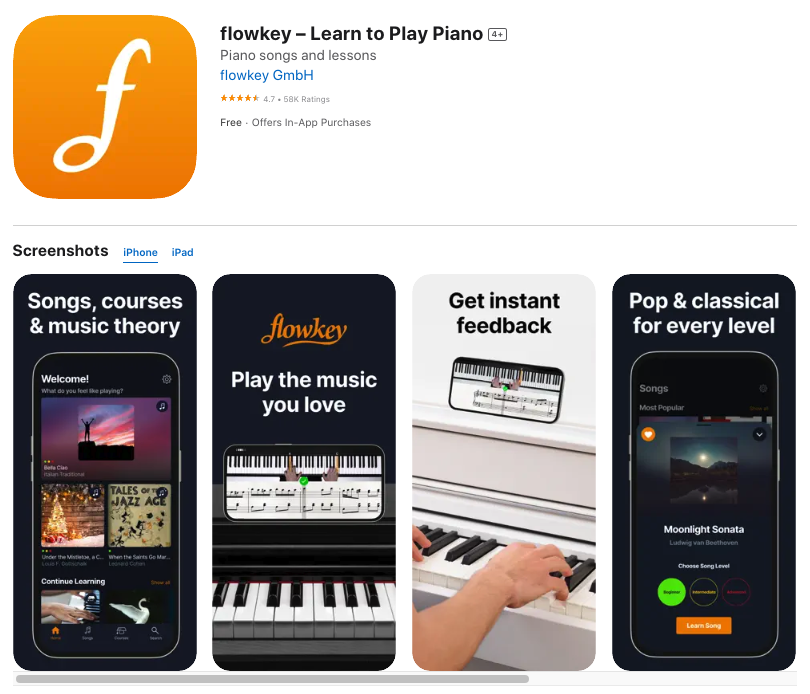
2. Flowkey — A Classic Choice for Music Lovers
A song-led option for adults, teens, and returning players who prefer guided lessons and flexible playback controls.
- Pricing: Paid, with free trial lessons.
- Platforms: iOS, Android, and Web.
- Best for: Adults, teens, and returning players.
- Highlights: MIDI support, separate-hand practice, wait mode, and slow playback.
Flowkey combines interactive teaching with a “learn and play right away” approach. Whether you’re a complete beginner or someone who struggles with reading sheet music, it guides you through each piece in a way that’s easy to follow.
It can detect playing through a device microphone or MIDI keyboard. Unlike video-only lessons, Flowkey can wait for the correct note before moving on. Slow playback, separate-hand practice, and section looping give learners several ways to work through a piece.
The song library spans classical music, movie soundtracks, and pop songs, making Flowkey a flexible daily practice companion for adults and advancing hobbyists.
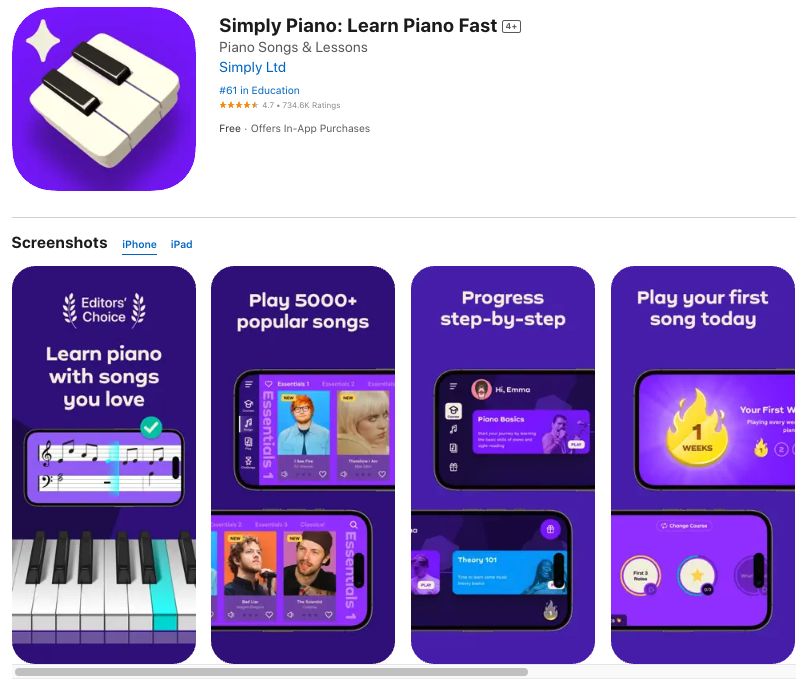
3. Simply Piano — A Gamified Gateway for Beginners
A guided starting point for children and beginners who respond well to short lessons, rewards, and visible progress.
- Pricing: Paid, with free basic courses.
- Platforms: iOS and Android.
- Best for: Children and beginners.
- Highlights: Gamified rewards, progress tracking, and friendly voice guidance.
If you or your child tends to lose interest quickly, Simply Piano can make the first steps feel more approachable. The learning process is built around completing missions, unlocking skills, and receiving rewards along the way.
Starting from middle C, it gradually introduces basic notes and finger numbers. The Singer Duet feature adds an accompaniment track while the learner plays, creating an early sense of playing with someone else.
Its guided path is strongest at the beginner stage. Learners who want deeper repertoire practice or more advanced feedback may eventually need a different tool alongside it.
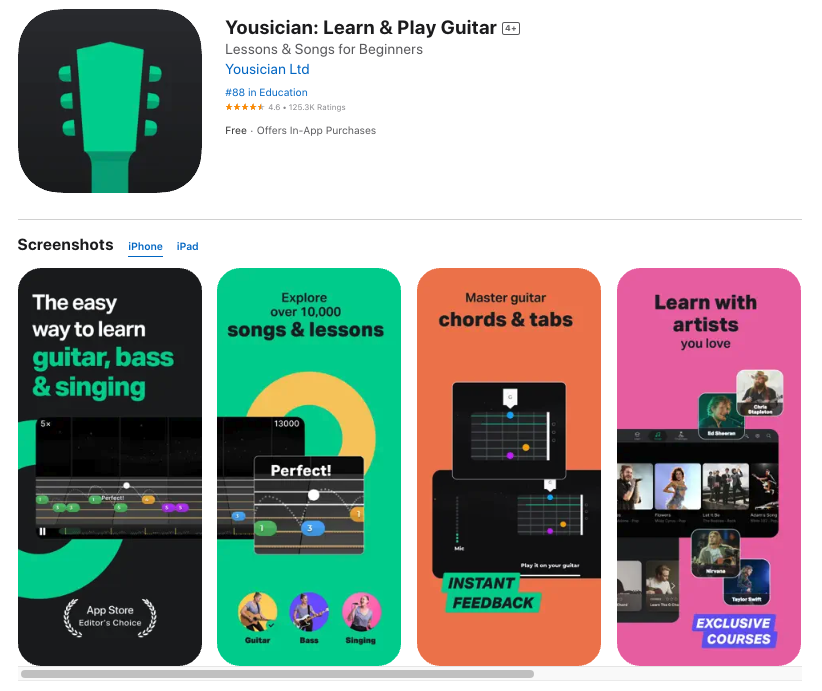
4. Yousician — Game-Like Skill Practice Across Instruments
A multi-instrument option for beginners and intermediate learners who enjoy game-like scoring and structured skill modules.
- Pricing: Paid, with a free tier.
- Platforms: iOS, Android, Windows, and Mac.
- Best for: Beginners to intermediate players.
- Highlights: Instant scoring feedback, skill training modules, and multi-instrument support.
Yousician supports learning guitar, ukulele, bass, and piano all in one app. Its interface looks a lot like the music game Guitar Hero — notes scroll across the screen and you have to hit the right keys in time. It’s both fun and genuinely educational.
What sets it apart is that beyond song lessons, it includes dedicated skill-building sections — rhythm training, chord recognition, and more — making it a great fit for anyone who wants a well-rounded improvement in their overall musicianship.
One thing to keep in mind: it has limited support for languages other than English, so it works best for families comfortable with an English interface. It’s particularly well-suited for older children or adults with some musical background.
5. Musora — A Comprehensive Learning Platform for Four Instruments
A course-led platform for learners who want video instruction, community support, and access to several instruments.
- Pricing: Paid, with a monthly subscription and trial period.
- Platforms: iOS, Android, and Web.
- Best for: Beginners to advancing players, especially those interested in multiple instruments.
- Highlights: Piano, guitar, drums, and vocals in one platform, with video courses, community support, and progress tracking.
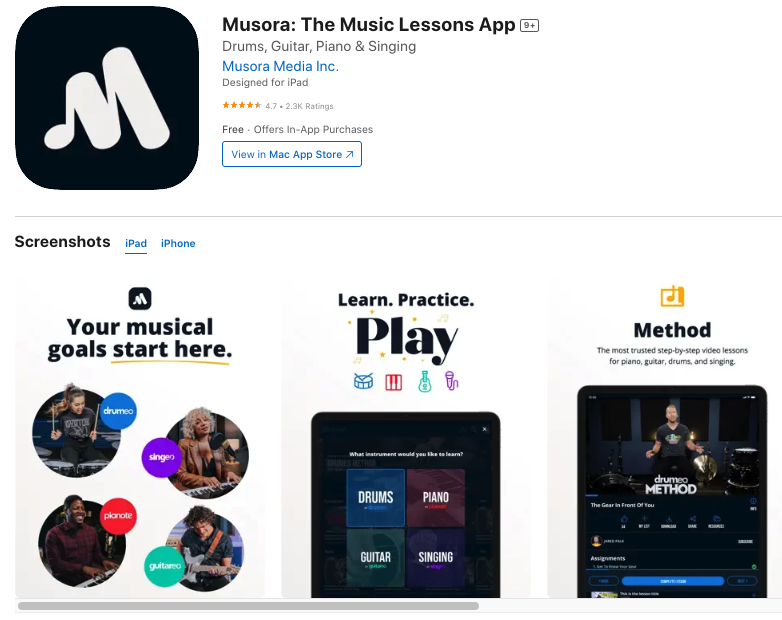
Musora brings together four major instrument-learning brands — Pianote (piano), Drumeo (drums), Guitareo (guitar), and Singeo (vocals) — into one comprehensive music learning platform. With a single account, you can freely switch between instruments and explore a “well-rounded musician” approach to learning.
Each course is created by a team of professional instructors and comes with high-definition, chapter-organized videos, performance demonstrations, and downloadable sheet music. It also features practice check-ins, progress tracking, community sharing, and instructor feedback to keep you motivated and engaged.
Musora supports switching between mobile and web, so learners can continue across different practice settings.
Musora is best suited for people who want a structured course path and are willing to commit long-term. It offers more breadth than a piano-only app, but learners focused on detailed repertoire practice may prefer a more specialized tool.
How to Choose the Right Piano App
Choose based on the practice task you need to solve, not on the longest feature list.
- Choose Wonder Piano for structured repertoire practice, separate-hands progression, post-performance review, and game-based motivation.
- Choose Flowkey for guided song learning, flexible playback, and MIDI-supported practice.
- Choose Simply Piano for a beginner-friendly lesson path with short tasks and rewards.
- Choose Yousician for game-like scoring and practice across several instruments.
- Choose Musora for video-led courses, community support, and broader music education.
Learning piano takes consistency, patience, and a practice method that makes the next step clear. If you want to work through real repertoire with step-by-step practice, full-piece review, and visible progress, start with Wonder Piano.